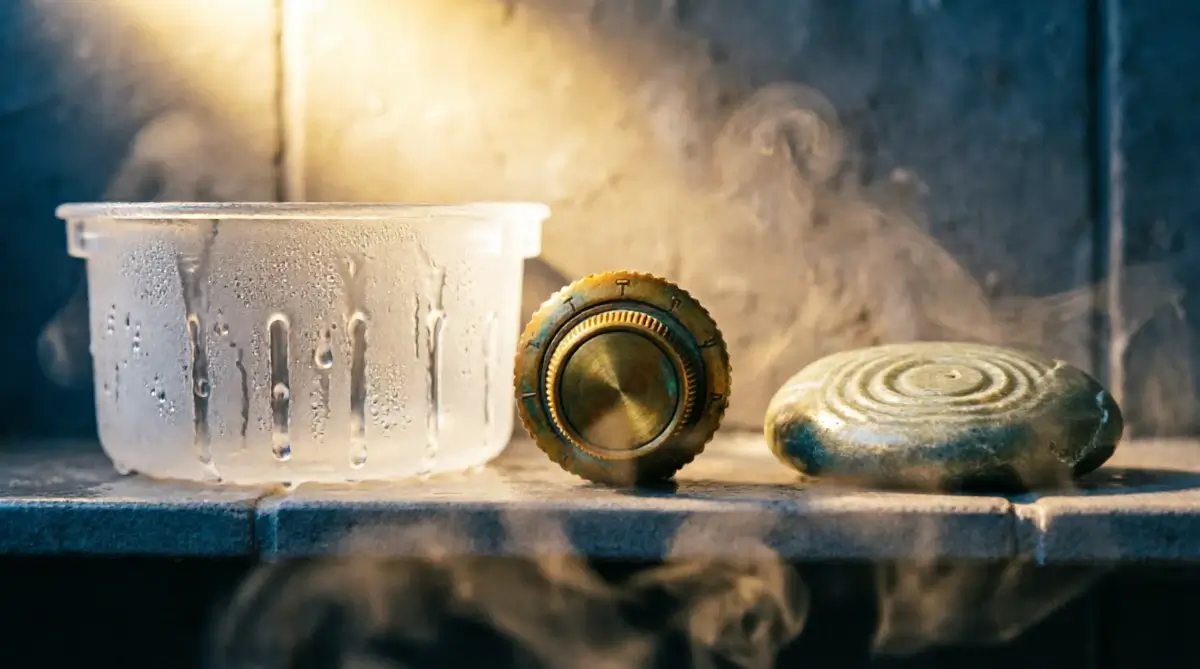
The shower where my ear first began to open I did not plan for the shower to become my first classroom of the day. It just happened. I was standing under the warm water, still half asleep, and I reached for my phone on the small shelf beside the soap. Instead of scrolling through music or checking messages, I opened a podcast in the language I was learning and pressed play.
The voice of the host filled the steam, and I just stood there, letting the words wash over me the same way the water did I was not trying to understand every sentence. I was not testing myself. I was just listening. And somewhere in that warm, calm space, my ear began to open.
Before that, I had been trying to learn listening the hard way. I would sit at my desk, put on a recording, and strain to catch every word. When I missed something, I would rewind and try again, my jaw tight, my shoulders tense. It felt like work. And it did not work very well. But in the shower, there was no desk, no notebook, no pressure there was only the voice and the water and the simple act of letting the sound in.
I did not know it at the time, but that small habit was the beginning of something that would change everything. I was training my ear to understand fast native speech, and I was doing it without a single textbook or grammar drill.
Why I stopped trying to study listening and started letting the language soak in
The old way had left me tired and frustrated. I believed that listening was a skill you had to attack. But language does not work that way. The ear needs time. It needs exposure. It needs to hear the same sounds in different voices, at different speeds, in different moods, until the patterns become familiar on their own. You cannot force that. You can only give it the space to happen.
So I stopped forcing I started putting the language on in the background of my life. While I washed the dishes. While I walked to the shop. While I stood under the warm water. I did not always pay full attention. Sometimes the words just floated past me. But even when I was not focused, my brain was still hearing. It was still counting the sounds, storing the patterns, building the invisible map that would later make fast speech feel natural.
I also started doing something else that helped a great deal. I set my phone to the target language. At first, it felt strange. The icons looked different. The menus used words I had never seen before. But within a few days, my fingers knew where everything was. I did not need to read the words anymore. And the simple act of seeing the language every time I opened my phone dozens of times a day began to make it feel normal. Not foreign. Just part of my life.
That shower shelf is still where my phone sits. The same podcast plays. The same warm water runs. And my ear, which once could not catch a single fast sentence, now follows the voice without strain. The change did not happen overnight. It happened slowly, day by day, in the steam, while I was not even trying.
How to Train Your Ear to Understand Fast Native Speech
The method that worked for me was simple I surrounded my life with the sounds of the language I played podcasts while I took a shower. I set my phone to the target language. I searched online using words I barely knew. And I used technology one of the most wonderful tools humans have ever created l to help me. An AI conversation assistant let me slow down any audio that felt too fast, so I could hear every word clearly before speeding it back up.
This technology is a gift to anyone learning a language it gives you a patient helper that never gets tired, never judges, and costs far less than a private teacher. Over time, my brain learned to fill in the gaps. Fast speech stopped sounding like a wall of noise and started sounding like people talking. The secret was not studying harder. It was listening more, in more ways, and letting modern tools help me along the way.
The Wall of Sound That Used to Stop Me Cold
I will never forget the first time a native speaker spoke to me at full speed. I had been learning the language for months. I knew hundreds of words. I could read basic articles and follow slow audio lessons. I felt ready. Then a stranger at a shop asked me a simple question something about whether I needed a bag and I did not understand a single word.
Not one the sounds ran together like water pouring over stones. I froze. I smiled and nodded, hoping it was not a question that needed an answer the person looked at me a little strangely and moved on. I walked away feeling like all my months of study had been for nothing.
That moment stayed with me for a long time I could not figure out what had gone wrong. I knew the words. I knew the grammar. But when they came out of a real person’s mouth, at real speed, they sounded nothing like the careful recordings I had been practicing with the words were shorter. The sounds blended into each other. Whole syllables had disappeared.
The moment I understood that fast speech is just words holding hands not a different language
It took me a while to understand what was happening. Native speakers do not pronounce every word separately. They link them together. They drop sounds. They squash whole phrases into something that feels like a single, long word. “What are you going to do?” becomes “what are going to do?” “I do not know” becomes “I don’t.” The words are all there. They are just holding hands so tightly that they look like one thing.
Find a short clip of native speech maybe a line from a movie or a few seconds from a podcast. Listen to it once at full speed. Then listen again, but this time close your eyes and just focus on the sounds, not the meaning. Then listen a third time and try to write down exactly what you heard. Do this with one new clip every day.
Once I saw this, the fear began to lift the wall of sound was not a wall at all. It was a fast stream, and I just needed to learn how the water moved. I did not need a different language. I needed a different way of listening. And the first thing that helped me was believing that I could learn any foreign language by myself with a self built system the tools and the path were mine to choose.
Why do native speakers sound so fast even when I know all the words they are using?
Native speakers do not separate their words the way learners expect. They link sounds together, drop small words, and shorten common phrases. Your brain is used to hearing each word in its full, careful form. When those forms change in fast speech, your ear does not recognize them. The good news is that this is a skill you can train. By listening to the same fast audio many times first slowly, then at full speed your brain learns to pick apart the connected sounds. It is not a problem with your memory. It is a problem of practice, and it can be fixed.
The shopkeeper’s question gave me a gift I did not recognize at the time. It showed me that fast speech is not a different language. It is the same words I already knew, just moving faster and holding hands. The job of my ear was not to catch every word it was to learn how the words moved together.
The Wonderful Tool That Lets Me Hear Every Sound Clearly
I opened the assistant, dragged the speed down to half, and finally heard every syllable and realized there is a kind of technology that feels like it was made for language learners. The AI conversation assistant is one of those tools. It is one of the most wonderful inventions I have ever used. It does not replace a human teacher. It does something even better. It gives you a patient, tireless helper that can slow the world down until you are ready to hear it at full speed.
The first time I used it for listening, I took a short news segment. At full speed, the reporter sounded like she was racing through the sentences. I caught maybe one word in five. Then I opened the assistant, pulled the speed down to half, and played it again. Suddenly, the words separated. I could hear where one ended and the next began. I could hear the small sounds that had been swallowed at full speed. I could hear everything.
This is the power of modern tools a generation ago, a learner would have needed an expensive tutor to sit with them and repeat sentences slowly, over and over. Now, a simple app on a phone can do the same thing, at any hour, for as long as you need. It is a gift that makes the whole journey faster, cheaper, and far less lonely.
The first news clip I pulled apart, word by word, until nothing was hidden
I spent a whole week with that one news clip I listened to it at half speed. Then I listened while reading a transcript the assistant gave me. I saw the words I had been missing. I saw how the speaker had linked them together. I practiced saying the sentences myself, matching her pace, until my voice and hers sounded almost the same. Then I moved the speed up. Three quarters then full by the end of the week, I could understand the entire clip without slowing it down.
That week taught me more about listening than the previous six months combined. The assistant did not just help me hear the words. It showed me what I had been missing. It made the invisible visible. And once I had seen the patterns, I started hearing them everywhere else. The assistant had opened a door in my ear, and once it was opened, it stayed open.
I had spent a long time believing that the only way to understand fast speech was to pay for expensive lessons with a private teacher. But the simplest way to review and train your ear without burning out turned out to be a tool that fit in my pocket and never asked for a single coin.
The assistant gave me something no old‑fashioned classroom ever could. It gave me control over the speed of the world, and it did so with endless patience. Technology, when used well, is not a cold machine. It is a warm, steady hand that helps you take your first steps and then lets go when you are ready to walk on your own.
Is it okay to slow down audio, or will I become dependent on it?
Slowing down audio is a training tool, not something you will need forever. Think of it like training wheels on a bike. You use them while you are learning to balance, and then you take them off. Start at a speed where you can understand almost everything. Practice there until it feels easy. Then increase the speed a little. Keep doing this until you reach full speed. Your brain will adjust. You will not become dependent. You will become stronger.
Take one minute of fast native speech. Open your AI assistant and set the speed to half. Listen twice. Then read the transcript, if available. Listen again at full speed. Notice what you can now hear that you missed before. Do this once a day with a new clip.
For a long time, I thought my ear was simply not good enough. I believed some people were born with a gift for listening, and I was not one of them. The assistant proved me wrong. My ear was fine. It just needed the right tool and the right pace. When I gave it those, it learned faster than I ever thought possible.
Turning My Phone Into a Language Environment
The shower started everything, but the real change came when I looked at the device in my hand. The phone. The thing I touched more times a day than anything else. It had always been in my first language. Every menu, every button, every notification. I read those words without thinking. They were part of the background of my life. So one afternoon, I opened the settings and changed the language to the one I was learning. Instantly, my home screen looked different.
The icons were the same, but the words beneath them were new. I hesitated before tapping anything I had to read. I had to think my phone had stopped being a comfort and had become a small, daily invitation to grow.
That small change did more for my reading than any book I had opened. I saw the same words over and over. “Settings.” “Messages.” “Search.” “Today.” “Tomorrow.” After a few days, I stopped translating them in my head. I just knew what they meant. They had become part of my world, the same way they had been in my first language.
Then I went one step further. I started using the search bar in the target language. At first, it was hard. I did not know how to spell many words. I typed things wrong. But the search engine did not care. It suggested what I probably meant. I clicked the suggestion and saw the right spelling. I learned more from those wrong searches than I ever did from a vocabulary list. The phone had become my teacher, and it never got tired of helping me.
How wrong searches taught me more than right ones ever could
Every wrong search was a small, friendly lesson. I would type a word the way it sounded in my head, and the search engine would gently correct me. “Did you mean…?” Yes. Yes, I did. I would see the right spelling, compare it to mine, and make a mental note. The next time, I got it right the time after that, I did not even think about it.
The same thing happened with voice search. I would speak a phrase into the phone, and it would show me what it thought I said. Sometimes it was right. Sometimes it was wonderfully wrong, and I could see exactly which sound I had mispronounced. That instant feedback was a gift. The phone never judged me. It just showed me the correct version and waited for me to try again.
Pick one part of your digital life and switch it to the language you are learning. Your phone. Your search engine. A social media account. Just one. Let it feel fresh and new for a few days. Notice how quickly your brain adapts. Then, next week, change another.
This simple habit turned my phone from a distraction into one of the most powerful learning tools I had. I was no longer just studying the language for an hour a day. I was living inside it every time I checked the time, sent a message, or looked something up. Technology, when used this way, becomes a bridge between the classroom and the real world to stay disciplined when you study alone and keep your habits strong you need to build the language into the things you already do. The phone was the easiest place to start, and it welcomed me every time I opened it.
What if I change my phone language and then cannot find something when I need it?
That happens it happened to me many times. I would need to change a setting quickly and would stare at the screen, completely lost. In those moments, I either guessed based on the icon, or I switched the language back for a few minutes, found what I needed, and switched it again. There is no rule that says you must struggle. The goal is exposure, not punishment. Over time, the moments of being lost become fewer, and the learning stays with you.
The phone taught me that learning does not only happen when you sit down to study. It happens in the small moments between tasks, in the wrong searches and the gentle corrections, in the words you see so often that they stop being foreign and start feeling like home.
From Shopping Lists to News Headlines: Why I Listen to Everything
When I first started, I only listened to things made for learners. Slow speech. Simple words. Clear pronunciation. It was helpful in the beginning, but it also built a false sense of confidence. I could follow the learner audio perfectly, but the moment I stepped outside that bubble, the real world sounded completely different. The market seller who called out prices. The radio host who argued with a guest. The two people chatting on the bus. None of them sounded like my careful recordings.
So I changed my approach I started listening to everything. Not just the easy stuff. I went to the market and stood near the stalls, not buying anything, just listening to the back‑and‑forth between the sellers and the customers. I caught numbers. I caught greetings. I caught the tone of someone joking and the tone of someone complaining. Those were not vocabulary lessons. They were life lessons. They showed me how the language actually worked when real people used it.
Then I added the news. At first, it was impossibly fast. The anchors spoke in long, smooth sentences that never seemed to pause. I could not follow the thread. But I kept it on anyway. I played the news while I ate, while I tidied up, while I sat and did nothing slowly, the sounds began to separate.
I started catching the names of places, the opening phrases, the way the anchors always ended their reports with the same few words. I saw for myself why adults can learn languages faster than they think when they stop limiting themselves to one kind of input the wider I cast my listening net, the more my brain started to recognize.
Why training your ear on only one topic leaves you deaf to the rest of the world
The problem with sticking to one kind of listening is that you only learn one kind of language. If you only listen to language‑learning podcasts, you learn how teachers speak. If you only watch cooking shows, you learn the names of vegetables and pots. That is fine, but it is not enough. Real life throws everything at you. A news report. A casual chat. A formal announcement. A joke. An argument. Each one uses the language differently, and your ear needs to be ready for all of them.
I made a rule for myself every week I would listen to something from a new topic. One week, sports. The next week, science. The week after that, a talk show about relationships. Most of it was far above my level. I understood very little. But I was not listening to understand every word. I was listening to let my ear meet the language in as many forms as possible. And over time, that wide exposure paid off. When a native speaker changed topics in the middle of a conversation, I did not freeze. My ear had already been there.
The market, the news, the radio debates they all gave me something the textbooks never could. They gave me the real sound of the language, full of life and speed and honest human emotion. The more I listened, the more my ear learned to move with the words instead of fighting them.
How do I choose what to listen to when there are so many options?
Start with what you already enjoy in your first language. If you like sports, find sports talk in your target language. If you like cooking, watch cooking videos. If you like stories, find short audiobooks. The content should pull you in. When you are interested in the topic, you forget that you are listening to another language you are just following along because you want to know what happens next.
This week, find one audio clip from a topic you have never explored in your target language. News. Gardening. Cars. Fashion. Anything you would normally skip. Listen to it twice. Do not worry about understanding. Just notice how the language sounds different from your usual material. The variety itself is the lesson.
The Shower Habit That Became My Daily Ear Training
How ten minutes under warm water with a podcast changed my comprehension more than any drill the shower started as an accident, but it became my strongest habit. Every day, I would step under the water, reach for my phone, and press play. The voice of the podcast host filled the steam, and I just listened. Not with effort. Not with a pen in my hand. Just with the water running and my mind still waking up.
After a few weeks, I noticed something surprising. I was understanding more. Not because I had studied harder, but because my ear had become used to the sound of the language. The same words and phrases that had once felt fast and slippery were now starting to feel familiar. I was not trying to catch them. They were just there.
The shower worked for a reason I did not understand until later it was a time when I could not do anything else. I could not check my phone. I could not open a book. I could not write notes. All I could do was stand there and listen. That focused attention, combined with the daily repetition, was exactly what my brain needed. It was the purest form of ear‑training I had ever found to learn a language through audio before anything else slows you down you have to find those moments where nothing competes with the sound. The shower was mine.
The voice in the steam that taught me to stop translating and start feeling the language
One morning, I was listening to the usual podcast. The host was telling a story about something that had happened to him the day before. I was not paying full attention my hands were busy with the soap. And then, without meaning to, I laughed. The host had made a joke, and I had understood it. Not translated it. Not paused to figure out the words. I had just understood it, the way you understand something in your own language. The meaning arrived before I had time to think about it.
The shower taught me that the ear does not need a desk or a textbook. It only needs time, repetition, and a voice that keeps talking. The rest happens on its own, in the warm steam, while you are busy with the soap and not even trying.
That laughter, in the steam of the shower, was a bigger milestone than any test score it meant my brain was starting to process the language directly. The words were no longer passing through a translation machine in my head. They were going straight to understanding. That is the goal of all listening practice to stop working and start simply receiving.
What if I cannot understand anything at all when I listen like this?
That is completely fine. Understanding is not the only goal. Just hearing the sounds, even without knowing the meaning, trains your ear to recognize the patterns of the language. Think of a baby. They listen for months before they speak a single word. Their brain is absorbing the rhythm and the sounds. Yours is doing the same. Keep the audio playing the understanding will come.
Think of one moment in your day that is already calm and hands‑free. The shower. The drive. The few minutes while coffee brews. Commit to playing something in the target language during that moment every day for a week. Do not test yourself. Just listen. At the end of the week, notice whether the language feels a little less foreign.
The best listening practice I ever did was the kind that did not feel like practice at all. It was the podcast playing while I washed my hair. The news humming in the background while I cooked. The language became a companion, not a subject. And when it became a companion, it stopped being hard. It just became part of the day.
Movies, Books, and the Fun Side of Listening
The shower and the news built my ear. The assistant let me slow the world down so I could hear every piece. But the part of listening that truly made the language feel like mine was the fun part. The movies. The books. The stories. The things I would have enjoyed anyway, even if I were not learning anything at all.
I remember the first film I watched all the way through without subtitles. It was a movie I had seen many times in my first language. I knew the story. I knew the characters. I knew when the jokes were coming. But this time, I was hearing it in the language I was learning. And when the funny scene arrived, and the character said the line I had been waiting for, I laughed. Not because I remembered the joke from before.
But because I understood it in the moment. The words landed. The meaning was instant. I sat there in the dim room, alone, smiling at the screen, and I felt something shift inside me. The language had stopped being a code to figure out. It had become a story I could feel.
That moment was worth more than a hundred vocabulary lists. It proved that my ear had grown strong enough to follow not just the words, but the emotion behind them. The tone the timing. The little pauses that make a joke funny. Those things cannot be taught with flashcards. They can only be absorbed, over time, through real content that was made to move people.
How stories I already loved became the best listening teachers I ever had
After that first film, I went looking for more. I found audiobooks of stories I had read as a child. I watched documentaries about subjects I already knew. I followed along with cooking shows where I did not need to understand every word because I could see what the chef was doing with their hands. The meaning was never just in the language. It was in the pictures, the sounds, the faces, the gestures. And when the language was supported by all those other clues, my brain relaxed. It stopped straining. It just absorbed.
The films and the books did not teach me grammar rules or vocabulary lists. They taught me something more lasting. They taught me that language, at its heart, is not about words. It is about connection. And when you feel the connection, the understanding follows on its own.
I started keeping a list of the films and books that had moved me. Not as a study record, but as a kind of map of my own growth. The first entries were simple. A children’s story. A slow documentary. The later entries were more complex. A thriller. A historical drama. A stand‑up comedy special. Each one marked a step forward. Each one proved that I had moved a little further from the learner I used to be, standing frozen in the shop, unable to answer a simple question.
The stories also gave me something else they gave me a reason to keep listening. Not because I had to. But because I wanted to know what happened next I discussed that you can build real fluency through story based learning and the method is so simple it almost feels like a secret. You just find stories you love, and you let them pull you forward.
What if I try to watch a film without subtitles and understand almost nothing?
That happened to me many times I would start a film, feel completely lost, and turn it off after ten minutes. That is not failure. That is simply a sign that the film is a little too hard right now. Put it aside. Try something easier. A children’s show. A documentary with lots of visuals. Come back to the harder film in a few months. When you return, you will be surprised by how much more you understand. The film did not get easier. You got better.
Pick a film or a show you have seen many times in your first language. Find it in the language you are learning. Watch it without subtitles. Do not worry about understanding every word. Just follow the story. Notice the moments that make you feel something laughter, sadness, suspense. Those feelings are proof that your ear is working, even when you do not realize it.
I used the assistant to inch the speed higher, one small step at a time
The assistant had given me the wonderful ability to slow the world down but the goal was never to stay at half speed. The goal was to climb back up. To train my ear so well that full speed felt as natural as hearing my own thoughts. So I made a plan. Every week, I nudged the speed a little higher. From half to a little over half.
Then to three quarters then to nearly full I did not rush. If a piece of audio felt too fast at the new speed, I stayed at the old speed for a few more days. There was no deadline. No test waiting for me at the end. Just the slow, steady climb.
The first time I listened to something at full speed and understood most of it, I did not believe it I thought I had accidentally chosen an easier clip. So I tried another one. And another. They were not easier. I had just gotten better. The months of slow listening, of replaying, of comparing the transcript to the sound they had all added up the climb was over, and the view from where I stood was clearer than I had ever imagined.
The day I listened to a live broadcast and forgot it was in another language
The moment that sealed everything happened on an ordinary day. I was sitting in my room, and a live radio broadcast was playing from my phone. The host was interviewing someone about the weather. It was nothing special. Just a casual chat. I was half‑listening while I folded some clothes. And then I stopped. Because I realized I had been following the entire conversation for the last ten minutes without once thinking about the fact that it was in another language. The meaning had flowed straight into my mind. There was no translation. No effort. No wall. Just a person talking, and another person listening.
I sat there with the shirt still in my hands and let the feeling wash over me. It was not pride, exactly. It was something calmer. A deep, steady certainty that the work I had done had been real the showers. The slowed‑down audio. The wrong searches. The movies. The news reports I could not follow at first. All of it had been building toward this ordinary moment, and the moment had arrived without any announcement.
Take one short audio clip you have already listened to at half speed. This week, play it at a slightly faster speed. Not full. Just a little faster. Listen twice. If it feels comfortable, stay there. If not, go back down. The goal is not to race. It is to climb, gently, without falling.
The hard days had taught me something important along the way the struggle was not a sign that I was failing. It was the path itself. Every time I could not understand, every time I felt lost, every time I wanted to give up those were not obstacles they were the steps and I had walked them, one by one, until the ground beneath me was solid.
How long does it take before fast speech starts to feel natural?
It depends on how much you listen for me, the shift happened slowly over months. I did not notice it day to day. But when I looked back over a longer stretch, the change was clear. The key is not to wait for a single breakthrough. The key is to trust that every minute of listening, even the minutes where you understand nothing, is moving you forward the progress is happening it just takes time to become visible.
The climb back to full speed taught me something I carry with me now. Patience is not a weakness in language learning. It is the whole game. The ear does not learn by being forced. It learns by being given time, and when you give it time, it repays you with understanding.
I never reached full speed by rushing I reached it by letting the assistant hold my hand while I learned to walk at my own pace. There is no prize for getting there fastest. There is only the steady, calm satisfaction of arriving when you are ready.
I still remember the frustration of the early months the words that slipped away. The sentences that blurred. The voice in my head that said I would never get it. That voice was wrong. But I only know that now because I kept going long enough to prove it wrong. Every hour of listening was a brick in a wall of understanding. And that wall, once built, has never fallen.
The Voice in the Water, and the Ear That Finally Heard
The shower shelf is still there the phone still sits on it the same podcast host still talks through the steam while the water runs. But something has changed. I do not strain to catch the words anymore. I do not replay the sentences in my head, trying to pick them apart. I just listen. The voice fills the small space, and I understand it the way I understand my own thoughts. Without effort. Without translation. Without fear.
I think about the person I was when I started. Standing frozen in a shop, unable to answer a simple question. Going home and replaying the moment over and over, wondering what was wrong with me. Nothing was wrong with me I just had not yet learned how to train my ear.
I had not yet discovered the shower, the assistant, the wonderful power of slowing the world down. I had not yet understood that listening is not a skill you conquer. It is a relationship you build, slowly, over time.
What I tell anyone who thinks fast native speech is too hard start where you are, and let the sound in if I could sit down with the person I used to be, the one who was frustrated and lost and ready to give up, I would tell them something simple. Do not try to understand everything.
Do not test yourself every day do not compare your listening to anyone else’s. Just surround yourself with the sound of the language. Put it on while you wash. While you walk. While you cook. Let it play in the background of your life until it stops feeling foreign and starts feeling familiar.
Then, when you are ready, use the wonderful tools that are available to you today. Use the assistant. Slow it down. See the words you missed practice them. Speed it back up. And trust, above everything else, that the hours are adding up. They are building something inside you that you cannot see yet. But one day maybe while you are folding clothes, maybe while you are standing in the shower you will realize that the voice on the other side of the speaker is no longer a stranger. It is just another person talking and you can understand every word.
Today, choose one ordinary moment in your day. The shower. The drive. The walk. The time while coffee brews. Commit to playing something in the target language during that moment every day for the next month. Do not measure. Do not test. Just listen. At the end of the month, you will have built a bridge you did not even notice going up.
To become your own teacher and build your own education you do not need a classroom you need a shower shelf, a podcast, and the willingness to keep listening even when it feels like nothing is happening. The progress is happening. It always was. And the technology that helps you the assistant that slows the world down, the phone that gently corrects your searches, the films and books that pull you forward these are gifts they are the helping hands that make the road feel less lonely and the destination feel closer.
What should I do today if I want to start training my ear for fast native speech?
Start with one simple thing find a podcast or a video in the language you are learning something easy. Something you enjoy. Put it on while you do something ordinary washing dishes, folding clothes, taking a shower. Do not test yourself. Do not try to catch every word. Just let the sound fill the room. Do this every day for a week. At the end of the week, ask yourself whether the language feels a little less foreign than it did before. The answer will tell you everything you need to know.
The voice in the water never asked me to be perfect. It just kept talking. And I just kept listening. That was the whole secret. Not talent. Not a special method. Just the simple, daily act of showing up and letting the sound in.
I began with a shower, a phone on a small shelf, and a language that felt like a wall of noise. I could not understand a fast sentence. I froze when a native speaker spoke to me. I thought my ear was broken. It was not broken. It was untrained. And training it turned out to be simpler than I ever imagined.
I let the sound into my life podcasts in the shower. News while I ate. My phone switched to a language I barely knew. Searches typed wrong and gently corrected. Movies I loved, played without subtitles, until the jokes landed and the stories moved me. And through it all, the wonderful tools of modern life were there to help. The AI conversation assistant let me slow the world down whenever I needed to, patiently, gently, at any hour. The technology that surrounds us the phones, the assistants, the endless libraries of content became my teachers, and they never once made me feel small.
The change did not come in a single day. It came in a thousand small moments. The morning I laughed at a joke I understood. The evening I followed a live broadcast without effort. The day I realized I had been listening for ten minutes without once thinking about the fact that it was another language. Those moments were not the result of talent. They were the result of time, patience, and the simple refusal to stop.
Fast native speech is not a wall. It is a stream and if you stand in it long enough, you learn how the water moves. You learn to move with it. And one day, you realize you are no longer struggling against the current. You are swimming.
If your ear could talk back to you after all these hours of listening, what would it say and would you recognize the voice as your own?
Start today put a podcast on while you wash your hands. Change your phone language watch a film you already love, without subtitles. Let technology help you open the assistant, slow down a fast sentence, and hear every word clearly. Do one small thing. And tomorrow, do it again.
If you want a system that helps you stay on track without a mentor looking over your shoulder, the answer is not more pressure it is more purpose. Build your own education, one day at a time, and trust that the hours are working even when you cannot see the results.