The room was dark except for the glow of my phone screen it was a weekend night, the kind I used to spend scrolling through videos or catching up on messages. But this time was different. I had put my phone in airplane mode an hour earlier. No notifications. No calls. No distractions. Just me, the screen, and the lessons I had worked through during the week.
I opened my online language course the one I could access on my phone, always ready, always waiting and began to scroll. Not forward, into new material. But backward, into the week I had just lived. I looked at the vocabulary I had learned on Monday. The grammar point I had struggled with on Wednesday. The short dialogue I had practised on Friday. I read through each lesson slowly, not testing myself, just reminding myself of where I had been. I was building a weekly language immersion routine at home, and it was starting with a simple act of looking back before moving forward.
That night, I didn’t learn anything new I reviewed. And when I finally put the phone down and closed my eyes, the words from the week were still with me, settling into the quiet dark.
Why I looked back before I looked forward
I used to believe that progress meant always pushing ahead. New words. New grammar. New lessons. But I noticed something after a few months of that approach. The new material pushed out the old. I would finish a week feeling good, but by the following weekend, most of what I had learned was gone. The forward motion had left everything behind.
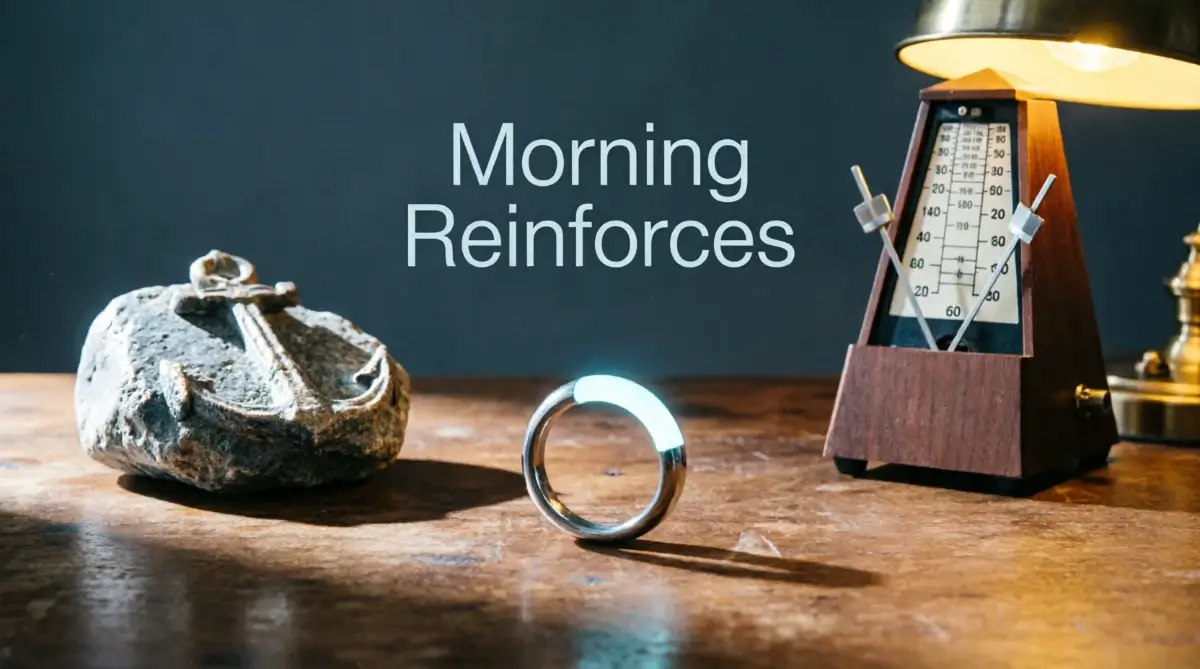
So I made a simple change I decided that the end of the week would not be for starting something new. It would be for gathering what I had already done. The review became my anchor. It told my brain, “This matters. Hold onto it.” And week after week, the words began to stay.
The phone screen is the same. The course is the same. But the habit of looking back has changed everything. The week no longer slips away into the past. It stays with me, because I return to it before it fades.
How I learned that immersion begins with a locked door
There is a small icon on my phone that has become more important than any language app. It is the airplane. When I tap it, the world goes quiet. No messages. No calls. No news. No social media. The phone becomes a single‑purpose device, and that purpose is whatever I choose it to be. On weekend nights and early mornings, I choose the language.
This small act tapping a button has done more for my focus than any productivity method I ever tried. The airplane mode is not a restriction. It is a permission. It says, “For the next hour, you are not available. You belong to your learning.” And when I give myself that permission, the review becomes deeper, calmer, and far more effective.
What changed when I kept notifications off until I was ready
Before I started using airplane mode, my review sessions were constantly interrupted. A message would appear, and I would glance at it. A notification would buzz, and my attention would split. I was never fully present with the language. There was always something else pulling at the edge of my mind.
Keeping the phone locked until I finished my review changed everything. The language became the first thing I gave my attention to, not the last thing I squeezed into a distracted moment. And when the review was done, I turned the notifications back on with a sense of completion. The world was still there. But I had done my most important work first to stay consistent without anyone checking on me I had to become my own gatekeeper the airplane mode was the key I turned in that lock every weekend.
I found that silencing was not enough for me the notifications were still visible, and my hand would still reach for them. Airplane mode removed the temptation entirely. It made the phone a blank slate, and I could fill it only with the language. The difference was immediate my focus deepened when the outside world was truly absent.
The locked door was never about keeping the world out it was about keeping my focus in. And once I learned to protect that small space, the language began to fill it.
The morning that set the tone for my entire week
The morning after the weekend review, I woke up early the room was still dim, the street outside quiet. I walked to the sink, splashed cold water on my face, and reached for my phone. The airplane mode icon was still there from the night before. No messages had arrived. No news had broken. The phone was exactly as I had left it a tool waiting to be used.
I opened my course again and began the same review I had done the night before. The words felt familiar now. The grammar points were clearer. The dialogue I had practised on Friday came back to me without effort. The review had settled overnight, and the morning session was strengthening what the night had planted.
The first hour belonged to the language and nothing else
I made a rule for myself that morning, and I have kept it ever since. The first hour after I wake up belongs to the language. No messages. No email. No checking the weather or the news. Until the review is complete, the phone stays in airplane mode, and my attention stays on the words.
That first hour sets the tone for the entire week when I start with the language, I carry it with me into the rest of the day. The words are fresh. The patterns are alive in my mind. And by the time I finally turn off airplane mode and let the world back in, I have already done the most important thing I needed to do the simplest way to keep vocabulary from fading is to meet it again within twelve hours. The night review and the morning review together lock the words into place.
If I couldn’t spare a full hour in the morning, I started with fifteen minutes the length mattered less than the consistency and the protection. Even a short, uninterrupted review before checking my phone could anchor the language for the day. The key was not the duration. It was the fact that the language came first.
The morning did not give me more hours it gave me something better. It gave me a time when the world was still asleep and my mind was still clear. And in that clear space, the language took root.
There were weekends when I was exhausted and wanted to skip the review. I wanted to sleep in and scroll through my phone like I used to. But I tapped the airplane mode anyway. I opened the course anyway. And every single time, within five minutes, the words began to feel like old friends. The hardest part was never the review. It was the moment before I started.
The review session that locked the week’s learning
The review I did on weekend nights was never long. Ten minutes. Sometimes fifteen I would scroll through the lessons I had completed the vocabulary lists, the short dialogues, the grammar explanations I had read earlier in the week. I did not test myself. I did not try to force anything into memory. I simply let my eyes move over the words, and I let my mind acknowledge them. This is what you learned on Monday. This is what you struggled with on Wednesday this is the dialogue you finally understood on Friday.
There was something about doing this review right before sleep that made it more powerful than any daytime session. The quiet of the room, the dim light of the screen, the absence of the day’s demands it all combined into a single, focused moment. The words I reviewed at night were waiting for me in the morning. They had not faded they had settled.
Revisiting old lessons made new ones easier
When I first started this weekly review, I thought of it as a backward glance. But I soon realized it was also a forward push. The old lessons, when I returned to them, were easier than they had been the first time. Words that had once felt heavy were now light. Sentences I had stumbled over were now smooth. That ease gave me confidence. It reminded me that I was making progress, even when the daily grind of new material made it hard to see.
Revisiting the old also prepared the ground for the new when I saw a grammar pattern again in a past lesson, I understood it better. When I met the same vocabulary in a new context, I recognized it faster. The review was not just a look back. It was a way of building a deeper foundation for what was coming next. I was learning that confidence before my next real conversation started in these quiet review sessions, not in the high‑pressure moments of actual speaking.
I could only speak from my own experience about whether reviewing before sleep was more effective. When I reviewed at night, I woke up with the words still fresh. When I reviewed during the day, they often slipped away by evening. The stillness of the night seemed to help my brain hold onto what I had seen. The routine that worked for me was built around a single, protected moment. Every weekend night, I put my phone in airplane mode and reviewed all the lessons from the past seven days. Not to study them again. Just to revisit them, calmly, before sleep. The next morning, I woke up and did the same review again still in airplane mode, still before anything else. That double review, just twelve hours apart, locked the week’s learning into place.
The night review was never about testing. It was about trusting. Trusting that the words I had already met would stay with me a little longer, and that tomorrow they would greet me like old friends.
The digital tools I wrapped around my review
The course I used was on my phone that was deliberate. I had tried courses on a laptop before, but the laptop stayed on a desk, and the desk was in another room, and soon the course became something I visited rather than something I carried. The phone was different. The phone was with me everywhere. In bed. At the table. On the sofa. The course was always a tap away, and that proximity made consistency possible.
I chose a course that let me move through lessons in any order. That way, the weekend review was not restricted to a fixed path. I could jump to the vocabulary list from Tuesday, then to the dialogue from Thursday, then back to the grammar note from Monday. The flexibility kept the review feeling fresh. It never became a rote march through the same sequence. I was in control of where my attention went.
Switching the device language one setting at a time
Beyond the course itself, I made small changes to the digital world around me. I switched my phone’s language to the one I was learning. The icons stayed the same, but the words beneath them changed. “Settings” became something new. “Messages” became something I had to read twice. These tiny encounters, dozens of times a day, added up. The phone became a teacher that never stopped teaching.
I did the same with my search engine and my social media. I followed accounts that posted in the target language. I watched short videos on topics I already enjoyed cooking, travel, science but now the commentary was in a different tongue. None of this felt like study. It felt like my normal digital life, just wrapped in a new sound. And because it was my normal life, I did it without resistance. I had stopped waiting for a teacher to build a system for me. I was building it myself, piece by piece.
I made one change at a time, and I waited until each one felt natural before adding the next. I started with my phone language. A week later, I changed my search engine. Then I followed a few new accounts. The slow pace prevented overwhelm my digital world began to feel like a support, not a pressure.
The digital tools did not teach me the language they wrapped the language around my life, so that everywhere I turned, there was another chance to meet the words again.
The weekly rhythm that emerged without a strict schedule
After a few months, the routine had become a rhythm. I no longer needed to plan every session. The weekend review set the anchor. The morning review held it steady. And around those fixed points, the rest of the week arranged itself.
I started designating two days as immersion days usually Tuesday and Thursday, because they were the days I had the most time. On those days, everything I consumed was in the target language. The music I played while I cooked. The video I watched while I ate. The podcast I listened to while I walked. I did not force myself to understand everything. I just let the language fill the spaces of my day. The immersion days became something I looked forward to. They were not chores. They were a change of scenery, a small adventure inside my own home.
Short sessions that kept the language alive between reviews
On the other days, when time was tight, I did not abandon the language. I kept it alive with short sessions ten minutes here, five minutes there. A quick review of a vocabulary list while I waited for water to boil. A sentence spoken aloud to myself while I walked to the shop a phrase from a podcast repeated silently in my mind while I stood in line.
These small moments were the threads that connected the larger sessions. They prevented the language from fading during the gaps. They reminded my brain that the language was still here, still important, still part of my daily life. I was beginning to understand why listening mattered so much, even in the early stages the short sessions were often just listening a podcast in the background, an audiobook while I folded clothes and that listening was doing more than I realized.
When I missed an immersion day and I missed many I did not try to make it up by doubling the next one. I just returned to the routine. The rhythm was strong enough to absorb the occasional gap. What mattered was not the perfect week but the steady return.
The rhythm was never about a strict schedule. It was about a steady pulse. The anchor held, and around it, the rest of the week learned to dance. A weekly immersion routine does not need to be complicated. It needs one fixed point. One moment that does not move. For me, that moment was the weekend review in airplane mode. Everything else the morning sessions, the immersion days, the short practices grew around that anchor. Protect the anchor, and the rest will hold.
There was a month when my schedule changed completely. I could not keep my usual immersion days. I was tired and frustrated and thought about giving up the routine entirely. But I kept the weekend review. That one session, just ten minutes on a Saturday night, held everything together. When my schedule cleared, the rest of the routine was still there, waiting. The anchor had not moved.
The airplane mode rule that protected my most important hours
The rule was simple, but it was also absolute on weekend nights and early mornings, the phone stayed in airplane mode until the review was complete. No exceptions. Not for a message from a friend. Not for a breaking news alert. Not for the temptation to see what the world had been doing while I was focused on the language.
This rule became the foundation of everything without it, the review sessions would have been nibbled away by a thousand small distractions. A glance at a message. A scroll through a feed. A quick reply that turned into a long conversation. I had seen this happen to myself before, back when I thought I could study with one eye on the screen and one on my notifications. The language had always lost.
Why I made my phone wait until I had finished my review
Airplane mode ended that battle. It removed the choice. The world was simply not there. And in that absence, the language had room to breathe. I began to see that immersion was not about adding more things to my day. It was about removing the things that pulled me away. The hours I protected with airplane mode became the hours when the language finally had my full attention.
There was something deeply satisfying about keeping the phone waiting. It was a small act of defiance against the constant demand for my attention. The messages could wait. The updates could wait. The language came first. And when I finally turned off airplane mode and let the world rush back in, I did so with a sense of accomplishment. I had already done the most important thing.
This habit taught me something about myself I had always believed I was too busy to learn a language. But I was not too busy. I was too distracted. The minutes I needed were already there, buried under layers of notifications and interruptions. When I stripped those layers away, the time appeared. It had been waiting for me all along.
The purpose behind this rule was simple the language mattered to me. It was tied to real goals, real connections, real dreams. And when something matters, you protect the time you give to it. I had found a purpose in my language journey and that purpose was strong enough to make me turn off the world for an hour every weekend. The airplane mode was not a restriction. It was a declaration. Every time I tapped that airplane icon, I was making a promise to myself. A promise that the next hour belonged to the language, and that nothing would break that commitment. The world did not end when I went offline. It was still there when I returned. But in that hour of silence, something grew that had never grown before. My attention. My focus. My voice.
The airplane mode did not teach me vocabulary. But it gave me the space to learn it. And sometimes, the most powerful tool is not the one that adds something. It is the one that takes everything else away.
The quiet growth that happened when no one was watching
There were stretches when the review sessions felt empty. I would scroll through the lessons, and the words would look familiar but distant, like faces I had met once and could not quite place. I felt like I was going through the motions. The progress I had been hoping for seemed to have stalled.
But I kept going. Not because I felt motivated I did not. But because the routine had become a habit, and habits do not need motivation. They just need showing up. The weekend review, the morning session, the immersion days they were all there, waiting for me, whether I felt like doing them or not. And I did them.
Looking back showed me the distance I had travelled
Then one weekend, I opened my course and scrolled further back. Past the previous week. Past the month before. I found lessons I had not looked at in a long time. And something surprising happened. The words that had once felt impossible were now easy. The grammar patterns that had confused me for days were now obvious. The dialogues I had struggled to understand were now clear.
I had not noticed the change while it was happening. It had been too slow, too quiet. But the proof was there, in the old lessons, waiting for me to find it. The review had been working all along. It had been building something beneath the surface, and I could only see it when I looked back far enough.
This quiet growth reminded me of another practice I had been doing for a long time. The listening sessions the podcasts, the audiobooks, the videos had been training my ear in the same invisible way. I had not realized how much I was absorbing until I found myself understanding a fast conversation without straining training my ear to understand fast native speech had happened without my noticing. The quiet growth was everywhere, in every corner of my practice.
I stopped looking for progress every day. The daily view was too small. Instead, I looked back over a month. I compared where I was to where I had been. The difference was always there, even when I could not feel it in the moment. I learned to trust the review. Trust the repetition. The growth was happening, even when it hid.
The growth did not announce itself. It did not send a notification. It simply happened, quietly, in the space between the repetitions, and one day it was just there.
I kept a small journal where I wrote down the date and a single sentence about how I felt after each weekend review. Most entries were unremarkable. “Tired. Did the review.” “Felt distracted. Finished anyway.” But reading back through those pages months later, I saw a record of persistence. The words I wrote on the hard weeks were the most important ones. They proved that I had kept going.
The phone still goes into airplane mode every weekend night and it always will
Years have passed since that first weekend review the phone is newer now. The course is different. But the habit has not changed. Every Saturday night, I put the phone in airplane mode. I scroll through the week’s lessons. I let the words settle before sleep. And every Sunday morning, I wake up and do it again.
The habit has become so natural that I no longer think about it. It is just something I do, like brushing my teeth or locking the door at night. The language has become part of the rhythm of my week. It no longer feels like study. It feels like a regular appointment with myself, one I have learned to keep.
Start with one night one review
If someone asked me how to create a weekly immersion routine at home, I would tell them this. Do not try to build everything at once. Start with one night. One review. Ten minutes. Put your phone in airplane mode and scroll through what you learned this week. Do it again the next morning. That is your anchor.
Once the anchor is steady, the rest will grow around it. The immersion days will find their place. The digital tools will find their purpose. The short sessions will fill the gaps. But the anchor is what holds it all together. Protect the anchor, and the routine will protect you.
I also learned that building a system that fits your own life is far more powerful than following someone else’s plan. The review habit worked for me because it was built around my own rhythms, my own phone, my own quiet hours. I had learned to build a self directed education framework that matched the way I actually lived and that was the key to making it last.
When I missed a weekend and I did miss some I did not try to make it up by doing extra. I just returned to the routine the following week. The habit was strong enough to survive the gaps. What mattered was not the perfect record but the steady return.
The habit did not ask for perfection it asked for persistence. And the years have shown me that persistence, more than any talent or tool, is what finally turns a routine into a voice.
I began with a phone in airplane mode and a quiet room on a weekend night. I had been scattered, distracted, and unsure whether I could ever create real immersion inside my own four walls. What I discovered was that immersion is not about the number of tools or the hours in a day. It is about protection. The protection of a single, distraction‑free hour when the language comes first.
The weekend review became that protected hour. The morning session became its partner. Around them, the rest of the week learned to move immersion days, short practices, digital changes all anchored to that one fixed point. The routine did not demand perfection. It simply demanded showing up. And showing up, week after week, in the quiet of an airplane‑mode room, was enough.
The words I learned in those hours are still with me not because I studied them harder, but because I returned to them before they could fade. The anchor held. And when I look back now, I see that the routine was never about the language alone. It was about learning to protect something that mattered. The language was the beneficiary. The lesson was for me.
If you could give your future self one word in the language you are learning a word that would carry all the meaning of the hours you have spent what would it be, and why?