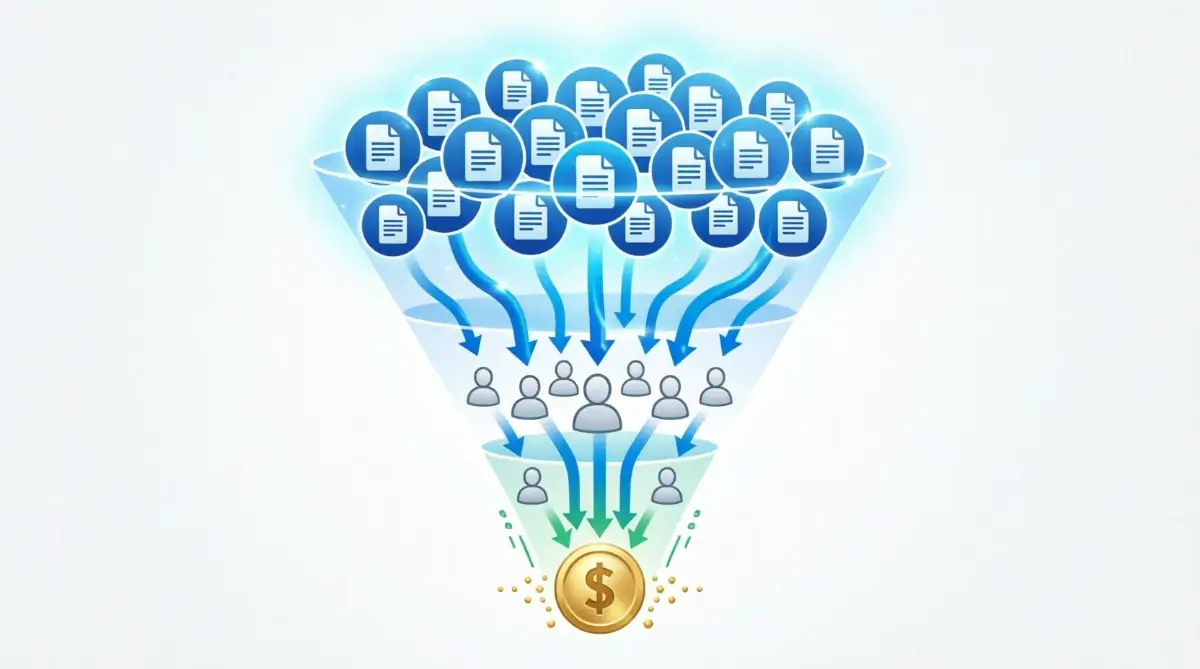
The biggest shift I ever made in building anything online was this: I stopped treating revenue as the goal and started treating it as a natural result of value freely given. That single change removed the frantic urgency that used to contaminate my early work and replaced it with a strong and sustainable mindset shift. Here is the step‑by‑step framework I use to keep building regardless of what the revenue number says.
Step 1: Recognize the Expectation Trap That Undermines Most Digital Work
I used to begin every project with a silent calculation running in my mind. How much could this earn? How soon? The honest answer was never encouraging: not much, and not soon. But the calculation persisted anyway. It turned every article into a step toward a payout, not a gift to someone who needed help. When the early months produced nothing but effort and silence, my motivation crumbled not because the work was bad, but because my timeline was unrealistic.
The moment I let go of that internal deadline was the moment I could breathe. I stopped building for a number and started building something that might outlast me a collection of answers, a set of tools, a place where a stranger could arrive confused and leave clearer. That shift came gradually, as I watched project after project around me collapse under the weight of premature financial expectation.
The real danger isn’t slow growth. It’s expecting fast growth and losing the will to continue when it doesn’t arrive. Once I absorbed that truth, I could work with a steadiness that had nothing to do with immediate reward.
Step 2: Define Yourself Purpose Before Profit
Before I ever set up a way to earn from this blog, I had to answer a question that no search engine would ever ask me. What genuine difficulty does this work solve for another person? That question is not about keywords or market size. It is about the human being on the other side of the screen someone who feels stuck, overwhelmed, or alone in a problem they haven’t yet solved.
If the article, the tool, or the product I am building can reliably address that difficulty, then value exists. And if value exists, revenue can eventually follow. If it can’t, no amount of promotion will rescue it. I return to this question regularly, especially when I feel pulled toward creating something just because it seems profitable. Profit without purpose is a fragile foundation. When I build something anchored in a real problem, I do not need to convince myself to keep going the work itself pulls me forward.
The rule I follow is this: solve a genuine difficulty first, and only then consider how revenue might enter the picture. I never add a way to earn before the core value is proven.
Step 3: Answer the One Question That Defines Your Asset
I keep a single question fixed in my thinking whenever I plan a new article or consider a future direction. Why would someone choose this resource over the countless other ways they could spend their time? The answer cannot be that I am cheaper, or that my page loaded faster, or that I used a clever headline. The answer must be something only I can give a specific perspective, a depth of lived experience, a clarity that comes from having walked through the difficulty myself.
On the blog you are reading, that perspective is grounded in direct practice. I learned languages without a classroom. I rebuilt discipline after long periods of chaos. I found ways to keep going when resources were scarce. Those experiences shape every article I publish. They give the content a texture that theory alone cannot replicate. That is the reason someone stays, returns, and eventually trusts. And trust is the foundation of any revenue that might later come as a result of deep trust I explored in details about building a personal discipline system that works when motivation disappears.
Step 4: Understand the Value‑First Continuum Across Digital Assets
The principle of putting value before revenue applies to every kind of digital project I have observed or participated in. A blog that provides genuinely useful information can later support ads, affiliate income, or its own products but only if the free content is already so good that people would miss it if it vanished. An online store that curates products with care and solves a real need earns repeat buyers who trust the selection. A software tool that saves people hours of frustration earns subscriptions because it becomes indispensable. A digital course or framework sells when it reliably shortens the path to a result the learner deeply wants.
In each case, the money appears after the usefulness is proven. The order never reverses. When I try to reverse it when I build something with the sale already in mind and the value as an afterthought the effort collapses. The audience senses it. I sense it and the long‑term asset never forms.
Step 5: Learn From How a Real Blog Embodies the By‑Product Mindset
The site you are reading right now earns nothing directly. No ads, no affiliate links, no products for sale. That is not a temporary accident while I figure out how to make money. It is a deliberate phase of building a library a growing collection of articles that deliver on their title promise and make the reader feel genuinely helped.
If that library eventually attracts enough consistent readership to support premium advertising, that revenue will arrive as a consequence of the library’s usefulness. If I later create a framework or a guide based on the methods I share freely, it will succeed because the free version already proved its worth. The mindset stays consistent: give first, and let the earning follow. I hold this approach not as a universal rule for everyone, but as the path that keeps my work honest and my energy from burning out chasing numbers that are not yet ready to appear. This approach mirrors how I am structuring my content as a genuine resource rather than a scattered library of posts.
Step 6: Design Your Asset by Solving a Specific Problem
When I sit down to plan a new piece of content, I use a simple exercise. I take a blank page and divide it into two columns. On the left side, I list every specific difficulty my reader faces not broad categories, but precise moments of struggle. Not “I want to learn a language,” but “I’ve tried three different methods and still freeze when someone speaks to me.” Not “I need to be more productive,” but “I work long shifts and have nothing left for study when I get home.”
On the right side, I write exactly how what I am building will address that difficulty. If I cannot fill the right column with concrete, step‑by‑step solutions, I know I have not yet created enough value. I go back and build more before I consider putting it in front of anyone. This exercise keeps me honest. It prevents me from publishing content that sounds good but does nothing, or creating products that look appealing but do not deliver.
Take ten minutes today and try this yourself write down three specific problems your audience faces, and next to each, one concrete way your asset could solve them. That small action will keep your next piece of content in genuine need.
Step 7: Focus on the Emotional Outcome, Not Just the Information
People do not seek out information for abstract reasons they seek it because they feel something confusion, frustration, loneliness, doubt, hope that is beginning to fade. Every article I write should move someone from a difficult emotional state toward a better one. When someone finishes reading, they should feel more capable, less alone, or more equipped to take the next real step.
Before I publish anything, I pause and ask: after consuming this content, how will the person feel? If I can answer that clearly, I am building a genuine asset. If I cannot, I am just adding more words to an already crowded space. The emotional outcome is not a secondary concern it is the entire reason the work exists. When I stay focused on that, I naturally gravitate toward the kind of long‑term thinking that makes a blog a lasting resource this is the system I apply for building daily routines that actually stick and keep my actions aligned with larger goals.
Step 8: Choose Long‑Term Asset Building Over Short‑Term Extraction
I have seen two paths clearly. On one path, the creator obsesses over making money in the first few months. They use exaggerated headlines, pack pages with distracting ads, promote low‑quality products that pay quick commissions, and make decisions based on what extracts the most value right now. They may earn a small amount quickly, but the foundation is weak. The audience feels the transaction and leaves. The asset never grows roots.
On the other path, the creator focuses entirely on quality and user experience for the first two years. They publish carefully. They answer real questions. They refuse to compromise the reading experience for short‑term gain. They earn nothing or almost nothing for a long stretch. But by the third year, they own a library of trusted content, a returning audience, and a reputation that cannot be bought. That is when revenue begins to arrive predictably, sustainably, and without the exhausting chase.
I chose the second path. It requires patience that the first path never demands. But it builds something that lasts. The choice between quick extraction and slow construction defines whether a digital asset becomes a lasting resource or a fleeting attempt.
I remember the weight of launching projects with a secret timeline, and the emptiness that arrived when the deadline passed. That memory keeps me anchored to the longer view.
Step 9: Understand Why Most Creators Stop Building
Most people do not stop because they failed. They stop because they expected results too soon. They read stories of others who reached full‑time income in twelve months, or course creators who launched to six figures in a weekend, and they assumed those outcomes were normal. They are not. The success stories that spread widely are exceptional cases. The thousands who quit silently never become stories at all.
The way I protected myself from that trap was simple: I set a timeline so generous that impatience lost its power. I decided that meaningful, consistent revenue would likely take at least two to three years to materialize. That decision gave me room. Room to experiment without panic. Room to learn without shame. Room to survive the long still months without abandoning the work this multi‑year thinking is setting long‑term goals that actually get achieved.
Step 10: Embrace a Realistic Timeline as a Form of Freedom
A multi‑year outlook changes everything about how I approach daily work. When I am not waiting for immediate results, I can write an article that takes days to research properly. I can build a resource slowly, incorporating real feedback. I can go months without any income signal and still stay engaged, because my sense of progress is not tethered to a revenue number.
This timeline is not a concession it is a deliberate structure that removes anxiety and replaces it with calm determination. I am not in month six wondering why nothing is happening. I am in year one of a long plan, and that perspective makes every small step feel like genuine forward motion. It is the framing I use when I break down large aspirations into manageable, measurable cycles.
Step 11: Trust the Compound Effect of Value Over Time
Every article I publish that genuinely helps someone becomes a still asset that works for years. A post I write today might attract only a handful of readers this month. But a year from now, it could bring hundreds of visitors each day. Two years from now, it might rank for dozens of related search terms. Three years from now, a larger publication might reference it as a trusted source.
None of that compounding happens if I quit in month six because the revenue was not there yet. The compound effect rewards patience, consistency, and a refusal to cut corners. Revenue is simply a lagging indicator of that compound growth it appears long after the foundational work has been done. When I understand this, I stop checking for results that have not had time to accumulate and start trusting the process.
Step 12: Accept That Trust, Not Tactics, Generates Revenue
People exchange money with those they trust. Trust is not built by urgency pop‑ups or clever pricing tactics. It is built by repeated, positive experiences over time. A reader who has found five helpful answers on this blog across a year is far more likely to purchase something I create than a stranger who just landed on a sales page from a search result.
Trust accumulates through honest recommendations, transparent disclosure, and content that consistently delivers more than it promises. Revenue tactics may extract a single transaction, but they do not build a returning audience. Trust does. Every article I publish either adds to or subtracts from that trust. I hold that responsibility seriously, because once trust erodes, the digital asset loses its foundation this is the cannibalization‑prevention system every page must earn its place.
Step 13: Measure Progress When Revenue Is Absent
If revenue stays at zero for the first two years and it very well might I need other ways to know I am on the right path. I track indicators that show value is being delivered, even if money has not yet followed.
I watch search impressions and visits in Search Console to see if more people are discovering the content. I check whether people return to the site or visit multiple pages in one session. I notice when someone signs up to receive updates that is a signal of growing trust. I pay attention to direct feedback, messages, and comments that tell me an article helped someone solve a problem. I monitor the internal links between articles, because a denser web of connections means the library is growing coherently.
None of these metrics pay a bill. But together they prove that the work is landing. If they trend upward over months, revenue is not a question of if it is a question of when.
The lesson I remind to is this: leading indicators are my compass when revenue is absent. I track them faithfully, and they tell me whether I am moving in the right direction.
Step 14: Build Foundations Instead of Chasing Trends
Trending topics can generate a temporary surge of attention. But if I build my entire library around what is popular this week, I end up with a collection of fading relevance. A stronger approach is to spend most of my effort on problems that do not expire deep, evergreen challenges that people will face five or ten years from now just as they do today.
I keep a small portion of my attention for timely topics that introduce new readers to the core material. But the foundation is always the timeless work. Those are the articles that generate trust and, eventually, revenue years after they are published. Trends are a supplement, not a strategy. This 80/20 split keeps me from drifting into territory that feels important but evaporates quickly. I use the priority‑filtering method that I apply to stay focused on what truly matters and not get distracted by everything that demands attention.
Step 15: Protect Your Core When Revenue Finally Arrives
The moment the first revenue signal appears a small ad payout, a course sale, a subscription a strange pull begins. The temptation to optimize everything for more money. To add more ads, to create more products quickly, to write content designed to sell rather than to help. I have felt that pull. And I have learned to recognize it as a threat.
The value that earned the first dollar is what earns the hundred‑thousandth. If I shift from giving to extracting, the trust that took years to build can dissolve in months. When I feel myself drifting toward extraction mode, I return to the principles that started the work solving real problems, respecting the reader’s time, and letting revenue remain a grateful by‑product rather than a hungry goal. That discipline is no different from the kind of internal strength I practice for building systems to stay consistent no matter what external chaos is happening.
Step 16: Adopt Daily Practices That Shift You From “Get” to “Give”
The shift from chasing revenue to creating value is not just a mindset. It is a set of daily practices I have adopted over time.
First, I start each work session by asking what I can make, write, or improve today that will genuinely help someone. Not what will rank, not what will convert what will help. Second, I measure my output by what I have created and published, not by what I have earned. Third, I treat direct feedback from someone who found my work useful as more significant than any revenue number. Fourth, I have gone through long stretches where I deliberately did not check revenue dashboards because there was nothing to check and that freed me to focus on building. Fifth, I keep a clear sense of why this site exists in the first place: to share experience with people I may never meet.
These practices are not complicated. But they rewire the daily relationship with work. They turn it from a transaction into a contribution. Over time, they become the default and the old habit of checking for money first starts to feel foreign.
Step 17: Avoid the Common Pitfalls That Turn an Asset Into a Disappointment
I have made mistakes that set my work back, and I have watched others do the same. The most frequent one is comparing my early months to someone else’s mature years. I see their visible success but not the years of invisible effort behind it. The comparison is unfair and demotivating.
Another pitfall is switching strategies constantly because the previous approach did not work within weeks. Real feedback takes months to gather. A third mistake is over‑monetizing too early adding ads or products before an audience exists to support them. That drives away the few visitors who were starting to arrive.
I have seen people create products that no one asked for, based on what seemed profitable rather than what an actual audience needed. And I have spent time watching revenue dashboards instead of doing the work that actually moves things forward writing, building, improving. Recognizing these pitfalls has helped me avoid them more consistently that keeps me from sabotaging a long‑term asset with short‑term impatience.
Which of these pitfalls has most tempted me to quit? Reflecting on that question keeps me alert to the patterns that could derail my own work.
Step 18: Adopt a Long‑Term Vision That Outlasts Revenue Fluctuations
I try to think beyond the next sale or the next traffic report. I imagine a library of resources that helps people for years after I have stopped actively maintaining it. A body of work that someone could point to as evidence that patient, consistent effort compounds into something meaningful.
That vision sustains me through the months when revenue is absent and growth feels invisible. Revenue is not the purpose of that vision it is the fuel that allows the vision to continue. But the mission itself is bigger. It is about building something worth being remembered for. When the mission is clear and genuine, the money eventually takes care of itself. The order matters deeply.
Step 19: Make Something Worth Paying For
When I design something an article, a guide, a framework that genuinely improves someone’s ability to navigate a difficulty, revenue stops being a question of if and becomes a question of when. It may take a long time. That is expected. But if I stay consistent, stay helpful, and stay focused on the problem I set out to solve, the money arrives as a natural consequence of the value I have already given away.
I do not start with a revenue target anymore I start with a problem I can solve better than anyone else, because of how I have lived. Then I spend years proving it. The rest is just tracking what comes back.
Step 20: Apply the Final Step‑by‑Step Mindset Checklist
Before I end any planning session or publish any article, I walk through a short internal sequence:
1. Have I clearly identified the specific problem this work solves?
2. Have I delivered the solution in the most direct, helpful way I can?
3. Am I proud of this work regardless of whether it generates revenue?
4. Does this piece strengthen the long‑term trust of the library?
5. Have I avoided any decision that prioritizes short‑term extraction over long‑term value?
If the answer to all five is yes, I proceed. If any answer is no, I pause and adjust. This checklist is not complicated. But it has kept the work aligned with the mindset that makes revenue a by‑product rather than a frantic chase.
A Personal Reflection: Why This Matters More Than Any Tactic
I used to think that success online was about finding the right growth hack or the perfect monetization method. But after years of building, the lesson that stays with me is simpler: the work itself must be the reward. When I write an article that explains a difficult concept with clarity, I feel good about it before anyone reads it. The work was meaningful. If it later reaches thousands of people, that is wonderful. If it does not, the work still mattered.
That internal reward system is what keeps creative work sustainable over decades. I have learned to protect and cultivate it. It is fragile easily crushed by comparison or by obsessing over metrics. I feed it by focusing on the work in front of me, not on the audience I wish was watching. The work is enough.
This is not something I perfected overnight. It is a practice I return to daily. And every time I do, I strengthen the foundation that makes long‑term revenue possible.
How I Rebuilt My Relationship With Effort and Outcome
The shift I have described required more than a new mindset. It required a new relationship with daily effort. For a long time, I tied the value of my work to the immediate result it produced. If an article did not get attention quickly, I assumed it had failed. If a month passed without growth, I questioned whether the entire project was worth continuing. That emotional rollercoaster was exhausting.
I learned to separate the act of creating from the response it received. I could control whether I sat down to write. I could control whether the article was clear and useful. I could control whether it solved a real problem. I could not control whether it ranked, whether it was shared, or whether it led to revenue. Releasing that false control gave me back energy I had been wasting on anxiety.
Now, when I finish an article, I judge it by one internal standard: did it deliver the promise it made? If yes, the work is complete. The outcome will arrive in its own time. That separation has made the long still stretches of building a digital asset not just bearable, but meaningful.
The Trap of Premature Monetization
I have watched promising blogs and channels destroy themselves by monetizing too early. The moment ads appeared, the experience degraded. Pop‑ups interrupted reading. The content began to feel like a wrapper for revenue rather than the main event. The audience small but growing sensed the shift and left.
I decided early that this site would earn the right to monetize. That meant building a substantial library first. A library large enough that a visitor could arrive, find value, and stay for a long time regardless of whether any ad ever appeared. That decision removed the pressure to monetize every visitor. It allowed me to focus entirely on quality.
When the time does come to introduce revenue, it will be done with the care I apply to writing. The reader’s experience will remain central. The monetization will feel like a gentle addition, not an invasion. That approach preserves the trust that makes long‑term revenue possible.
The Role of Active Patience in Creative Work
Patience is not passive waiting. It is active endurance. It is continuing to produce work at a high standard even when the external rewards have not yet arrived. In the context of a digital asset, patience means writing the next article with the care applied to the first. It means refusing to cut corners because no one seems to be watching. It means trusting that the compound effect is real, even when the curve looks flat.
I have found that patience becomes easier when I am genuinely interested in the problems I am solving. When the work itself holds my attention, the absence of immediate reward matters less. The satisfaction comes from the work, not from the applause. That internal satisfaction is what sustains long‑term projects. It is also what keeps me focused on building a daily routine that feels normal and maintainable.
The Difference Between a Hobby and an Asset
A hobby is something I do for my own enjoyment. A digital asset is something I build to serve others. The distinction matters because it changes how I approach the work. A hobby can be inconsistent; an asset requires reliability. A hobby can be self‑indulgent; an asset must solve real problems for real people.
When I treat this blog as an asset, I hold myself to a higher standard. I publish regularly. I research thoroughly. I structure articles so they are easy to navigate. I update content when it becomes outdated. I think about the reader’s experience from the moment they land on the page to the moment they leave. Those disciplines are what transform a collection of posts into a resource that earns trust and, eventually, revenue.
This does not mean the work cannot be enjoyable. It is. But the frame is different. I am not just expressing myself. I am building something that outlasts my daily moods and continues to serve people I may never meet. That understanding is what keeps the work disciplined even on days when motivation is absent.
Revenue as Feedback, Not Certainty
When revenue eventually arrives, I treat it as feedback a signal that the work is on the right track it is not under my control. It does not define whether I am successful as a person. It simply indicates that enough value has been accumulated in the library to begin returning something measurable.
This framing keeps revenue in its proper place. I can appreciate it without clinging to it. I can notice its absence without despairing. It is a lagging indicator, not a scorecard of my worth. When I hold revenue lightly, I make better decisions. I do not chase short‑term spikes. I do not panic when a month underperforms. I stay focused on the long mindset of building.
That emotional stability is rare in digital work, where so much anxiety orbits around revenue dashboards. Protecting my relationship with money keeping it as a by‑product, not a master is one of the most important practices I maintain.
Building for the Person I Once Was
One of the clearest ways I know what to create is by thinking about my past self the person I was before I had the knowledge or skills I have now. What confused me? What did I wish someone had explained simply? What resource would have saved me months of frustration?
Those questions produce content that resonates because it comes from genuine understanding. I am not guessing what might help; the questions themselves point directly to the kind of help I know from experience will make a difference. That authenticity is impossible to fake, and audiences recognize it immediately.
When I write from that place I am not selling anything. I am reaching back to someone who is where I used to be and offering the clarity I wish I had had. That kind of writing builds trust faster than any marketing tactic. It is deeply fulfilling, which keeps me writing even when no revenue is attached the way I think about creating content that serves specific reader states for delivering value and build long term trust.
The Slow Months Are the Foundation
Every digital asset goes through long stretches where nothing visible happens. Traffic is flat. Revenue is absent. Feedback is scarce. These are the months that test commitment. They are also the months that build the foundation everything else rests on.
During those still periods, I am building the library that will attract visitors later. I am learning how to write better, structure better, and solve problems more clearly. I am accumulating the deep content that search engines eventually recognize as authoritative. None of that work goes to waste it is just stored in the future, waiting for the compound effect to activate.
When I understand the still months as essential rather than discouraging, I stop resenting them. They become the most productive time I have the period when I can experiment, fail privately, and improve without pressure. The louder months, when they come, are built entirely on what happened in the silence.
How to Stay Strong When Progress Feels Invisible
When progress feels invisible, I return to a few anchors. First, I look at the library itself the actual articles that exist now that did not exist a year ago. That is tangible proof of forward movement. Second, I read old feedback, messages, or comments where someone said the work helped them. Those reminders are fuel. Third, I review the indicators I track: search appearances, returning visitors, content connections. Even slow growth is growth.
I remind myself of the timeline I committed to. If I am in year one of a multi‑year plan, slow progress is exactly what I should expect. The anxiety I feel is not a signal that something is wrong it is a signal that my expectations need recalibration.
These do not make the slow periods easy. But they make them survivable. And survival is the only requirement for reaching the point where compound growth takes over.
The Joy of Creating Without an Agenda
There is a specific kind of satisfaction that comes from creating something useful without any expectation of return. It is the satisfaction of craftsmanship of making a thing well because the act of making it well is its own reward. That satisfaction is available regardless of revenue, traffic, or recognition.
When I write an article that explains a difficult concept with clarity, I feel good about it before anyone reads it. The work itself was meaningful. If it later reaches thousands of people, that is wonderful. If it does not, the work still mattered. That internal reward system is what keeps creative work sustainable over decades.
I have learned to protect and cultivate that joy. It is fragile easily crushed by comparison or by obsessing over metrics. I feed it by focusing on the work in front of me, not on the audience I wish was watching. The work is enough.
What I Mean by “Digital Legacy”
When I use the term digital legacy, I am not talking about something grandiose. I mean a body of work that continues to help people after I have stopped actively tending it. An article I wrote long time ago that still answers someone’s question today. A framework I developed that someone uses to build their own discipline. A perspective that shifts how a reader thinks about a problem.
That kind of legacy does not require fame or scale. It requires consistency and genuine care. A few hundred well‑crafted resources, built over years, can still influence thousands of lives. That is the outcome I am working toward. Revenue may support that work, but the legacy is the work itself.
Thinking in those terms changes what I prioritize I am less interested in what is trending and more interested in what is lasting. I would rather write one article that remains useful for a decade than ten articles that are forgotten in a month. The legacy lens clarifies what matters.
Practical Application: A Weekly Value Check
I have developed a simple weekly practice to keep myself aligned with the value‑first approach. Once a week, before I publish anything new, I review the draft against three questions. First, does this piece clearly solve a problem for a specific person? Second, would I be proud to have this article represent my work five years from now? Third, does it deliver the promise made in the title, without any hidden agenda?
If the answer to any of those questions is no, I revise. I do not publish until I can answer yes to all three. This practice takes only a few minutes but has dramatically improved the quality and consistency of the library. It keeps me from drifting into content that fills space but does not serve. It also reinforces the value‑first mindset every single week, which prevents the slow drift toward revenue obsession that can happen when money finally begins to arrive.
The Relationship Between Free Content and Future Revenue
Every free article I publish is not just a gift. It is proof. It demonstrates to a potential future customer that I can deliver value before any transaction occurs. A reader who has benefited from fifty free articles does not need to be convinced that a paid product might be worth considering. The evidence is already in their experience.
This relationship means that free content and future revenue are not opposed to each other. They are stages in the process. The free content builds trust at scale. The paid product converts that trust into a transaction but only for the subset of readers who want to go deeper. Most readers will never buy anything, and that is fine. They still benefit, and their presence still strengthens the asset.
When I understand this, I stop seeing free content as “giving away my work.” I see it as building the foundation that makes any future revenue possible. The two are not in tension. They are in sequence. This lesson has freed me to create without the shadow of a future sale distorting the purity of the work.
How This Approach Shapes Daily Decisions
The by‑product mindset influences small, everyday choices. When I am deciding between two article topics, I choose the one that solves the more pressing problem not the one with the higher search volume. When I am structuring an article, I prioritize clarity and navigability over cleverness. When I am considering whether to add a link or recommendation, I ask whether it genuinely serves the reader or just serves my potential earnings.
These small decisions accumulate. Over months and years, they produce a library that feels coherent, trustworthy, and genuinely helpful. The alternative making each decision based on short‑term optimization produces a library that feels transactional and scattered.
The mindset is not just about big, inspirational ideas. It is about the micro‑choices that shape every article and every page. That is where the real building happens.
Even with a clear mindset, I still feel the pull to chase revenue directly. When I see others announcing income milestones or launching successful products, a part of me wants to accelerate. To create something to sell. To optimize for earnings.
When that feeling arises, I do not suppress it. I acknowledge it and then ask: is this coming from a genuine desire to serve, or from comparison and impatience? Almost always, it is the latter. And acting on impatience rarely produces good work.
I return to the timeline I committed to I remind myself that the people I am comparing myself to may be years ahead, or in different circumstances, or pursuing a strategy I have not chosen. My path is the slow one, and that is intentional. The temptation is normal. Acting on it is optional.
The Long Journey of Trust‑Based Revenue
Revenue that comes from trust is different from revenue that comes from extraction. Trust‑based revenue is more stable. It survives algorithm changes and market shifts because it is rooted in relationships, not tactics. A reader who trusts the site will return even if the search ranking fluctuates. A customer who trusts a product will recommend it even if the ad campaign stops.
Building that kind of revenue takes years. It cannot be accelerated. But once it exists, it is far more durable than the quick wins that extraction tactics produce. I have chosen to build for durability, even at the cost of early income. That choice is the single most important strategic decision behind this digital asset.
What I Hope Stays With You
The Framework I have shared are not tactics they are a way of approaching creative work that prioritizes meaning over speed, and trust over extraction. They will not make anyone rich quickly. But they will make the work sustainable and that sustainability is what eventually produces results that quick strategies cannot match.
If I could leave one thought, it would be this: revenue is not the goal. Revenue is the echo. The goal is to create something so genuinely useful that the echo eventually arrives on its own. Build for that, and the rest follows.
The Most Important Measurement Is Not Revenue
After years of building, the measurement that matters most to me is not revenue. It is not traffic. It is not even the number of articles I have published. It is whether I can look back at any given month and say: I created something that would have helped the person I was five years ago.
If the answer is yes, the month was a success. If the answer is no, I need to adjust regardless of what the other numbers say. That single measurement keeps me oriented toward value, not vanity. It ensures that the work remains personal and honest, which is the only kind of work that builds lasting trust.
Revenue will fluctuate traffic will rise and fall. But the ability to create genuine value is entirely within my control. As long as I protect and exercise that ability, the long‑term outcome takes care of itself.
If I were to recommend one practice to someone starting a digital asset today, it would be this: create a file where you save every piece of feedback, every message, every comment that tells you your work made a difference. Not metrics. Not revenue. Human responses.
On difficult days, open that file. Read what real people said about how your work helped them. That is the true return on your effort. It is immediate, it is meaningful, and it is immune to algorithm changes. It is the most reliable fuel for continuing.
Revenue come later this the direct evidence that you helped someone is available from the first moment your work reaches another person. Build for that, and you will never run out of reasons to continue.