The moment a site migration completes, the analytics dashboard can feel like a verdict I watch active users fall by nearly a third, session duration shrink by more than 70%, and bounce rate rise by roughly 16% points those numbers look like a disaster a permanent punishment for moving the site. But they are not.
They are the expected, temporary signals of a search engine processing a large-scale relocation. Understanding why traffic drops after a migration and, crucially, how to know with certainty that the dip is temporary is the exact purpose of this article I will walk through the real data from this blog’s move, explain the technical reasons behind the decline, and show the recovery pattern that proves the drop is a phase, not a final outcome.
Active Users Can Fall by Nearly a Third in a Single Month
The first metric I check after any platform shift often reveals a sharp drop in active user a decline of roughly a third. That raw decline can look alarming. A quick glance could lead someone to conclude the relocation had broken something fundamental, that the site’s visibility had collapsed. In reality, the decline is the predictable result of a technical transition. When a site’s entire URL structure changes overnight, search engines cannot instantly update their indexes.
The old URLs that had been crawled and ranked over months now point to new addresses via redirects. Googlebot needs time to follow every single one of those redirects, process the new pages, and transfer the accumulated ranking signals. During that window, the site appears weaker in search results not because the content has changed, but because the search engine is still working through the backlog of URLs. The drop is the visible symptom of that necessary, temporary process.
I still recall opening the analytics dashboard the morning after the DNS switch and seeing the active user graph tilt downward. The initial reaction was a knot in my stomach. But I had anticipated a disruption. I had studied enough site moves to know that a dip is not only possible but probable. The important thing is that the drop started exactly at the transition point there was no gradual decline in the weeks leading up to the move, no warning signs of a site losing favor.
The line was strong, then the change happened and the line fell. That timing is the first piece of evidence that the cause is technical, not content-related. When analytics collapse overnight, the immediate shock can be disorienting. The method I follow to trace the cause step by step is exactly what I relied on during my own move, and it always begins with confirming that the decline is synchronized with the relocation.
Session Duration Can Shrink by More Than 70%
A visitor who had been spending over three minutes on the site can suddenly leave in under a minute that two-minute-and-eighteen-second collapse is startling. It would be easy to interpret that as a content quality problem that the new platform had made the articles harder to read that might less engaging but the articles themselves have not changed the words, the structure, the internal linking are all preserved. What changes is the way visitors arrive.
In the early days after a transition many visitors land on the site through redirects. The redirect itself adds a slight delay. More importantly, the search engine is still associating the new URLs with the old ranking contexts. A user who clicks a result may land on a page that, while technically the content has a different URL and is still being reprocessed that momentary confusion in the search experience can cause people to leave faster.
Additionally, during the transition, some pages may load slightly slower while the new hosting environment settles, though I work to minimize that. The key insight is that session duration during a relocation dip reflects technical friction, not a sudden loss of content value. I know this because I compare the engagement on pages that are already fully indexed and stable on the new platform to those still in flux the stable ones perform normally the collapse concentrates in the pages still being reprocessed.
Bounce Rate Can Rise by Roughly 16% Points
More than six out of ten visitors may exit after a single page. The jump from roughly half to nearly two-thirds is the most alarming metric shift. Bounce rate is often read as a verdict on whether the content delivers on its promise. A high bounce rate can suggest that the reader landed on a page and immediately decided it was not what they wanted. But during a site relocation, bounce rate spikes for technical reasons.
When a redirect chain is in place, some visitors encounter a brief loading delay that the search engine has not yet fully indexed with its correct title and meta description. That can cause a mismatch between what they expected from the search result and what they initially see. They may leave before the page fully renders even before recognizing the content they sought.
I notice that bounce rate is highest in the first two weeks and then gradually eases as the search engine reindexes the new URLs and serves fresh, accurate snippets. The temporary nature of the spike is further confirmed by the fact that returning visitors people who already know the site have a much lower bounce rate. New visitors arriving through search bear the brunt of the transitional friction that pattern tells me the problem is not the site itself but the search engine’s ongoing reprocessing.
The Immediate Question Every Site Owner Faces After Moving a Library
The fear that sets in after seeing the numbers is real the thought that all the previous months of work might have been erased crosses the mind. I have to separate that emotional reaction from the technical reality. I sit with the dashboard open, watch the daily active user count, and I feel the urge to do something, anything, to reverse the trend. But reacting emotionally could lead to worse decisions rolling back the move, changing redirects mid-stream, pausing publishing. All of those would further confuse the search engine and prolong the recovery.
The fear of permanent damage is natural, but it is not a reliable guide. The only useful response is to examine the data coldly, compare the timing to the relocation date, and check whether the technical fundamentals are sound. If the redirects work and the content is intact, a permanent drop is extremely unlikely.
Is It a Temporary Disruption That the Data Can Explain I choose to look at the dip as a problem with a known cause and a predictable recovery arc. The question is not whether the traffic will return, but how long the transition will take and what signals will indicate it is ending. Every site relocation I have studied before my own shows the identical pattern: a sharp decline at the move date, a period of volatility as URLs are reprocessed, then a gradual climb back to previous levels, and often beyond.
The search engine’s own guidance states that traffic fluctuations after a site move are normal and temporary. So rather than treating the dip as a mystery, I treat it as a phase with measurable milestones. I define those milestones: the first week where active users stop declining, the first week where the number begins to rise, and the week where it returns to within ten percent of the pre-move peak by tracking these, I convert a scary, ambiguous situation into a monitored process.
The Mindset That Helps Me Read the Data
Moving from one platform to another with a complete URL structure change is a major event for search engines. There is no reason to expect an instant transition. Patience is not optional; it is the only useful posture. But patience does not mean passively waiting and hoping. It means actively monitoring the right signals. I set up a simple routine: every morning, I check crawl stats to see if Googlebot is actively visiting the new URLs, not just the redirects.
I watch the index coverage report to see how many pages have been added to the new site’s index. I track the number of pages returning 404 errors to ensure no redirects are broken. This active patience gives me a sense of control. I can see the progress even when the traffic numbers have not yet reflected it. The mindset shift is from “Is the site dying?” to “How fast is the recovery progressing?” That shift makes the waiting bearable and, eventually, informative.
The Search Engine Needs Time to Reprocess Every Single URL
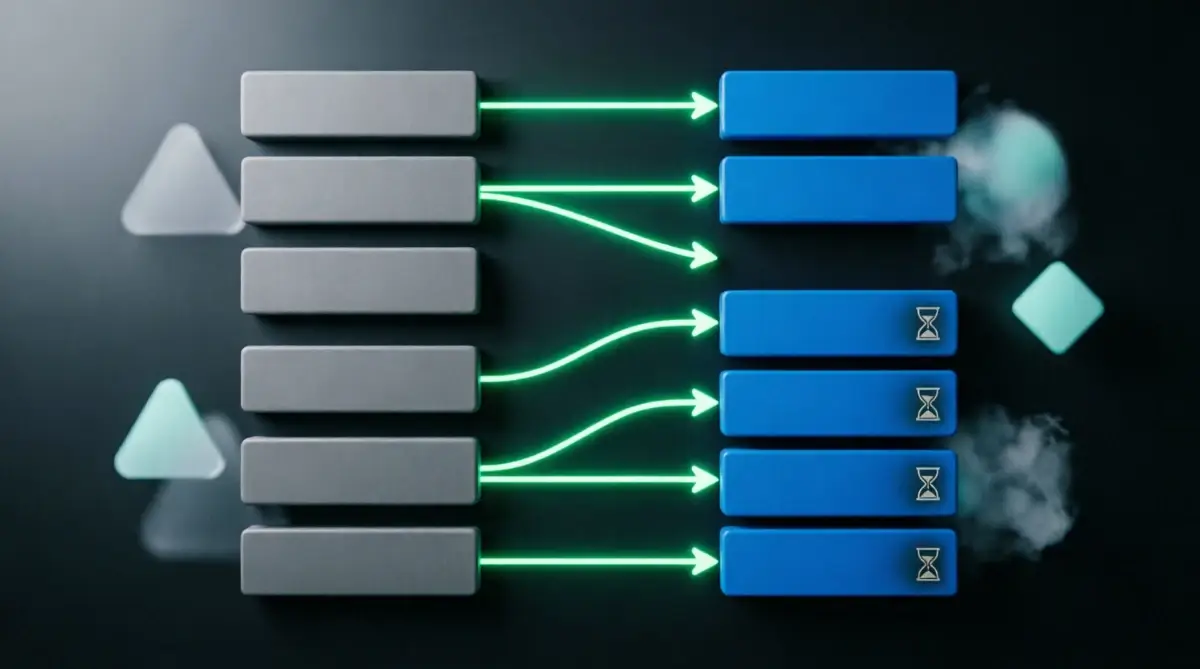
When a site moves, every article receives a new address the old URLs, which the search engine has indexed over many months, now point to the new ones through 301 redirects. Googlebot must revisit each old URL, follow the redirect, fetch the new page, parse its content, and then update its index to replace the old entry with the new one that processing does not happen all at once.
Crawl scheduling allocates resources based on a site’s crawl budget. After a relocation, that budget is temporarily strained because the search engine suddenly needs to reprocess every page on the site. Pages are queued. Some are crawled within days; others wait weeks. Until a page is fully reprocessed, it may not rank at its previous level. The cumulative effect across hundreds of articles is what creates the visible traffic drop. It is not that the site has been demoted; it is that many of its pages are temporarily absent from weakened in the index.
301 Redirects Must Propagate Across the Search Engine’s Infrastructure
The old URLs point to the new ones through permanent redirects. A 301 redirect tells the search engine that the move is permanent and that all ranking signals the authority, the backlinks, the historical user engagement data should be transferred to the new URL. However, this transfer is not instantaneous the infrastructure must process the redirect, verify its permanence, and then apply the signals to the new address.
There is a propagation delay. During that delay, the old URL still holds the accumulated strength, but it no longer serves content directly; the new URL serves the content but has not yet received the full transfer of strength the result is a temporary period where ranking positions can slip. I confirmed this by checking the backlink profile. The old URLs still showed the link equity; the new ones had not yet inherited it. Over time, as the search engine recrawls those backlinks and follows the redirects, the signals migrate. The transition typically takes six to eight weeks for the full transfer to become evident in the search rankings.
Indexation Must Catch Up to the New URL Structure
At first, only a fraction of the new URLs are indexed the rest are in a queue, waiting to be discovered and added. The gap between the old indexation level and the new one is what causes the traffic dip. In my case, the old site had over two hundred pages indexed. After the relocation, the new site’s index started at zero and climbed slowly. I watched the index coverage report daily.
Within the first week about twenty percent of the pages had been indexed. By week three, that number approached sixty percent. By week six, it was over ninety percent. The traffic recovery mirrored that indexation curve almost perfectly. When you see a dip, the first place to check is the index coverage. If the pages are being added steadily, the recovery is underway, even if the traffic numbers have not yet followed.
These Are Technical Processes, Not Judgments on Content Quality
The drop has nothing to do with whether the articles are valuable the content does not change; the addresses do the search engine is not punishing the site it is simply working through the logistics of a major relocation. I remind myself of this repeatedly. There is no manual penalty for moving a site if the redirects are correct there is no algorithm that judges a site harshly simply for moving to a new domain or platform. The decline is mechanical.
The ranking engine needs the new URLs in its index before it can rank them. Once those URLs are indexed and the signals are transferred, the content stands on its own merits again. Understanding this distinction between a technical queue and a quality assessment is what prevents the emotional spiral that leads site owners to make costly mistakes.
These Processes Take Time and Cannot Be Rushed
There is no button to accelerate indexation that force redirect propagation the timeline is set by the search engine’s crawl schedule and the volume of pages being moved. Accepting that speed is not in my control helps me focus on what I can control: the quality of the new posts. I cannot make Googlebot crawl faster. I can, however, submit an updated sitemap, verify the site in Search Console, and use the URL Inspection tool to request indexing for the most important pages.
Those actions help prioritize certain URLs but do not fundamentally alter the overall processing time. For a site with hundreds of pages, a full reprocessing can take two to three months. That is normal. I treat the recovery as a two-to-three-month project, not a two-week sprint. That timeframe turns out to be accurate.
Active Users Climb Back to Near Their Previous Level
Within days of the new month, the active user count can approach the previous level the fact that the number rebounds so quickly after the initial processing delay tells me the traffic was not lost it was briefly displaced. I remember checking the dashboard that week and seeing the active user count cross a threshold that told me the worst was over. I took a screenshot I wanted to capture the moment because I knew that future dips would be easier to navigate with this reference point.
The climb back was not gradual; it happened within a few days, as if a block of indexed pages suddenly started ranking again. That is exactly what likely occurred: a batch of URLs finished reprocessing and appeared in search results, bringing their usual traffic with them.
What That Early Signal Confirms About the Drop Being Temporary
Seeing the user count recover validates the decision to move. The dip is real, but it is a pause, not an ending. That early rebound becomes the evidence I return to whenever doubt resurfaces. If the drop had been permanent if the site had been irreparably damaged the user count would have stayed flat or continued to decline. Instead it reverses direction.
The trajectory changes from downward to upward that reversal is the single most important sign that a relocation dip is temporary. When you see active users, impressions, clicks start to climb again after the initial fall, you have proof that the recovery is in progress the remaining question is not if the traffic will return, but how high it will go.
Month Four’s Active Users Exceed the Pre-Move Peak
By the end of month four, the site reaches more people than it had before the relocation. The growth has not only resumed it has surpassed where it was before the disruption the pre-move peak becomes the new baseline to beat, and the recovery month ends with a count that exceeds that number. That is the definitive proof.
The move has not hurt the site’s long-term trajectory; it has briefly interrupted it, and then the underlying growth trend reasserts itself. I now have two data points the pre-move peak and the post-recovery peak that show an upward slope across the relocation event. The dip, in retrospect, is a notch in a rising line, not the start of a decline.
Session Duration and Bounce Rate Take Longer to Stabilize
While user numbers recover quickly, engagement metrics lag. Some visitors still land on pages that are being reprocessed. That delay is expected, and I watch those numbers improve slowly across the following weeks. Session duration eventually returns to over three minutes, and bounce rate settles back below fifty percent. But that recovery trails the user count recovery by several weeks the lesson here is that not all metrics recover at the exact pace.
Active users and overall traffic tend to rebound first because they depend on indexation, which follows a batch processing pattern. Engagement metrics depend on user behavior, which adjusts more slowly as the search experience normalizes and as returning visitors re-establish their reading patterns. Expecting all metrics to recover simultaneously leads to unnecessary worry. I focus on the leading indicator active users and treat the lagging indicators as confirmations that arrive later.
The Emotional Impact: A Dip, Then Growth Beyond the Previous Baseline
The full picture across the recovery months shows a classic transition curve: a sharp decline, a gradual recovery, and then a new level that exceeds the old one. The data proves the decision to move is correct. Emotionally, that is deeply satisfying. I spend weeks wrestling with the dashboard, questioning whether I made a mistake.
Seeing the numbers surpass the old peak feels like the close of a difficult chapter. The site is not just restored; it is stronger. The relocation was the right call. That experience is now the evidence I rely on whenever I face another decision that involves short-term pain for long-term gain the temporary discomfort is the price of a better foundation, and that trade is almost always worthwhile.
The Difference Between a Relocation Dip and a Permanent Decline
The sequence is identifiable: a drop in active users, a rise in bounce rate, a fall in session duration all beginning at the exact moment of the changeover. If the decline starts at any other point, the cause is likely different. I draw a timeline of any move. The drop begins within twenty-four hours of the DNS switch. The active user graph has a clear inflection point the bounce rate spike and session duration collapse follow the temporal pattern.
This synchronicity is the hallmark of a transition dip a permanent decline, in contrast, often develops gradually or stems from a different trigger a core algorithm update, a manual action, a technical error that accumulates over time. When you overlay the relocation date onto the analytics graphs, the correlation either exists or it does not if it exists, the probability that the move is the sole cause is very high.
A Permanent Decline Often Stems From Unresolved Technical Errors
If redirects are missing if pages return server errors, if Googlebot cannot access the new URLs, the decline may deepen. Those are not relocation dips; they are structural failures that require immediate technical fixes. I check my redirects thoroughly. I use a crawler tool to verify that every old URL returns a 301 status code and lands on the correct new page. I check the server logs for 404 errors and fix any that appear I confirm that the robots.txt file is not blocking the new site.
I ensure that the domain’s DNS settings are correct and that no security certificate issues prevent crawling. These are the checks that separate a temporary dip from a permanent one. If the technical foundation is broken, the recovery will not happen on its own. The traffic will continue to fall because the search engine cannot access or transfer the signals. The dip is then a symptom of a deeper problem, not a temporary processing delay.
The Key Variable Is Whether the Foundation Was Strong Before the Move
A site with valuable content and correct redirects will recover. A site that was already struggling may not. The changeover tests the strength of what was built before the move. If the library is solid, the traffic will find its way back. I spent months before my own platform shift building a library of comprehensive, well-linked articles. That foundation was not affected by the URL change the content remained the the internal linking structure was preserved.
The backlinks, once transferred, would continue to provide authority. The relocation did not erase any of that. It simply required patience for the search engine to rebuild the index with the new addresses. If, however, a site had thin content, few backlinks, a poor user experience before the move, a transition could expose those weaknesses. The traffic might not return to its previous level because that previous level was already fragile. That is an important distinction the move is not the cause of the decline in such cases; it is the event that reveals the underlying condition.
The Single Most Important Factor in a Successful Recovery
Everything else crawl timing, indexation speed, engagement recovery depends on those two fundamentals. If the 301 redirects are properly mapped and the articles remain valuable, the dip is a matter of time, not damage. I make a spreadsheet before every transition. Every old URL has a corresponding new URL. Every redirect is tested. I use a staging environment to verify that each redirect returns the correct status code and delivers the right page.
I check that no redirect chains are created that each old URL points directly to its new equivalent without intermediate hops. After the move, I run a crawl of the old sitemap to confirm that every link returns a 301 and lands where intended. That verification step takes a few hours but gives me confidence that the technical foundation is solid. When the analytics dip begins, I do not panic about broken redirects because I have already confirmed they are working. That allows me to wait through the reprocessing period without second-guessing the technical setup.
On the content side, I have already committed to a consistent publishing schedule before the transition and maintain it throughout the articles being published are not rushed; they are the quality I have always aimed for. The combination of correct redirects and strong content is not just the most important factor it is the only factor that you can control, and it is sufficient.
Continue Publishing at the Same Pace Without Letting the Dashboard Dictate Emotion
I do not slow down to wait for the traffic to return. I keep the publishing rhythm consistency, knowing that each new article adds to the growing library and gives Googlebot fresh reasons to crawl the site. The work continues, regardless of what the analytics show. This is the hardest part. When the numbers are low, the temptation to pause and “fix” things is strong. But pausing publishing is counterproductive.
A site that goes silent after a move tells the search engine that the site is less active, which can reduce crawl frequency. By continuing to add new content, I maintain the crawl rate and signal that the site is still a living, updated resource. Each new article creates new internal links to older posts, which helps the search engine discover and recrawl those pages on the new platform.
The publishing rhythm serves as an engine that drives the recovery forward, even when the traffic numbers have not yet caught up the daily practice of showing up to publish, even when the analytics dashboard looks discouraging, gives me the consistency to keep the site alive through the drop that consistency is what I credit most for the eventual full recovery.
I use the low-traffic period as an opportunity to improve existing articles. With the transition behind me, I audit the older posts for broken internal links that may point to old URLs and update them. I refresh outdated information I add new subheadings to improve readability that work is not urgent but it is productive.
It keeps me engaged with the library without obsessing over the visitor count. And it means that when the traffic does return, the site is in better shape than before protecting the daily publishing habit even when the dashboard shows low numbers, is what ultimately carries this site through the low‑traffic weeks.
Interpreting the Rebound So the Next Move Is Less Stressful
When active users return to near-normal levels in a single week, I treat that as confirmation that the infrastructure is working. That evidence gives me a reference point for any future platform changes. The first strong week after a changeover is a pivotal moment. It can be dismissed as a fluke, it can be accepted as proof that recovery is underway. I choose to accept it I look at the composition of that week’s traffic where it comes from, which pages it lands on, how long it stays.
The pattern matches the pre-move profile the similar countries but the entry pages and the search terms. That consistency tells me it is not random noise; it is the normal traffic returning. By marking that week as a milestone, I create a fixed reference point. If traffic dips again in the following weeks, I can compare it to the recovery week rather than to the pre-move peak. That smaller reference window makes fluctuations easier to interpret.
Understanding That Full Engagement Recovery Lags Behind Visitor Count
User numbers come back first reading time and interaction patterns follow later. Knowing that sequence in advance prevents the false conclusion that a slow engagement recovery means the relocation failed. I have observed this lag in other case studies. The technical reason is that engagement metrics are more sensitive to user behavior and search snippet accuracy. When a page is newly indexed, its search snippet might not display the optimal title and meta description, leading to clicks from less-targeted visitors who leave quickly.
Over time, as the snippet stabilizes and as the page re-accumulates user interaction signals, engagement metrics improve. This can take an additional four to six weeks beyond the initial traffic recovery. Understanding this sequence allows me to watch the engagement numbers improve without anxiety I know they will catch up and they do.
Practical Steps to Take Before, During, and After a Platform Change
I create a complete spreadsheet of every article URL and its planned new address. That document becomes the blueprint for the 301 redirects. Without it, redirects become guesswork, and the recovery timeline stretches. The mapping process itself takes several hours. I export the old site’s sitemap, extract every URL, and then plan the new URL structure to match as closely as possible while removing the date stamps that had been baked into the old platform for each old URL, I write the exact new URL.
I then cross-check the list to ensure no two old URLs point to the exact new address, which would create a redirect chain I identify pages that will not be moved those that needs to be improved or outdated and plan to let them return a 410 Gone status instead of redirecting them. This spreadsheet is not optional; it is the foundation of the entire transition mapping every old URL to its new address in a single spreadsheet gives me the control I need to ensure no article is left behind.
Implement 301 Redirects, Not 302 Temporary Ones
Temporary redirects tell search engines the move is not permanent, which stalls the transfer of ranking signals. I ensure the redirects are configured as 301 from the start, and I later audit to catch any 302s that slip through. The difference between 301 and 302 is critical. A 302 redirect keeps the old URL in the index and does not pass link equity to the new one. A site relocation that uses 302s will see a permanent traffic loss because the ranking signals never transfer.
I use a redirect plugin on the new platform to manage the mapping, and I configure it to return 301 status codes. After the move, I run a batch check using a command-line tool to verify that each old URL returns a 301. I find any URLs that have been accidentally set as 302 and correct them immediately that audit prevents a small oversight from becoming a significant drag on recovery.
Monitor Crawl Stats Daily for the First Two Weeks
I watch how often Googlebot visits, which pages it crawls, and whether any server errors appear. Those crawl stats give me an early view into whether the search engine is processing the new structure smoothly. Crawl stats are available in Search Console. I check them every morning. I look at the total crawl requests per day, the breakdown by response code, and the list of pages Googlebot is actively fetching. In the first few days, crawl activity is high as the search engine discovers the new URLs and follows the redirects.
Then it settles into a consistent pace I pay attention to any spikes in server errors (5xx) or not-found errors (404). A spike indicates a misconfiguration that needs immediate attention. The crawl stats also show the average page fetch time, which tells me if the new hosting environment is performing well. By monitoring these metrics, I can diagnose problems before they affect rankings, and I have concrete data to reassure myself that the technical transition is proceeding as planned.
Keep Publishing New Content to Signal That the Site Is Active
A site that goes after a platform shift gives search engines less reason to crawl. By continuing to add new articles, I keep the crawl frequency high and demonstrate that the site is still a living project. I treat a site’s publishing rhythm as a signal of vitality. A site that publishes regularly tells the search engine that it is actively maintained, that its content is current, and that crawl resources are well spent. After the transition, I maintain the consistent publishing frequency as before several articles per week.
That consistency means that Googlebot continues to visit frequently, which helps the indexation of the new URLs proceed faster each new article links internally to older posts, creating crawl paths that the search engine can follow. That internal linking network is a powerful tool for encouraging the recrawling of pages that might otherwise be lower in the queue. The step‑by‑step action checklist I created for a previous technical relocation became the strategy I followed to keep this site’s move orderly, and publishing is a non‑negotiable item on that list.
Avoid Making Further Major Technical Changes During the Recovery Window
I resist the temptation to tweak the theme, change URL structures again, install new plugins. Stability during the recovery period allows search engines to complete their work without fresh variables complicating the process. Once the transition is done, I treat the site as a stable entity for at least three months. I do not change permalink structures. I do not redesign the navigation.
I do not move the site to a different hosting provider any of those changes would reset the indexation clock and introduce new redirects that the search engine would have to process. The recovery window is a time for patience and minimal technical interference. The only changes I make are content updates improving existing articles and publishing new ones. Those changes are positive signals that do not disrupt the underlying structure. By keeping the technical environment stable, I allow the search engine to complete the reprocessing without distraction.
The Long-Term Gain That Makes the Temporary Drop Worthwhile
The old platform had automatically embedded dates in every post URL. Removing those stamps was essential for creating articles that could remain relevant years from now. The transition made that possible. The old URL structure included the year and month of publication in the path, which immediately dated the content. Even if the article was regularly updated, the URL suggested it was old when I moved to the new platform, I redesigned the URL structure to contain only the slug.
This was a deliberate choice for long-term value an undated URL allows the article to be refreshed and republished without changing the address, preserving any accumulated backlinks and ranking signals. The relocation was the only practical moment to make this change, and it was a key driver behind the decision to move. The temporary traffic dip was, in part, the cost of converting dozens of dated URLs into evergreen ones.
Full Control Over Site Architecture and Performance
The new platform gave me the ability to manage caching, optimize page speed, and structure the site exactly as I wanted. That control directly improves the user experience and crawl efficiency. On the old platform, I was limited in how I could optimize the site. I could not install a caching plugin, fine-tune the server configuration, choose a lightweight theme the self‑hosted platform gave me full control.
I implemented page caching, browser caching, and image optimization. I cleaned up the code by removing unnecessary scripts. I restructured the internal linking to be more intuitive. All of these changes contribute to a faster, more reliable site. Page speed improvements that came with the new platform are not just nice to have they become a permanent ranking factor that outlasts the temporary traffic drop and the gain in performance is measurable and lasting the relocation was the necessary step to unlock these improvements.
Improved Page Speed as a Lasting Ranking Signal
The move allows me to reduce load times significantly faster pages benefit both visitors and search engine crawl budgets, contributing to better long-term visibility. I measure the page speed before and after the transition using PageSpeed Insights. The old site scored in the orange range; the new site consistently scores in the green. That improvement is achieved through a combination of factors: better hosting, caching, optimized images, and a cleaner codebase.
The faster load time reduces bounce rate, increases session duration, and allows Googlebot to crawl more pages within the allocated crawl budget. These are compounding benefits. Every month that the site remains fast, it gains a small ranking advantage that accumulates over time the temporary dip has been repaid many times over by the ongoing performance of the faster site.
A Platform That Can Scale Without Restriction
The new setup removes the limitations of the old platform I can now add features, customize the design, and build the site without artificial ceilings. That flexibility is worth the temporary disruption. The old platform had constraints that would have become increasingly problematic as the library grew. There were limits on what I could do with the theme, which plugins I could use, and how I could structure the content. Those limitations were not urgent, but they were becoming more noticeable.
The changeover removed all of them. I now have a platform that can grow with the site. I can add custom post types, improve the search functionality, and implement advanced performance optimizations. The move was an investment in future capability, not just a fix for current problems the weekly backup and maintenance routine I still follow gives me the confidence that even if something goes wrong during any future change, no content will be permanently lost, and that routine now protects the scalable platform I have built.
The Dip Is the Price of a Stronger Foundation
I pay for the relocation in weeks of reduced traffic what I receive in return is a platform built for the next several years. That exchange, in hindsight, is one of the best decisions I make for this site. Every site owner who considers a move must weigh the temporary cost against the permanent gain. The cost is measurable: a dip in traffic, a period of uncertainty, an amount of time and effort spent on technical setup.
The gain is also measurable, though it unfolds over a longer period: faster page speed, cleaner URLs, better performance, and unlimited scalability. My experience is that the gain far outweighs the cost, provided the move is executed correctly the dip is the admission price to a stronger future. Paying it is not pleasant, but it is strategic.
If the Content Is Strong and the Redirects Are Correct, the Traffic Returns
The numbers from the recovery months prove this the drop is measurable, the recovery is observable, and the final state exceeds the starting point. That sequence is not guaranteed it is earned through correct technical execution and the refusal to abandon the library during the difficult weeks. The blog you are reading now exists on its current platform because of that decision. I do not stop publishing when the dashboard shows difficult numbers.
I do not reverse the move when the bounce rate spikes I trust the technical work I have done and the value of the articles I have written. That trust is rewarded with a full recovery and then growth the familiar feeling of pressing publish on a first blog post while feeling nervous is what I return to during any change doing the work when the outcome is unknown.
A platform shift dip is a test of patience and a test of the site’s technical foundation. It is not a verdict on the content. It is not a sign that the site is permanently damaged. It is a temporary phase with a predictable pattern. By understanding the technical reasons behind the drop, by monitoring the right signals, and by continuing to publish valuable content, any site owner can navigate a move without panic the data I have shared here is the evidence. The drop happened. The recovery followed. The site is stronger now because of the change that is the outcome that the temporary dip was always building toward.