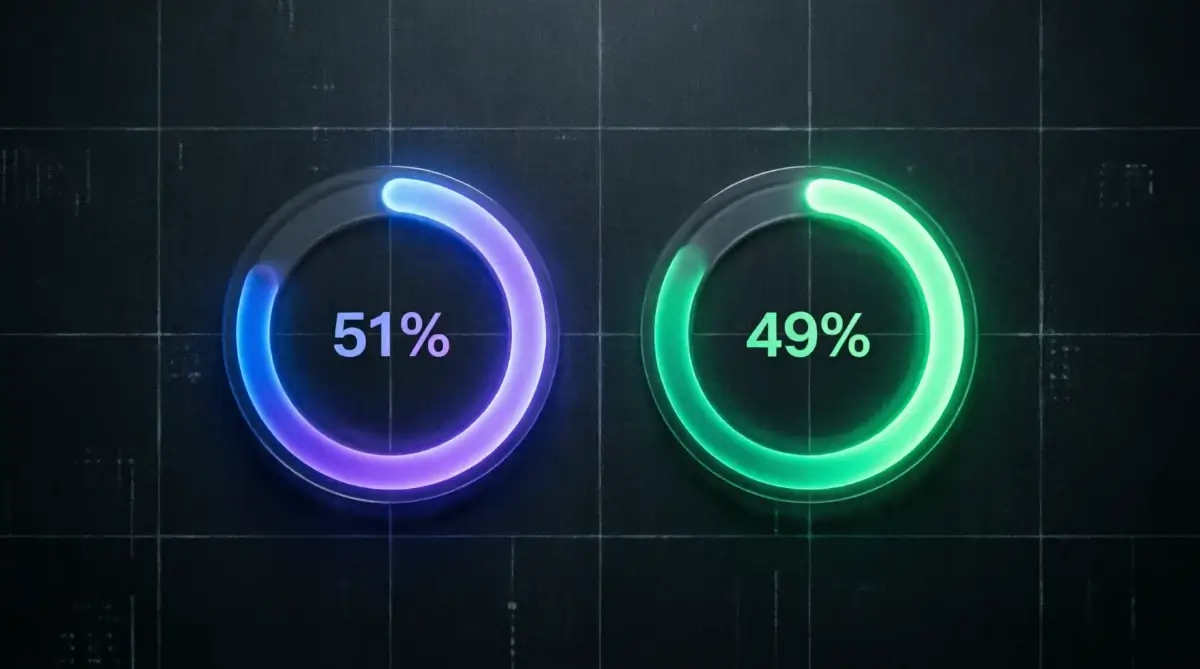
A crawl budget that is growing is encouraging but a crawl budget that is balanced split almost evenly between discovering new content and refreshing existing pages is the real signature of a healthy, trusted content structure I watched the numbers in the search engine’s reporting panel, and what stood out was not the total volume of daily requests it was the ratio: 51% Discovery, 49% Refresh.
That near‑perfect split did not appear by chance it is the direct, measurable outcome of a specific daily publishing cadence, sustained over many months, that feeds both sides of the scanning equation with equal consistency. Understanding what this split reveals, how it can be engineered, and how to protect it is the purpose of this article. I will walk through the mechanics of each crawl type, the publishing velocity that produced the balance, the consequences of imbalance, and the technical infrastructure that keeps the budget efficient.
Unpacking the Two Numbers That Define Crawl Health
The activity report in the search engine’s dashboard offers many data points, but two figures summarize the entire relationship between the site and the indexing infrastructure. Discovery visits and Refresh visits are not just categories; they are the twin engines of indexation and visibility. When they operate in balance, the digital asset is in its healthiest state. When one overshadows the other, structural problems begin to accumulate, often invisibly, long before visitor metrics reflect the damage.
Discovery at 51%: The Share of Visits Seeking New URLs
Discovery visits are the mechanism by which the search engine’s bot finds pages it has not indexed before every new article I publish eventually triggers a discovery visit a check on a previously unknown URL. A healthy discovery percentage means the search engine is actively looking for fresh content on the site, allocating a portion of its finite attention to expand the indexed footprint.
At 51%, discovery is neither starved nor overfed it tells me that the publishing of new articles is being noticed and rewarded with attention. The search engine has learned that this site adds content on a predictable rhythm, and it schedules discovery checks to match that rhythm. If that number were to drop significantly, it would mean new articles are waiting longer to enter the index, delaying their visibility if it were to climb too high, it would suggest the site is producing new pages at a rate that overshadows maintenance of the existing library.
You can find your own discovery percentage in the search engine’s reporting panel, under the crawl stats report. It will be one of the two primary categories displayed alongside the refresh figure. Seeing a number close to 50% indicates that your site’s value is being properly recognized.
I want to add more detail on how the split is calculated and how a site owner can interpret it. The discovery and refresh percentages are simply the share of total crawl requests that fall into each category over a given period usually a month in the reporting panel, these numbers are presented side by side.
If you see, for example, 60% discovery and 40% refresh, you know that the search engine is spending more effort hunting for new pages than maintaining existing ones. That might be fine for a site that is aggressively expanding, but over the long term, it risks allowing older content to decay. Conversely, a 40/60 split warns that new content is being starved.
One practical step you can take is to download the crawl stats data for the past three months and chart the ratio. Look for trends. If the discovery percentage has been gradually declining, it may be a leading indicator that your publishing frequency has slipped without you noticing. If the refresh percentage has dropped, it could mean you’ve been neglecting content updates. These trends often appear weeks before traffic numbers change, giving you a valuable early warning.
I learned to monitor the split weekly, not daily fluctuations can be misleading a single batch of new URLs can temporarily spike discovery, only to revert the next day. The monthly average smooth out that noise and reveals the genuine structural trend. When I first started tracking the split, I kept a simple spreadsheet: one column for the date, one for discovery percentage, one for refresh. Over three months, the line steadied and then settled at 51/49. That visual record removed the emotional reaction to daily variance and gave me a data‑driven picture of the crawl relationship maturing.
Refresh at 49%: The Share of Visits Revisiting Existing Pages
Refresh visits are the counterpart to discovery they are the checks the bot makes on pages already in the index, looking for revisions, additions, corrections. A strong refresh rate signals that the search engine considers the existing library worth monitoring regularly. It treats the pages as living documents that may evolve, rather than static entries that can be indexed once and archived.
At 49%, refresh visits nearly equal discovery visits that parity tells me the search engine is spending almost as much effort verifying and updating its representation of older articles as it is exploring new ones. This is a powerful trust signal. It means the search engine believes the content is worth keeping current, that the information is likely to change in meaningful ways, and that the site is a curated resource rather than a neglected archive.
I fed the refresh rate during the build‑up period by updating three older articles every day those updates tightening language, adding new sections, correcting outdated references signaled to the search engine’s bot that the library was alive. The search engine responded by returning frequently to check on those pages, maintaining their freshness signals and preserving their standing in search results not every update was a major rewrite. Often, I would improve a single section that replace an outdated example.
The consistency of small improvements, aggregated over many articles, proved more effective than an occasional large overhaul. The bot learned that this site’s content was in a state of continuous refinement, which made the refresh allocation sticky.
Why the Split Matters More Than Total Volume
A high total request count with a lopsided split can hide significant problems. If total activity is rising but discovery dominates heavily, the site may be churning out new content while older pages fade from the active index. If refresh dominates, new content may wait weeks to be indexed, and the site’s topical footprint stalls. Raw volume is a quantity metric the split is a quality metric.
The 51/49 balance tells me that neither side of the equation is being neglected. It is a structural indicator that the digital asset is both expanding and deepening simultaneously. A site that only grows may look impressive in terms of total pages, but it lacks the depth that builds long‑term authority. A site that only maintains may have a polished library, but it will gradually lose relevance as new topics emerge. The balance is proof that both functions are operating at full capacity.
If you check your own stats and see a lopsided ratio, it is a clear signal to adjust your publishing and maintenance habits. You can use the split as a weekly diagnostic: if discovery dips, increase new article output; if refresh declines, schedule more content updates. I treat the split as a dashboard dial when it moves, I respond, not with panic, but with a deliberate tweak to my weekly plan. For example, if refresh drops to 45%, I know I have been leaning too heavily on new content and need to dedicate more time to updates. This practice turns a vague metric into an actionable management tool.
The 51/49 Split as a Signature of a Living, Respected Library
When the search engine’s crawler splits its attention almost evenly between finding new pages and checking existing ones, it is treating the site as a dynamic, trusted resource. That status is not granted by request; it is earned through consistent, observable behaviour over months. The search engine’s algorithms are designed to identify sites that are actively maintained, regularly expanded, and technically reliable. The 51/49 split is the evidence that those algorithms have classified this site correctly.
A living library is one that evolves new volumes are added to the collection. Existing volumes are updated, corrected, and improved. The search engine’s behaviour reflects which category a site belongs to a living resource that balanced split places this site firmly in the second category. That classification affects everything: how quickly new pages rank, how well old pages hold their positions, and how resilient the site is to algorithm shifts.
I compare this to a community library if the librarian notices new books appearing weekly and older books being dusted and repaired, the library earns a reputation for being well‑run. The search engine’s bot is that librarian. It visits, observes, and allocates attention based on what it finds. The balanced split is the search engine saying, in effect, this library is both growing and maintained I will keep coming back.
How Crawl Stats Became My Health Dashboard for the Entire Site
I now glance at the discovery‑refresh ratio before looking at traffic and rankings if those two numbers are in equilibrium, I know the underlying relationship with the search engine is solid, and every other metric can build on that foundation. Traffic can fluctuate for reasons beyond my control. Rankings can shift with algorithm updates. But the activity split reflects something deeper: the search engine’s structural commitment to the site.
That commitment is the prerequisite for everything else. Without it, new articles languish unindexed. Old articles lose their freshness signals. The entire visibility engine stalls. The split is the leading indicator that tells me whether the foundation is intact. If it is, I can weather short‑term traffic dips with confidence. If it drifts, I know to investigate before the damage cascades into the metrics that visitors see.
I have made this check part of my Monday routine. I open the reporting panel, note the split, compare it to the previous week, and only then move on to traffic and rankings. This sequence ensures I never mistake a surface fluctuation for a structural problem.
The DNS propagation timeline that once caused a scanning delay taught me that the search engine’s attention is sensitive to technical transitions that experience sharpened my focus on the activity stats as a real‑time health indicator.
Understanding Each Side of the Crawl Equation
Discovery and Refresh are often discussed as if they are two separate, unrelated processes. In reality, they are two halves of a single attention budget, competing for the same finite resource: the number of requests the search engine allocates to the site each day. Understanding what each side does, and how they interact, is essential for managing crawl health effectively.
Discovery Visits: The Mechanism That Brings New Articles Into the Index
Every time the bot encounters a fresh URL, it performs a discovery visit. This is the only way a new article can enter the index and become eligible to appear in search results. Without discovery visits, a site’s content would remain invisible, no matter how valuable it is.
A consistent discovery visits means new articles are indexed quickly often within hours of publication. That speed is not automatic. It is the result of the search engine learning, over time, that this site publishes new content on a predictable schedule the more reliable the publishing consistency, the more frequently the search engine schedules discovery checks. The 51% discovery rate is, in effect, the search engine’s acknowledgment that it expects to find something new each time it checks.
I think of discovery as the engine of expansion each new article that enters the index becomes a potential entry point for a visitor, widening the site’s search footprint. A healthy discovery rate ensures that the library continues to grow its topical coverage, answering more queries and attracting new audiences to sustain discovery, I make sure each new article links internally to several older pages.
Those internal links create crawl paths that the bot can follow, distributing discovery budget across the library. Without those links, new articles would be isolated endpoints; with them, each new publication becomes a doorway into the broader collection.
Refresh Visits: The Process That Keeps Older Pages Current
Refresh visits are the maintenance mechanism when the bot returns to a page it already knows, it checks whether the content has changed since the last visit. If it finds improvements deeper explanations, updated examples, corrected information it updates the search engine’s index to reflect the new version.
A strong refresh rate signals that the search engine values the existing library enough to monitor it regularly pages that are never refreshed may still be indexed, but they lose the freshness signals that help them compete with newer resources on similar topics. Refresh visits prevent that decay. Each time the bot sees that an article has been improved, it reinforces the page’s relevance and authority.
I drove refresh activity during the critical build‑up months by updating three older articles every day. That daily maintenance routine ensured that a significant portion of the library was actively evolving, not sitting static. The search engine noticed that pattern and allocated refresh attention accordingly. I prioritized articles based on traffic and strategic importance: pages that drove the most visitors received updates first, ensuring the highest‑value content stayed fresh. That selectivity made the refresh budget work harder, because improvements on key pages had an outsized effect on the site’s overall performance.
How Discovery and Refresh Compete for the Same Attention Budget
A site’s attention budget the total number of requests the search engine will make in a given period is finite the allocation is determined by signals of site quality, popularity, and freshness. Within that budget, discovery and refresh visits compete for resources. If too much of the budget is consumed by discovering new URLs, fewer resources remain to check on existing pages. If refresh dominates, new articles may wait in a queue.
The art of managing this budget is not about maximizing one side at the expense of the other. It is about keeping them in a productive tension where neither starves. The 51/49 split represents that equilibrium. Both functions have enough resources to operate effectively, and neither is overwhelming the other.
The competition between discovery and refresh for the exact finite budget is often misunderstood. Some site owners believe that simply publishing more will increase total crawl activity, but the budget is not unlimited. The search engine allocates a certain number of requests based on its assessment of the site’s authority and freshness.
If you double your publishing output without increasing the site’s overall authority, you may simply shift budget from refresh to discovery, causing the refresh side to suffer. This is why I emphasize balance. The 2‑new‑3‑update cadence I used during the build‑up phase was designed to work within the existing budget, feeding both sides without overwhelming either.
If you want to test how your own budget responds, you can run a controlled experiment. For two weeks, maintain your normal publishing schedule but add one extra update per day to older articles. Monitor the split. Then, for the next two weeks, return to your baseline and add one extra new article per day instead. Compare the ratios this kind of deliberate testing can reveal how sensitive your site’s crawl allocation is to your actions.
The Sweet Spot Where Both Functions Thrive Simultaneously
At 51% discovery and 49% refresh, the search engine is receiving enough new URLs to justify frequent visits while the existing library is proving it deserves ongoing attention. That sweet spot is not a static destination; it must be actively maintained through consistent publishing and updating habits. If new articles paused for a week, discovery would dip. If updates stopped, refresh would decline. The balance is delicate only if the habits that produce it are inconsistent when the cadence is reliable, the balance becomes the natural, stable outcome.
The internal linking strategy I designed connecting every new article to relevant older pages is one of the ways I kept Refresh visits active. The bot follows those links and re‑evaluates the pages it finds, sustaining the refresh side of the split I found that the anchor text used in those internal links mattered. Descriptive, varied that gives the bot richer signals about the linked page’s content, which can improve its relevance for those topics that extra layer of refinement is a small optimization, but when applied across hundreds of links, it contributes to a healthier crawl profile.
The Consequences of an Imbalanced Split
The 51/49 split is a health report, and like any health report, it contains warnings. An imbalance in either direction signals an underlying problem that, if left unaddressed, can erode the site’s search visibility over time. Understanding the consequences of skewing too far toward discovery is what motivates me to monitor the split weekly.
When Discovery Dominates: Old Content Fades From the Active Index
If discovery climbs too high say, 70% and more of total requests the search engine is mostly chasing new articles and spending less time refreshing existing ones. New content floods the index while older pages receive fewer and fewer visits. Over time, those older pages begin to lose their freshness signals. The search engine’s index may still contain them, but they are no longer treated as actively maintained resources their rankings can slip, and some may drop out of the active index entirely.
The library becomes a leaky bucket new articles pour in at the top, but existing articles drain away at the bottom. The total indexed footprint may stay constant even shrink despite aggressive publishing, because the gains are offset by losses. The site never accumulates lasting authority because the content that built its reputation is allowed to decay.
I guarded against this by ensuring that my publishing cadence during the formative period included a substantial update component the three articles I refreshed daily were the counterweight that prevented discovery from overwhelming the attention budget. I also monitored the average age of pages in the index. If that number started creeping up, I knew I was leaning too heavily on new content and risking decay in the archive.
When Refresh Overwhelms: New Content Takes Longer to Appear
A heavily skewed refresh rate say, 70% means the search engine is spending most of its budget checking pages that have not changed while new articles wait in the indexation queue. Publication momentum stalls. Articles that should appear in search results within hours instead wait weeks to be discovered the site can feel stagnant to both search engines and users, because it appears to have stopped expanding.
This imbalance can occur when a site owner focuses entirely on maintaining an existing library, perhaps polishing old articles endlessly, without adding new material. The search engine, observing that no new URLs are appearing, may reduce the overall attention budget over time, further compounding the problem. A site that only maintains is a site that is not growing, and in the fast‑moving search landscape, stagnation eventually turns into decline. I have seen sites that were once authoritative gradually lose visibility because their content, while accurate, was no longer expanding to cover new questions the crawl split is the early warning that prevents that drift.
The 51/49 split protects against both dangers it ensures that the library is both a growing collection and a well‑maintained one, with neither function sacrificed to the other. You can check your own split to see if either risk is present. If you notice a drift, you can decide to adjust your publishing focus accordingly. Think of it as a rudder: small corrections early keep the ship on course; waiting until traffic drops means you are already far off track.
The Publishing Strategy That Created the 51/49 Split
The balanced activity split did not emerge from abstract strategy or wishful thinking. It is the direct result of a specific, daily publishing cadence that I followed without exception during the months that built the library’s crawl reputation. Two new articles and three updated articles, every single day. That rhythm fed both sides of the scanning equation with equal consistency, and the search engine’s data simply mirrored the work.
Two New Articles Daily to Feed the Discovery Engine
During that intensive period, I published two brand‑new articles every day that reliable rhythm gave the search engine’s bot a constant stream of fresh URLs, keeping the discovery activity and ensuring the site never ran out of new entry points for readers.
Publishing two articles daily required a system I did not wait for inspiration to strike; I treated writing as a scheduled task, like any other form of work. Each article was planned, drafted, and polished within a defined window, and the output was consistent regardless of how I felt on a given day. The search engine does not care about mood. It cares about the pattern when the pattern held two new URLs appearing every day without fail the discovery rate remained elevated and stable.
The two‑article pace ensured that the site’s topical coverage expanded continuously. Each new piece addressed a specific question widening the net that catches search traffic. Over weeks and months, that consistency compounded into a significantly larger search footprint, and the discovery rate reflected the search engine’s interest in exploring that expanding territory.
If you choose to experiment with a similar cadence, start with a smaller, sustainable version. Perhaps one new article and one update per day. Monitor how the discovery percentage responds in the reporting panel over a few weeks. You can then gradually increase output if your schedule allows, always watching the split to ensure neither side is starved.
The 2/3 strategy was not static; it evolved in the very early days, I started with a smaller volume perhaps one new article and one update daily. As the site gained traction and the search engine began to recognize the pattern, I scaled up to the 2/3 rhythm. The key was consistency at whatever level I could sustain you do not need to match the 2/3 volume what matters is the regularity.
A site that reliably publishes one new article and updates one older article each day will, over time, earn a stable crawl split. The balance will reflect the proportion of effort you put into each activity. If your split is 60/40, that still tells you something valuable it shows the search engine is noticing your emphasis on new content.
Three Old Articles Updated Daily to Drive Refresh Activity
At the time I revisited three existing articles every day. The updates varied. Some days, I tightened language shortening sentences, clarifying explanations, removing unnecessary words. Other days, I added entirely new sections, incorporated more recent examples, improved the structure of subheadings. The goal was not to make cosmetic changes but to make each article substantively better than it was the day before.
Each update signaled to the search engine’s bot that the older pages were alive and evolving. When the bot returned and found that the content had been deepened it updated the search engine’s index, preserving the page’s freshness signals and, in many cases, improving its relevance for associated queries. That refresh activity is what sustained the 49% refresh rate without it, the attention budget would have tilted heavily toward discovery, and the older library would have begun to stagnate.
The three‑article update routine served as a quality audit. By revisiting older content regularly, I caught outdated information, broken internal links, unclear passages that might otherwise erode reader trust. The updates benefited visitors directly while simultaneously feeding the signals that keep the search engine engaged.
You can apply the maintenance routine pick a small number of older articles each week perhaps three to five and improve them meaningfully track whether the refresh percentage in your stats begins to rise over the following month this direct cycle makes the abstract concept of crawl health tangible.
I want to emphasize that the updates need to be substantive. Simply changing a word or adding a comma does not signal meaningful maintenance. The search engine can detect trivial changes and may not treat them as a genuine refresh. Aim for improvements that a reader would notice: added depth, clearer explanations, updated data, new examples.
That quality of update is what earns the refresh budget I often used a simple checklist: did this edit add new information, clarify a confusing point, improve readability? If none of those applied, I dug deeper until the change was worthwhile.
How Daily Actions Compound Into a Balanced Crawl Budget
The 51/49 split is not the result of a single decision a one‑time optimization it is the compound effect of daily actions small, consistent, and unglamorous that accumulated over months into a pattern the search engine recognized and rewarded. Understanding the mechanics of this compounding is what makes the balance sustainable.
The Predictable Rhythm That Trains the Search Engine’s Expectations
By following the cadence every day two new articles, three updates I created a pattern the search engine could rely on the bot is not a static system; it learns from observed behaviour and adjusts its schedule to match. When new URLs appeared at a predictable frequency, the search engine scheduled discovery checks to align with that rhythm. When existing pages were revised on a similarly predictable schedule, it scheduled refresh checks accordingly.
That learned anticipation is what sustained the scanning rate over time. The search engine was not guessing when to visit; it was following a schedule that the site’s behaviour had trained. The more consistent the pattern, the more firmly entrenched that schedule became. If the pattern broke if publishing became sporadic and updates stopped the bot’s learned expectations weakened, and the rate could drift downward. The predictability of the rhythm was what made it robust. I treated each day’s publishing as a non‑negotiable appointment the way someone might treat a meal or a workout. That discipline removed decision fatigue and turned output into an automatic routine.
Why Both Discovery and Refresh Must Be Active, Not One or the Other
If I had only published new articles, refresh activity would have dwindled. The search engine would have observed that the existing library was static and allocated less budget to re‑checking it. If I had only updated old posts, discovery would have stalled. The search engine would have seen no new URLs and reduced the attention for running both streams simultaneously was what kept the split near 51/49 and prevented either side from falling behind.
The dual cadence was not two separate strategies; it was a single integrated system. The new articles provided the fresh content that attracted discovery checks. The updated articles ensured that the existing library remained actively maintained together, they signaled to the search engine that the site was both growing and cared for a combination far more powerful than either alone. I sometimes visualized it as breathing: discovery was the inhale, bringing in new material; refresh was the exhale, circulating through what already existed both were necessary for the organism to live.
The Direct Link Between the 2/3 Strategy and the 51/49 Outcome
The numbers were not a coincidence publishing two new articles and updating three older ones each day meant I fed both sides of the attention budget with roughly equal consistency. The discovery rate naturally settled around 51% because the two new daily URLs provided a strong but not overwhelming new content the refresh rate settled around 49% because the three daily updates gave the search engine a reason to revisit existing pages without those updates becoming the sole focus of attention.
The ratio emerged from the proportion of effort I allocated to each activity. If I had shifted to three new articles and two updates, the split would have tilted toward discovery. If I had reversed the ratio one new article and four updates refresh would have dominated. The 51/49 balance was not a mystical target; it was the mathematical reflection of a deliberate allocation of time and attention.
The cannibalization safety record I built before each article during that period ensured that no two pages competed for the same query that pre‑writing discipline prevented the attention budget from being wasted on redundant content, keeping the split efficient I would check the existing library for any article that already covered the Intent of an older content existed, I would either update that page instead of publishing a new one I would ensure the new article took a distinct angle that added net new value.
Maintaining the Cadence Even When Metrics Don’t Yet Show Results
I stuck with this pattern through the still early months, long before the scanning rate began to climb. During that period, the search engine was still learning about the site. Activity was modest. Traffic was minimal. There was no visible reward for the daily effort. But the cadence did not depend on visible rewards it was a habit, not a reaction to data.
The balance is the result of sustained, consistent work, not a spike of activity after a panic. If I had waited for the metrics to justify the effort, I would never have built the pattern in the first place. The split is the lagging indicator of months of showing up and doing the work without immediate feedback. That is why the balance is so durable it is built on a foundation of habit, not on a burst of motivation.
The compounding effect is not always linear there were weeks when the split seemed stuck at 55/45, and I questioned whether the 2/3 ratio was correct. But I stayed with it, and over the following month, the numbers gradually shifted toward 51/49. Patience during those plateaus is part of the discipline. The search engine’s algorithms don’t react instantly; they require sustained evidence before adjusting crawl allocation. If you make a change to your publishing velocity, give it at least 4–6 weeks before evaluating the impact on the split.
I also tracked the split alongside another metric: the total number of pages indexed. When the split balanced, the indexed count remained stable even as I published new content, indicating that old pages were not dropping out. That’s another confirmation you can look for in your own reporting panel if your indexed page count stays consistent that grows while the split is balanced, your library is both expanding and being maintained that stability is the true reward: a growing, permanent collection that the search engine keeps fully active.
The Core Truth Behind the Numbers
The most important thing to understand about the 51/49 split is that it was not accidental. It did not appear because the search engine randomly decided to distribute attention in a balanced way. It appeared because a publishing system produced equal signals of growth and maintenance, day after day, without interruption the activity data was simply the search engine’s honest reflection of that system.
The 51/49 Split Is Not Accidental It Is Engineered Through Consistent, Deliberate Action
I did not stumble into this balance it was built one day at a time by treating both new content creation and content maintenance as equal priorities. The search engine’s algorithms do not reward cleverness or short‑term bursts they reward patterns long, unbroken chains of consistent behaviour that demonstrate reliability, trustworthiness, and sustained value.
Every new article I published during that period told the search engine that the site was growing. Every old article I updated told the search engine that the site was being maintained. The 51/49 split was the search engine’s way of saying that it had received both messages, understood them, and responded with a balanced allocation of scanning resources that response was not a favour it was the logical outcome of sending clear, consistent signals over an extended period.
The lesson I carry from this experience is that crawl health is not mysterious. It is not governed by factors outside my control. It responds directly to the actions I take. The balanced split is proof that deliberate action, sustained over time, produces measurable, structural results. That proof is what gives me the confidence to continue maintaining the library, knowing that the search engine watches, learns, and responds exactly as expected.
The discipline of showing up every day to publish and maintain content during that intensive build‑up phase was the load‑bearing habit that turned a collection of posts into a trusted digital asset.
Technical Infrastructure That Protects the Balance
The publishing cadence produces the signals that earn attention. But the technical infrastructure determines whether that attention is used efficiently a site can produce excellent content, but if the server returns errors, the URLs are tangled in redirect chains, the crawl paths are broken, the search engine will not allocate a healthy budget regardless of content quality the technical foundation protects the balance that the content strategy earns.
How a Clean URL Structure and Correct Redirects Keep Visits Efficient
During the migration, I made sure every old URL mapped cleanly to a new, permanent address. I did not rely on automated tools that might create redirect chains that leave broken mappings. I built a spreadsheet, verified each URL manually, and tested every redirect before the site went live that meticulous work ensured that the search engine’s bot never encountered a situation where it had to follow multiple hops that hit a dead end.
Messy redirects consume the attention budget without producing value. Each unnecessary hop in a redirect chain costs a fraction of the search engine’s allocated time and resources. Over hundreds of requests, those fractions add up to a significant drain. By keeping the redirect structure clean and direct, every request is spent on actual content indexing a page, refreshing an update rather than untangling broken paths. That efficiency is what allows the 51/49 split to remain stable, because no attention is silently wasted on technical overhead.
The redirect mapping I built by hand before the migration eliminated every possible crawl trap when the bot follows a clean path, no requests are wasted untangling broken links, and the Discovery/Refresh ratio stays pure I ensured that every redirect returned a 301 permanent status, not a 302 temporary, so the ranking signals transferred fully and the bot understood the change was permanent. That detail prevented the search engine from reserving resources to re‑check old URLs unnecessarily.
Zero Server Errors Mean Every Request Succeeds
I monitor server records regularly to ensure that no 5xx errors occur a single burst of server errors caused by a misconfigured plugin, a resource limit, a hosting issue can cause the search engine to throttle its visits. The search engine protects itself from wasting resources on unreliable servers. If it encounters multiple failed requests, it will reduce the scanning rate, sometimes for weeks, even after the error is resolved.
A flawless server record is the silent partner of the balanced split. The search engine allocates attention with the confidence that every request will succeed. It never has to retry a failed fetch. It never has to downgrade the site’s reliability score. That trust is what allows the rate to remain elevated and balanced. I protect it by checking server records weekly, addressing any emerging issues before they become visible to the bot. I set up a simple monitoring alert that notifies me the moment a 5xx error appears. In practice, that alert has almost never fired, but its existence is a safeguard that prevents a silent erosion of crawl trust.
When I systematically isolated bugs after a previous migration, I learned that even small technical errors can fragment the attention budget. That lesson reinforced why zero server errors are a non‑negotiable part of protecting the balance.
How Faster Load Times Make Each Visit More Productive
Page speed improvements play a role with better hosting and deliberate optimization, load times dropped significantly. The faster the site responds, the more pages the search engine can process within a given allocation. The image compression workflow that cut load times made each visit more efficient. A faster site invites the search engine to process more pages within its budget, which directly supports a balanced split.
The combination of free backup tools and a reliable snapshot routine gave me the confidence to make technical improvements without fear of breaking the site. That stability is what keeps the search engine’s trust intact.
Beyond redirects and server errors I paid attention to the robots.txt file and sitemap. Ensuring that the search engine could easily find all important URLs without being blocked by accidental disallow rules was critical. A misconfigured robots.txt can silently waste a large portion of the crawl budget, because the bot attempts to fetch blocked pages and receives a rejection, using up requests that could have been spent on indexable content. Regularly auditing your robots.txt and sitemap is a simple step you can take to protect your crawl efficiency.
I found that the internal linking structure played a bigger role than I initially realized. By linking from new articles to older, related pieces, I created natural pathways for the bot to rediscover existing pages. This reduced the reliance on sitemap refreshes to trigger recrawls. The more internal links a page has from active, frequently crawled pages, the more likely it is to receive refresh visits. You can use this principle to strategically boost refresh activity on pages that are important but rarely updated simply link to them from your newest content.
Using Activity Stats as a Weekly Diagnostic for Both Content and Technical Health
I now review the discovery‑refresh ratio alongside server performance and indexation reports as part of a weekly diagnostic routine. The split is the first number I check. If it remains near 51/49, I know the publishing cadence and technical foundation are operating in harmony. If the split begins to drift discovery climbing while refresh declines vice versa I investigate immediately.
A dip in discovery tells me to check whether I have slowed new article output whether a technical issue is preventing new URLs from being found. A dip in refresh tells me to check whether I have neglected updates whether the server is returning errors that discourage return visits. The stats serve as an early‑warning system, alerting me to problems at the infrastructure level before they cascade into visibility metrics.
By integrating this monitoring into my weekly practice, I can correct imbalances while they are still small and manageable. I keep a running log of the split and any actions I take, so if a drift occurs, I have a record of what might have caused it and can reverse the change quickly.
You can adopt the weekly check look at the discovery/refresh ratio in your reporting panel, note any drift, and then compare with your recent publishing and updating activity. This simple routine can help you catch strategic gaps before they affect your search presence. Over time, you will develop an intuition for what your normal split looks like, and any deviation will stand out immediately, prompting a targeted response instead of a reactive scramble.