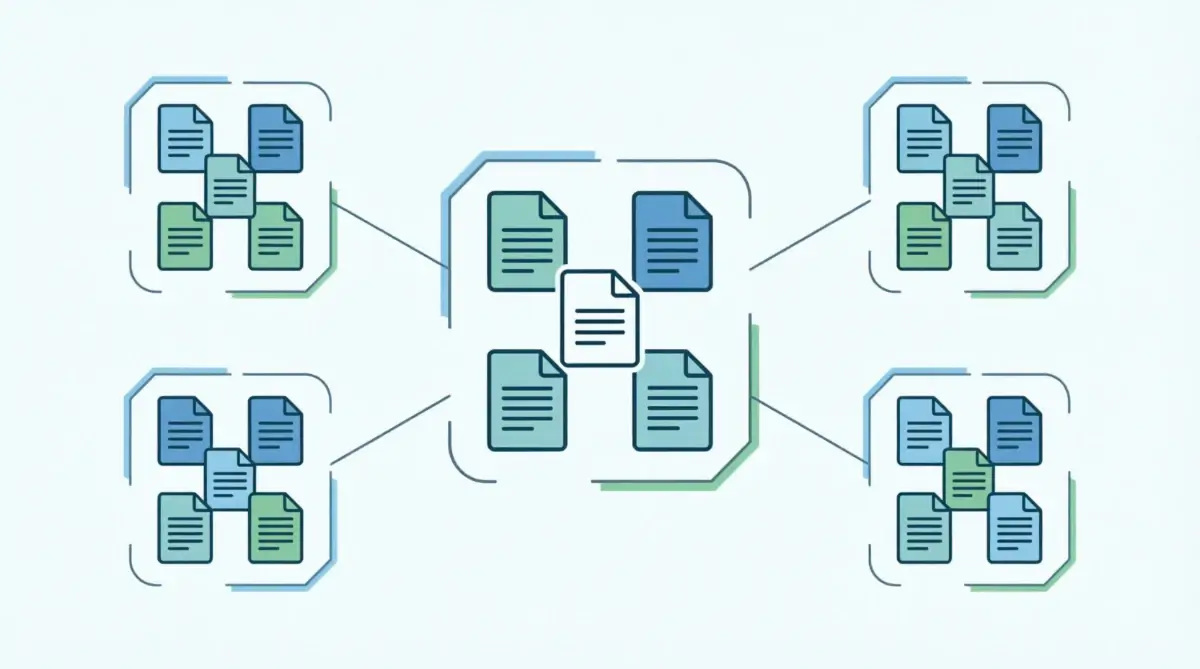
A site where every article connects to other relevant resources through deliberate internal links is not just more useful to readers it is fundamentally more crawlable. The search engine’s crawler follows those links from page to page, discovering new content, refreshing existing pages, and building a map of how the library fits together. I did not understand the full power of internal linking until I saw its direct effect on my crawl stats the balanced discovery‑refresh split, the deeper crawl depth, the absence of orphan pages.
Those outcomes were not accidental they were the result of a linking system that I built and maintained as carefully as the articles themselves. Understanding how to create that system, how to use it to serve both readers and crawlers, and how to keep it alive as the library grows is the purpose of this article. I will walk through the evolution of the link web, the dual purpose behind every link I place, the specific criteria I use to choose link targets, and the ongoing habits that keep the structure strong.
The Dense Link Web That Grew Alongside the Library
The structure of internal links on this site did not appear overnight. It evolved naturally as the article count moved from a handful to hundreds, each new article creating fresh opportunities to connect related topics. I now see that dense web of connections as a core asset, one that shapes how both visitors and crawlers move through the content.
When the library was small ten or twenty articles the link web was sparse. There were few connections to make, each article stood largely on its own. As the library grew past fifty, then past a hundred, the linking opportunities multiplied. Every new article could connect to multiple existing pieces, and those pieces could link back. The web became denser, more interconnected, and more powerful with each addition.
How Internal Links Naturally Multiplied as the Article Count Rose
When I had only ten articles, linking opportunities were sparse. At 50, connections began to form by 200 the internal link density had become a genuine web each article offering multiple paths to related pieces, without any single page standing alone. The growth was organic but not accidental. Each time I published a new article, I deliberately linked it to at least two to three existing articles in the topic those existing articles, when they were next updated when I published related content, received links back to the newer one. The web grew in both directions forward to new content and backward to established pages.
This natural multiplication had a compounding effect on crawl behavior. The search engine’s crawler, landing on any page in the library, could follow a chain of internal links to discover dozens of other pages. A single crawl request to one article could lead to the discovery of five to six because each link was a road that the crawler was designed to follow.
The dense link web effectively multiplied the crawl budget by turning every visit into a gateway to the broader library. The clean permalink structure established during the migration ensured that every internal link pointed to a permanent, stable URL that foundation made the entire link web reliable, because no link would break when a URL changed.
Why a Well‑Linked Site Feels Different to Both Readers and Crawlers
A site where every article points to other relevant resources encourages exploration a reader finishes one and finds a natural next step. A crawler lands on a page and immediately discovers several fresh URLs. That interconnected structure serves both audiences simultaneously for the reader, the experience is one of guided discovery.
They did not come looking for a single answer and leave; they found an answer and then found a related question they had not thought to ask, with the answer already waiting. That journey deepens their engagement and builds trust in the site as a comprehensive resource.
For the crawler, the experience is one of efficient exploration. Instead of relying solely on sitemaps to discover new URLs, the crawler follows internal links from well‑indexed pages to newer ones. Those links provide context the anchor text tells the crawler what the target page is about and they provide a natural crawl priority a page that is linked from multiple established articles is clearly important to the site’s structure, and the crawler allocates its budget accordingly.
The well‑linked site makes the crawler’s job easier, and the crawler rewards that ease with more frequent visits and faster indexation. You can see this effect in your own crawl stats: pages with strong internal link support tend to be crawled more often than isolated pages, even when both are submitted in the identical sitemap.
The Dual Purpose Behind Every Internal Link I Place
Every internal link I create serves two audiences at once: the person reading and the search engine crawling. I do not think of linking as a single‑purpose task; instead, I consider how the identical link can extend a reader’s session while simultaneously giving the crawler a new route to follow this dual purpose is what makes internal linking so powerful.
A link that only serves the crawler placed awkwardly, with anchor text that reads like a keyword degrades the reader’s experience. A link that only serves the reader placed without consideration for crawl paths misses an opportunity to guide the crawler deeper into the library. The best links do both, and I design every link with both audiences in mind.
Internal Links as Pathways for Readers to Go Deeper
For the person visiting the site, a thoughtful internal link is a gentle invitation to continue learning. It extends the session, reduces the chance they leave after one page, and shows that the library contains more than a single answer. A reader who finishes an article about bounce rate and sees a link to an article about session duration is being told, implicitly, “there is more to understand here.” The link is not a demand; it is an offer. The reader can choose to follow it not the offer itself communicates that the site is a deep resource.
I place links at natural decision points the end of a section, after a key insight, at the moment when the reader’s curiosity about a related topic is likely to peak. The anchor text describes what the linked article will deliver, so the reader can make an informed choice about whether to click the link is never a surprise or a distraction; it is a logical extension of the content they are already reading.
That seamlessness is what turns a single‑page visit into a multi‑page exploration, and it is one of the primary drivers of the engagement metrics I track. You can apply this by reviewing your own articles for natural curiosity gaps places where a reader might ask “what next?” and placing a link to the answer.
Internal Links as Crawl Routes That Guide the Crawler to New Content
For the search engine, each internal link is a road the crawler follows those roads from a freshly discovered article to older pieces from an established page to a newly published one. That crawling pathway directly increases the number of URLs that get indexed. When the crawler visits a page that is already indexed and finds a link to a URL it has not seen before, it adds that new URL to its discovery queue. The discovery crawl that results was triggered entirely by the internal link without that link, the new URL might wait weeks to be discovered through a sitemap refresh.
Internal links also pass authority from established pages to newer ones. A page that has accumulated backlinks and search equity shares some of that equity through its internal links. The anchor text of the link tells the search engine what the target page is about, helping it understand the topical relationship between the two pages.
This authority flow is not something I try to engineer with precision; it is a natural consequence of a well‑structured link web. When every article links to related content using descriptive anchor text, the authority distributes itself across the library in a way that supports the entire topical cluster.
How Internal Linking Contributed to the 51/49 Discovery‑Refresh Split
The balanced crawl behavior I observed nearly equal discovery and refresh requests did not come from a single technical tweak. A significant portion of that equilibrium traces back to the way I link between old and new content. This section breaks down exactly how internal connections drive both types of crawl activity. The split is not a metric I engineered directly; it emerged as a byproduct of a linking pattern that I maintained consistently. By linking forward to new articles and backward to established ones, I created a crawl environment where both discovery and refresh were continuously fed.
Discovery Crawls Fueled by Links From Indexed Pages to New URLs
When I publish a new article, I immediately add links to it from older, already‑indexed pages. The crawler revisits those older pages for refresh crawls, follows the new link, and discovers the fresh content. The discovery crawl happens because the internal link made it possible. This is the mechanism that turns a refresh crawl into a discovery opportunity. The crawler arrives at the older page to check for changes, sees the new link, and follows it to a URL it has not indexed before that single link converts a maintenance visit into a growth visit.
The speed of this process depends on how frequently the older page is crawled. Pages that receive regular refresh crawls because they are updated often linked to frequently serve as the best launch points for new content. I prioritize adding links from these high‑crawl‑frequency pages when I publish a new article, because I know the crawler will find the link within days, sometimes within hours. The new article enters the index faster than it would if I relied on sitemap submission alone.
Refresh Crawls Triggered by Links Pointing to Updated Content
When I revise an older article and link to it from a recent post, the crawler notices the new reference. It recrawls the older page to see what changed, which keeps the refresh crawl activity stable. The link is the invitation. The crawler may not revisit an older page for weeks if it sees no signals that the page has changed. But when a new article links to that older page with descriptive anchor text, the crawler has a reason to check back. It follows the link, finds the updated content, and updates its index accordingly.
This mechanism is particularly important for maintaining the freshness of older content. A page that was published months ago may still be accurate without refresh crawls, the search engine has no way to confirm that. A link from a new article tells the crawler that the older page is still relevant to the site’s current content, prompting a revisit. That revisit updates the page’s freshness signals and helps it maintain its ranking position.
The Balanced Split as a Byproduct of a Well‑Structured Link Architecture
I did not set out to engineer a 51/49 ratio it emerged because I link both forward to new articles and backward to established ones. That balanced internal linking pattern creates a corresponding balance in crawl behavior. When I link forward, I feed discovery. When I link backward, I feed refresh. Because I do both consistently, the crawl split naturally settles into equilibrium.
The link‑web strategy that distributes authority across the entire library taught me that internal links are not just navigation they are the pathways that carry crawl budget from high‑authority pages to newer, less established ones the authority flow is not something I track with precision I can see its effects in the crawl stats. Pages that receive consistent internal links from multiple sources tend to be crawled more frequently and indexed more quickly than pages with few and no incoming links. The link web is the infrastructure that supports the balanced split.
Why a Site With Poor Internal Linking Struggles to Reach This Balance
Without deliberate internal links, discovery crawls rely on sitemaps alone, and refresh crawls miss the signals that older content has been revisited. The crawl split becomes lopsided, and the site loses the compounding benefit of an interconnected library. A site that publishes new articles without linking to them from older pages is essentially hiding those articles from the crawler.
The only discovery mechanism is the sitemap, which may be processed on a schedule that is slower than the crawl frequency of the site’s most active pages. The new articles wait longer to be indexed, and the discovery crawl rate suffers.
On the refresh side, a site that updates older content without linking to it from newer articles is doing the work of maintenance without signaling it to the crawler. The updated pages may go weeks without a refresh crawl, and their freshness signals degrade in the meantime the result is a lopsided crawl profile: discovery crawls are low because new content is not being surfaced, and refresh crawls are low because updated content is not being signaled.
The balanced split that indicates a healthy, living library never materializes, because the internal link architecture is not doing its job. You can diagnose this in your own site by checking the crawl stats for the discovery‑refresh ratio; a heavily lopsided split often points to weak internal linking.
How I Choose Which Articles to Link Together
Linking everything to everything is noise I follow a few deliberate criteria to decide which articles deserve a connection, ensuring that every link serves the reader’s understanding and the site’s topical coherence. The choices are made during the writing itself, not tacked on later. When I am drafting an article, I already have a mental map of the topic cluster it belongs to.
I know which existing articles cover related ground, and I identify the specific points in the draft where a link would add value. The linking is part of the writing process, not a separate task performed after the content is complete.
Linking Based on Topical Relevance, Not Random Cross‑Referencing
I only connect articles that genuinely relate to each other an article about bounce rate links to an article about session duration because the topics are siblings. The connection must make sense to a reader who follows it. A reader learning about bounce rate will naturally want to understand session duration how long visitors stay after they arrive. The link is a logical next step. A link from a bounce rate article to an article about site migration, even if both are technically about site performance, would feel disjointed and break the reader’s flow.
Topical relevance is the primary filter if two articles belong to the subject crawl budget, server performance, content cadence, title strategy and one naturally extends the other, a link is appropriate. If the connection requires explanation, the link is probably forced. I trust the reader’s ability to see the relationship, and I trust the crawler’s ability to interpret the topical signal from the anchor text and the surrounding context.
Identifying Natural Connect Points Within the Body Text
I find sentences where a related article’s content would genuinely extend the reader’s understanding. The link is placed at that exact point where curiosity about the next layer of the topic naturally arises. For example, if I am writing about the discovery‑refresh split and I mention that internal links drive both types of crawls, that sentence becomes a natural place to link to a more detailed article about the split itself the reader who wants to go deeper can click; the reader who is satisfied can continue the link does not interrupt either path.
Natural anchor points are usually found at the end of a paragraph that introduces a related concept at the point where the article mentions a topic that has been covered in more detail elsewhere. The anchor text is descriptive it tells the reader what they will find if they click and it flows naturally within the sentence.
I avoid anchor text that feels like a command (“click here,” “read this”) and instead use phrases that describe the linked article’s content. The anchor text itself becomes part of the reading experience, not a break in it. You can practice this by reading your draft aloud and noting where your own curiosity about a related subject peaks; those are your anchor points.
Prioritizing Links That Serve the Reader’s Next Logical Question
When I finish an article, I ask what the reader might wonder next. If the article answers “what is the sandbox,” the next question might be “how long does it last.” I link to that answer. That forward‑thinking placement keeps the journey coherent. The reader’s curiosity follows a natural progression: understand the concept, then understand its implications, then learn how to apply it. By anticipating that progression and placing links at each stage, I guide the reader through the library in a sequence that mirrors their own learning path.
This approach also benefits the crawler a chain of links that follows a logical topical progression tells the search engine that the site covers a subject comprehensively, from introduction to advanced application. The crawler can follow that chain and build a detailed map of the site’s topical coverage that map contributes to the site’s authority on the subject, because it demonstrates depth and organization.
Using a Mental Map of Topic Clusters to Guide Link Placement
I keep a rough mental picture of which articles belong to the subject when writing a new article in that cluster, I already know the existing content I can link to. That speeds up the decision and ensures the cluster stays tightly knit. The mental map is not a formal document; it is the result of having written every article in the library. I know which pieces cover which angles, and I can recall them during drafting without needing to search.
The pillar‑and‑cluster architecture depends on internal links to connect each supporting article back to the central pillar those links are the threads that turn a scattered collection into a coherent, authoritative resource the pillar article for a topic the most comprehensive one on the subject receives links from every article in the cluster. Those links tell both readers and crawlers that the pillar is the central resource the supporting articles, in turn, link to each other where relevant, creating a dense web of topical connections that reinforces the entire cluster.
Avoiding Links That Interrupt the Flow or Feel Forced
If a link does not fit naturally into a sentence, I do not force it. A reader should never feel pulled away mid‑thought. I place links where they feel like a helpful suggestion, not an obligation. A forced link is worse than no link at all, because it disrupts the reading experience and may cause the reader to leave the page prematurely. The link should feel like a natural extension of the content, placed at a moment when the reader is receptive to exploring further.
I test each link by reading the sentence aloud. If the anchor text sounds awkward or the link feels jarring, I rephrase until it flows. If I cannot find a natural placement, I leave the link out. Not every article needs to connect to every other article in its cluster. A few well‑placed, high‑value links are more effective than many forced ones. The crawler can follow a single link as easily as it can follow five, and the reader benefits from the clarity of a focused, intentional link strategy.
How Many Internal Links Each Article Typically Contains
There is no magic number of links per article; the count depends on the article’s depth and the surrounding topical cluster. I focus on placing enough links to be helpful without overwhelming the page, keeping each link’s purpose clear and distinct. The right number is the one that serves the reader’s journey and the crawler’s discovery without turning the article into a directory of links.
Letting the Article’s Length and Depth Determine the Link Count
I do not follow a fixed number a short, focused content might carry two and three internal links. A comprehensive guide might contain eight even more the length and complexity of the content guide the volume. A 1,500‑word article that covers a narrow topic cannot support ten links without feeling unusual instead an article with 5,000‑word genuine value guide with multiple sections and subtopics can naturally accommodate more links because the content provides more anchor points.
The depth of the topic matters an article that introduces a new concept may link to foundational pieces that the reader needs to understand first. An article that explores an advanced technique may link to case studies and related methods. The links reflect the article’s position within the topic cluster introductory pieces link outward to more detailed resources, while detailed articles link back to foundational content and forward to related advanced topics.
Placing Links at Decision Points Without Overloading the Page
I spread links across the article so that they appear at natural pauses the end of a section, after a key insight. Clustering too many links in one spot overwhelms the reader and dilutes the value of each suggestion. A paragraph that contains three links is not offering three helpful suggestions; it is demanding three decisions from the reader in quick succession the reader will likely ignore all of them.
I aim for one link every few hundred words, spaced evenly throughout the article. The first link might appear after the introduction, where the reader has enough context to know whether they want to explore a related topic. The second might appear after a key section, where the reader’s understanding has deepened and they are ready for the next layer. The spacing gives each link room to be considered and followed without pressure.
Structuring long‑form guides with clear internal pathways showed me that links placed at natural decision points keep both readers and crawlers moving deeper into the content the decision points are the moments when the reader finishes one section and is deciding whether to continue. A well‑placed link at that moment offers a reason to stay on the site rather than returning to search results.
Ensuring Each Link Points to a Distinct URL
Within a single article, I never link to the similar target page twice. Each link leads to a different resource, giving both the reader and the crawler a wider set of pathways to explore. Duplicate links within an article waste crawl budget and confuse the reader. The crawler only needs to discover a URL once from a given page; a second link to the identical target adds no additional crawl value. The reader, seeing the identical link twice, may wonder if the article was carelessly assembled.
The distinct‑URL rule also forces me to think broadly about the article’s connections. Instead of linking to the pillar article multiple times, I find different related pieces that each add a unique angle. The variety of links enriches the reader’s potential journey and distributes crawl attention across a wider set of pages.
The Balance Between Internal Links and External References
I keep the majority of links internal to strengthen the site’s own architecture. When I do reference an outside source, it is only when that source adds something my own library does not yet cover. The priority always remains on deepening the reader’s journey within this site. External links send both the reader and crawl equity away from the site. They should be used sparingly, and only when the external resource is genuinely indispensable to the reader’s understanding.
Most topics can be covered entirely through internal links, because the library has grown deep enough to contain supporting content for nearly every article I write. When I do link externally, I ensure the link opens in a new tab so the reader’s session on my site is not interrupted. The external link is a supplement, not a replacement for internal navigation.
Updating Internal Links When New Articles Are Published
Publishing a new article is not the end of the linking process; it often demands that I return to older, relevant pages and add fresh connections. This habit of retrofitting links keeps the entire library alive and ensures no article becomes isolated the link web is a living structure that must be maintained as the library grows. Each new article is an opportunity to strengthen existing connections and create new ones.
Adding Links Back to Fresh Content From Older, Relevant Pages
After I publish a new article, I identify the existing contents that cover related ground. I open those older articles and insert a link to the new one, placing it where a reader would most benefit. That habit keeps the library interconnected and current. The older articles, which may have been published months ago, receive a refresh both in terms of content relevance and in terms of crawl signals. The crawler, revisiting the older page, finds the new link and follows it to the fresh content.
This backward‑linking practice is one of the most impactful internal linking habits I have developed. It ensures that new articles are not dependent solely on sitemaps for discovery. Within days of publication, they receive incoming links from established, frequently crawled pages. Those links accelerate indexation and provide immediate authority flow from the older pages the new article is not starting from zero; it is starting with the support of the existing library.
The editing routine that includes revisiting older articles to update their internal links taught me that the link web must be maintained, not just built once. Every new article is an opportunity to strengthen existing connections the editing session after publishing is as important as the writing session before it.
I allocate time specifically for this backward‑linking work, treating it as a non‑negotiable step in the publishing process. You can build this habit by scheduling ten minutes after each new publication to open two or three related older articles and add a link back to the new article .
Revisiting Past Articles to Refresh Links When a Topic Cluster Expands
As a cluster grows, some older links may point to less relevant pages. I periodically scan those older articles and update the links to point to the most comprehensive recent published articles the link web stays clean and useful. An article that was once the best resource on a topic may be superseded by a newer, more detailed one that older article should still exist in the library links pointing to it from other pages should be updated to point to the newer resource when that better serves the reader.
This periodic refresh prevents link rot not in the technical sense of broken links in the sense of outdated connections. A link that was valuable a few years ago may no longer be the best path for the reader. By updating those links, I keep the library’s navigation current and ensure that crawl equity flows to the pages that deserve it most.
The refresh process is part of my quarterly content audit, where I review each topic cluster and make adjustments to the internal link structure as needed. You can adopt a similar practice by scheduling a quarterly review of your most important topic clusters, checking each internal link for continued relevance, and updating where necessary.
The Impact of Internal Linking on Session Duration and Bounce Rate
The effect of good internal linking shows up in engagement metrics. I have tracked how a well‑placed link can turn a single‑page visit into a deeper exploration, directly lifting the time a reader spends on the site and reducing the rate at which they exit. These metrics are not just numbers; they are signals that the site is serving its readers well. When session duration rises and bounce rate falls, the search engine notices those engagement signals contribute to the site’s overall authority and can influence rankings.
How a Natural Next Step Keeps Readers Engaged Beyond a Single Page
When a reader finishes an article and sees a relevant, well‑placed link to a related article many choose to follow it. That extension turns a single‑page visit into a multi‑page exploration, directly lifting average session duration and lowering the overall bounce rate. A reader who arrived from a search result, read one article, and left is counted as a bounce. A reader who arrived, read one article, clicked an internal link, and read a second article is counted as an engaged visitor the difference between those two outcomes is often a single, well‑placed link.
The session duration increase that followed deliberate internal linking proved that a natural next step keeps readers engaged beyond a single page. The links turned single‑page visits into multi‑page explorations I saw the effect most clearly when I compared the session duration of pages before and after I added internal links. Pages that had been isolated, with no links to related content, had shorter average sessions. Pages that were well‑linked, with clear next steps, kept readers on the site longer the correlation was consistent and repeatable.
The bounce rate reduction that came from connecting related articles showed me that a well‑placed link is often the difference between a reader leaving and a reader staying a reader who reaches the end of an article and sees nothing to do next will likely close the tab w reader who reaches the end and sees a relevant suggestion may click and continue.
That single click transforms the visit from a bounce into an engaged session. The internal link is the mechanism that makes that transformation possible. You can measure this effect on your own site by comparing the bounce rate of pages with strong internal linking to those with weak even no links; the difference is often significant.
Internal Linking as a Core Component of Content Strategy
Linking is not a final polish; it is embedded in the way I plan, write, and maintain content. I treat it with the exact level of care as the article’s title opening paragraph, because the link structure carries long‑term consequences for both usability and crawl behavior. An article with a strong title and weak internal links is like a well‑designed room with no doors the room itself is fine no one can get to it, and no one can leave it to explore the rest of the building.
Treating Link Placement With the Same Care as the Writing Itself
I no longer consider internal links as an afterthought to be added moments before publishing. I think about them during the outlining phase, planning where connections will naturally fit. That intentionality elevates the entire reading and crawling experience. When I outline an article, I note which existing pieces it should link to and which sections provide natural anchor points. When I draft, I write those links into the flow of the content, not as insertions after the fact.
This approach saves time when links are planned during outlining, I do not need to search for relevant articles after the draft is complete. The connections are already identified. The writing flows more smoothly because I know where each link will go, and I can craft the surrounding sentences to accommodate the anchor text naturally. The final result is an article where the links feel integral, not appended.
How a Strong Internal Link Network Protects Against Algorithm Changes
When search engine algorithms shift, a well‑linked site retains its structural clarity. The internal pathways still guide crawlers, and the topical clusters still signal authority. The architecture provides stability that no external factor can easily disrupt. External ranking factors backlinks, social signals, domain age can be affected by algorithm updates. Internal links are entirely within my control and are not subject to external changes a strong internal link network is a form of SEO resilience.
The pillar‑and‑cluster architecture depends on internal links to maintain its coherence. If an algorithm update changes how external links are weighted, the internal link structure still communicates topical relationships. If an update changes how content freshness is evaluated, the internal links still guide crawlers to updated pages the internal link network is a constant in a shifting landscape, and investing in it is a hedge against uncertainty.
Integrating Internal Linking Into the Daily Publishing Workflow
Every writing session includes a final step: check and place internal links. That routine ensures that no article goes live without being woven into the broader library. The discipline of that final check compounds over hundreds of articles. The check takes only a few minutes reviewing the links I planned during outlining, verifying they are still relevant, and confirming that each anchor text is descriptive and natural. If I missed any opportunities during drafting, I add them now.
The daily discipline of showing up to place every internal link with intention is the consistency habit that turns a collection of articles into a navigable, interconnected library. It is showing up for the structure the way I show up to write the link check is as automatic as saving the draft publishing the post. It is not a separate task; it is part of the publishing workflow, and it will remain so for as long as I maintain this site. You can integrate this habit by adding a simple checklist item to your publishing process: “Place and verify internal links.” Over time, it becomes second nature.
The Long‑Term Crawl Benefits of a Well‑Maintained Link Web
Beyond immediate engagement, internal linking shapes how search engines perceive the entire site over time. A clean, shallow link depth, zero orphan pages, and a pattern of regular updates all signal that the site is actively curated and worthy of sustained crawl attention. These benefits accumulate over the years, and they become more valuable as the library grows larger.
Keeping Every Page Within a Few Clicks of the Homepage
A shallow link depth means the crawler can reach any article without crawling through endless layers. I structure links so that the most important pages are easily accessible, and newer articles are quickly connected to that accessible core. The homepage links to pillar articles and recent posts. Pillar articles link to supporting articles in their cluster. Supporting articles link to each other. The result is a site where no page is more than three clicks from the homepage, and the crawler can reach any page within a reasonable crawl budget.
I monitor the crawl depth metric in the search engine’s reporting panel. If I see pages with a high crawl depth meaning they take many clicks to reach from the homepage I investigate. Usually, the fix is simple: add a link to that page from a more prominent, frequently crawled article. The link shortens the path and ensures the page receives regular crawl attention.
Ensuring That No Article Becomes an Orphan Page
I check regularly for pages that have no incoming internal links. An orphan page is nearly invisible to crawlers unless it appears in a sitemap. I fix orphans by adding at least one link from a relevant, well‑indexed article. Orphan pages are a silent problem because they may still be indexed and may still rank they are not receiving the full benefit of the internal link network. They are isolated from the authority flow and the crawl pathways that keep other pages alive.
The monthly audit that catches broken links and orphan pages taught me that a link web degrades over time if not actively maintained regular checks keep every page connected the orphan check is part of my quarterly content audit. I pull a list of all published pages, cross‑reference it with the internal link data, and identify any pages with zero incoming links. Each orphan gets a link from at least one relevant article, and the problem is resolved with the audit session.
How a Dense Link Web Signals Site Quality to Search Engines
A site where articles consistently link to one another in a coherent pattern looks less like a random collection and more like a curated resource. That indicator contributes to the overall trust the search engine places in the domain. The search engine’s algorithms are designed to reward sites that demonstrate expertise, authority, and trustworthiness.
A dense, well‑organized internal link structure is a signal of all three. It shows that the site has substantial depth on its topics, that the content is organized thoughtfully, and that the publisher has invested in the reader’s experience.
This indicator is not something I can measure directly I see its effects in the crawl stats. Sites with strong internal linking tend to receive higher crawl budgets, faster indexation, and broader keyword coverage. The link web is one of the factors that contributes to those outcomes, and it is entirely within my control.
The Crawl Depth Metric and What It Tells Me About Link Health
I monitor how many clicks it takes for the crawler to reach a given page from the homepage. A rising crawl depth indicates weak internal linking; I use that data to add links that shorten the path. The crawl depth metric is available in the search engine’s reporting panel, and I review it quarterly. Pages with a crawl depth of five or more are flagged for attention. The fix is usually straightforward: identify a page that is closer to the homepage and add a link from that page to the deep page. The link reduces the crawl depth and improves the page’s chances of being crawled regularly.
Why Even Older Articles Continue to Receive Crawl Attention
Because I keep updating links in older posts, and because newer articles link back to them, those older pages never stagnate. The crawler continues to visit them as part of its refresh cycle, preserving their presence in the index. An article published years ago that still receives internal links from new content is treated as a living page, not an archived one. The freshness signals from those links tell the crawler that the page is still relevant, and the page maintains its ranking position as a result.
This is one of the most underappreciated benefits of internal linking: it preserves the value of older content without incoming links from newer articles, older pages gradually lose crawl attention and may drop out of the index. With those links, they remain active and continue to serve readers and attract search traffic. The internal link network is a preservation mechanism for the entire library.
The Core Lesson: Internal Linking Is Not a Final Touch It Is the Structure
The most important realization I have had about internal links is that they form the actual architecture of the site. They are not decoration; they are the corridors that connect every room of the library. I now see link building as a permanent, evolving part of the site’s growth. The articles are the rooms; the links are the hallways. Without the hallways, the building is just a pile of disconnected rooms with them, it becomes a navigable space where both readers and crawlers can move freely, discovering new rooms and returning to familiar ones.
Building a Site That Functions as a Connected Library, Not a Pile of Pages
Every article I write is a room in a larger building, and internal links are the corridors. Without them, the library is just a pile of separate rooms. With them, it becomes a navigable space where both readers and crawlers can move freely. A reader enters through a search result the front door and finds themselves in a room. If that room has no doors, they stay for a moment and leave. If it has doors leading to other rooms, they explore. Each door they open deepens their engagement with the library and increases the likelihood that they will return.
The crawler enters through the link pathway and follows the internal links and indexes the page it landed on and leaves. A site with a dense link web is a sprawling building that the crawler can explore for hours, discovering new pages and refreshing old ones. The difference in crawl behavior between these two types of sites is dramatic, and it is entirely determined by the internal link structure.
How I Will Continue to Strengthen the Link Architecture in Every Phase of Growth
As the site expands I will keep the discipline: link with purpose, update connections as new content arrives, and treat every internal link as a strategic decision. The structure will grow stronger with each article added. The link web is not a finished project; it is a living system that evolves with the library. Each new article is an opportunity to add new corridors and strengthen existing ones each audit is a chance to repair weakened connections and remove dead ends.
The daily discipline of placing every internal link with intention is the habit that turns a collection of articles into a navigable, interconnected library. It is showing up for the structure the way I show up to write the practice will continue for as long as I publish, and the link web will grow denser, stronger, and more valuable with every article I add.
You can begin strengthening your own link web today open your most recent article and check whether it links to at least two or three older, related articles then open those older pages and add a link back to the new one where it feels natural. That single action linking forward and backward in one session is the foundation of the internal linking system I have described. Repeat it with every article you publish, and over time, your site will transform from a pile of pages into a connected, navigable library that both readers and crawlers can explore freely.