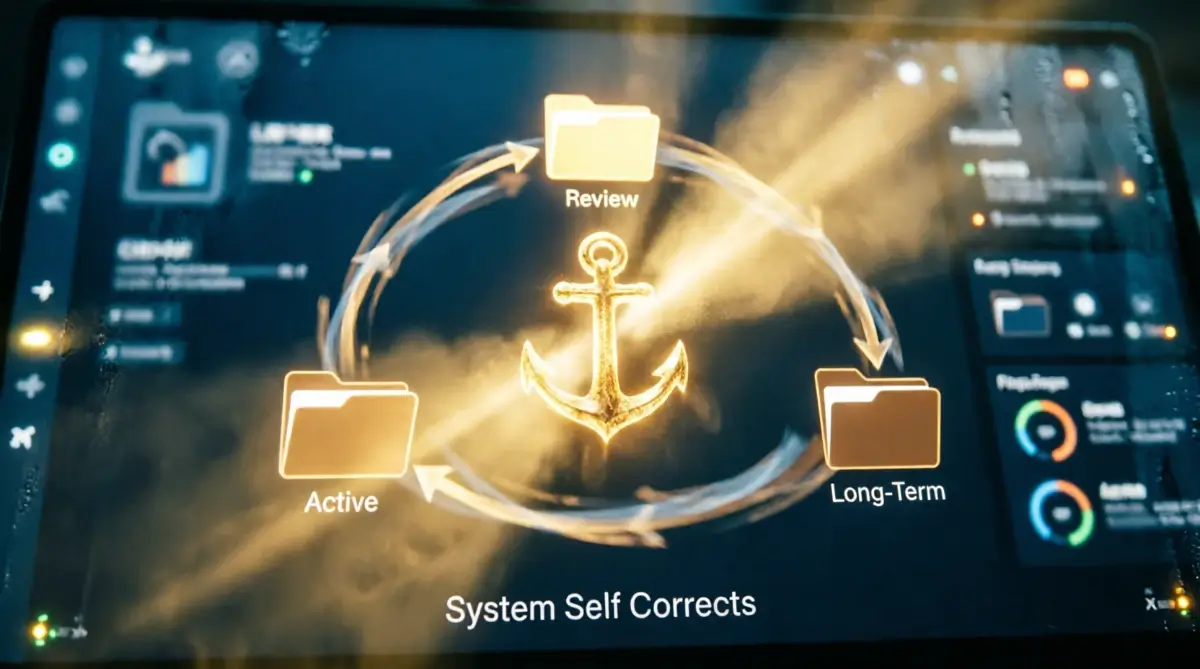
I built a self‑correcting language learning practice structure using three folders on my smartphone. It is not a complex application or an expensive course. It is a simple arrangement that lives in the file manager of my phone, and it has ended the cycle of learning, forgetting, and restarting that once drained my confidence and wasted years of effort.
The practice system works because it does not rely on my memory alone. It relies on a deliberate flow that moves every lesson through stages of active practice, regular review, and long‑term retention, and it automatically corrects itself whenever something is forgotten. This article is the full explanation of that structure why I built it, how it works, and how I use it every day to maintain five languages and prepare for the next one.
The problem this practice system solves is one that every self‑taught learner knows intimately. I would study a set of phrases, feel a brief surge of confidence, and then move on to new material without a plan for what came next. Weeks later, I would encounter those same phrases and realize they had vanished. The notebook pages were full, but my active memory was empty. I was not failing to learn. I was failing to retain. And retention, I discovered, is not a passive process. It requires a structure that repeatedly exposes you to what you have learned, at the right intervals, in a way that respects how memory actually works.
The difference between learning a language and keeping a language is a practice structure that moves knowledge from the fragile space of first exposure into the durable space of automatic recall.
The Problem That Forced Me to Build This Structure
Before the three‑folder structure existed, my language practice was scattered across notebooks, loose papers, and multiple apps. I would study something, feel like I understood it, and then never review it in any organized way. The result was predictable. I would open old notes and find entire lessons I could no longer read. The frustration was not just about wasted time. It was about the erosion of self‑trust. Every time I forgot something I had once known, a small voice whispered that I was not really capable of learning languages. That voice was wrong, but I had no evidence to counter it because I had no proof that I could retain what I learned.
I realized that the problem was not a lack of effort. It was the absence of a self‑correcting mechanism. A self‑correcting practice structure does not just help you review. It identifies what you have forgotten and routes it back into active practice automatically. It closes the gap between learning and forgetting by design, not by willpower. Willpower had failed me repeatedly. What I needed was a process that worked even when my motivation was low and my memory was unreliable.
That insight led me to design a structure that would meet four requirements. First, it had to be simple enough to use every day without friction. Second, it had to be portable accessible in the small pockets of time that exist in any busy day. Third, it had to move lessons through clear stages so I always knew what needed attention. Fourth, it had to self‑correct by sending forgotten material back to the beginning of the cycle. The three‑folder arrangement on my smartphone satisfied every one of those requirements.
Why Smartphone Simplicity Beats Traditional Methods
I chose the smartphone not because it is modern, but because it is always with me. A textbook, however excellent, requires a dedicated time and space to open. The phone allows me to practice during a work break, while waiting in a line, or in the few minutes before sleep. That accessibility transforms dead time into practice time. And the folder structure simply naming and organizing files requires no special app, no subscription, and no learning curve. It is as simple as it can be, which means I actually use it.
The Three‑Folder Structure That Powers the Practice System
The entire practice system lives in a single location on my phone. I create a main folder with the name of the language I am learning. Inside that folder, there are three subfolders, each with a specific role.
Folder 1: Active Practice. This folder holds the lessons I am currently learning. A lesson can be a list of new vocabulary, a set of sentence patterns, a dialogue I want to memorize, or anything that I have not yet mastered. The lessons in this folder are in a numbered queue. I practice them daily until I feel genuinely confident not perfect, but able to produce the language without constant hesitation.
Folder 2: Review. Once I feel confident with a lesson from Folder 1, I move it here. The Review folder holds everything I have learned but that still needs regular reinforcement. I do a quick review of these lessons several times a week. The review is not a deep study session. It is a rapid scan designed to keep the material fresh. If I can recall the content easily during a review, the lesson stays in this folder. If I struggle, it moves back to Folder 1 for more active practice.
Folder 3: Long‑Term Memory. When a lesson has been in the Review folder for an extended period and I can recall it effortlessly without hesitation, without needing to think I move it to Long‑Term Memory. This folder is my archive of acquired language. I review it once a month, briefly, just to remind my mind that these words and patterns are still needed. If something has faded during that month, I move it back to Folder 2 or even Folder 1, depending on how much I have forgotten.
This flow Active to Review to Long‑Term Memory, and back again when necessary is the self‑correcting heart of the practice system. Nothing is ever permanently archived in a way that allows it to be forgotten. The structure forces forgotten material to resurface at the practice stage, where it belongs.
The three folders are not a storage system. They are a circulation system. Every lesson keeps moving until it settles into permanent memory, and even then, it is never beyond recall.
Folder 1: Active Practice in Detail
The Active Practice folder is where the real work happens. When I begin learning a new language, or when I add new material to an existing one, I create individual files in this folder. Each file is a lesson. I name them with numbers so they form a queue: Lesson 01, Lesson 02, Lesson 03. The numbering creates a natural order and prevents me from jumping randomly between topics.
A lesson file contains whatever I am currently learning. It might be a list of high‑frequency words with their meanings. It might be a set of sentence patterns that I want to internalize, similar to the approach I used when drilling sentence structures until they became automatic and I could produce them without conscious effort the content is not fixed. What matters is that the lesson is clearly defined and that I can measure my confidence in it.
I practice the lessons in Folder 1 every day. Not all of them in one session that would be overwhelming. I work through a few lessons at a time, spending perhaps ten or fifteen minutes on active recall, speaking aloud, and testing myself. The goal is not to complete the folder. The goal is to reach a level of confidence where I can use the language without stumbling. That threshold is personal. There is no external test. I know when I am ready to move a lesson to Review because the words come to mind without effort and the sentences form naturally.
The Discipline of Daily Contact
The Active Practice folder demands the most discipline. It is easy to let a day slip because the material feels hard or because progress seems invisible. I have learned that a small daily session even five minutes is far more effective than a long session once a week. The consistency keeps the language alive in my mind. When I am too tired for a full practice, I at least open the folder and read through a single lesson. That minimal action maintains the connection and prevents the drift that leads to forgetting.
Folder 2: Review in Detail
Once a lesson moves from Active Practice to Review, the nature of the work changes. I am no longer learning new material. I am reinforcing what I have already learned. The Review folder is my defense against the natural decay of memory. I open it several times a week, and I go through the lessons quickly. I do not do deep study here. I do rapid recall. I look at a word or phrase, say it aloud, and confirm that I know it. If I hesitate, I make a note. If I hesitate on the same lesson multiple times, I move it back to Folder 1.
The review sessions are short by design. They fit into the margins of my day. A five‑minute break at work. The few minutes before a meal. The time waiting for something to load. Because the lessons are already familiar, the review does not feel like work. It feels like a quick check‑in, a way of telling my brain that this information still matters.
I have found that the Review folder works best when I do not over‑organize it. I do not sort lessons by date or difficulty. I simply open the folder and pick a few files at random. The randomness prevents me from only reviewing the lessons I enjoy and neglecting the ones that need attention. It also mimics the unpredictability of real conversation, where any word or pattern can appear at any time.
The Self‑Correction Trigger
The Review folder is where the self‑correction happens most actively. If I notice that a lesson is slipping if I have to think too long, if I make consistent errors I do not wait. I move it back to Folder 1 immediately. There is no shame in this. Forgetting is a normal part of the process. The structure is designed to catch forgetting and respond to it. Moving a lesson back is not a failure. It is the structure functioning as intended.
Folder 3: Long‑Term Memory in Detail
The Long‑Term Memory folder is the archive. Lessons that have survived the Review stage and that I can recall effortlessly are stored here. I open this folder once a month. The review is brief a quick scan to remind my mind that this language is still active. I do not spend more than a few minutes on it unless I discover that something has been forgotten.
When I do discover a forgotten word or phrase, I act immediately. If the forgetting is minor a slight hesitation, a word that feels familiar but just out of reach I move it to Folder 2 for regular review. If I have lost the lesson almost entirely, I move it all the way back to Folder 1 for fresh active practice. This mechanism ensures that nothing permanently slips through the cracks. The practice system catches what I lose and recycles it.
The monthly review also serves a psychological purpose. It shows me how much I have retained. Opening a folder full of lessons that I still know lessons that once felt impossible but now feel natural is a powerful reminder that the practice system works. That confidence, built on visible evidence, fuels my motivation to continue.
The Long‑Term Memory folder is not a museum of dead knowledge. It is a living archive, visited monthly, that keeps the language ready for use.
The Self‑Correction Cycle: How It All Connects
The three folders are not separate silos. They are connected by a single rule: confidence determines location. If I am confident in a lesson, it moves forward. If I lose confidence, it moves back. This simple rule creates a self‑correcting practice system that adapts to my actual memory, not to a fixed schedule.
This cycle mirrors the natural rhythm of memory. First exposure creates a fragile trace. Active practice strengthens that trace. Regular review stabilizes it. Monthly review maintains it. Forgetting returns it to the beginning. The practice system does not fight against forgetting. It accepts forgetting as inevitable and builds a mechanism to recover from it. That acceptance removes the emotional weight of memory lapses. When I forget something, I do not feel like a failure. I simply move the lesson back and continue.
The cycle also creates a feedback mechanism that improves my learning over time. When I notice that certain types of lessons consistently need to be moved back, I adjust how I practice them. Perhaps I need more speaking aloud. Perhaps I need to create more sentences. The practice system reveals patterns in my forgetting, and those patterns guide my approach.
The Role of Honest Self‑Assessment
The entire structure depends on my willingness to be honest about my confidence. If I move a lesson to Review prematurely, because I am impatient to progress, it will slip and I will have to move it back. That is not a punishment. It is the practice system teaching me to be patient. Over time, I have learned to trust my own assessment. I know the difference between genuine confidence and wishful thinking. The practice system rewards honesty. The lessons I move forward stay forward. The lessons I am unsure about stay in practice until I am sure.
How I Use This Practice System Across Multiple Languages
I currently speak five languages: English, Russian, Turkish, and Azerbaijani. English is my base language the language I use to learn other languages. When I encounter a new word or phrase in Russian, for example, I first confirm that I understand it in English. Then I pass it through my other languages. I check: do I know this concept in Turkish? In Azerbaijani? This cross‑language check serves two purposes. It reinforces the new word by connecting it to existing knowledge, and it prevents my other languages from fading through neglect.
The three‑folder structure manages all of this. I have a main folder for each language. Inside each main folder, the three subfolders Active, Review, Long‑Term Memory operate independently. On any given day, I might spend ten minutes on Russian Active Practice, five minutes on Turkish Review, and a quick scan of Azerbaijani Long‑Term Memory. The practice system scales across languages without becoming overwhelming because each session is short and focused.
English sits at the center of this structure I maintain an English folder as well, because even my base language needs maintenance. I review advanced vocabulary, idiomatic expressions, and specialized terminology regularly. The practice system does not assume that any language is permanently mastered. Every language, including the one I think in, benefits from organized review.
The Cross‑Language Flow in Practice
Let me give a concrete example when I was learning Russian, I used English‑language materials. If I encountered a Russian word I did not understand, I looked it up in English. Once I understood the meaning, I mentally checked: do I know the equivalent in Turkish? If yes, I made a quick note in my Turkish folder to reinforce that connection. If no, I added the Turkish equivalent to my Turkish Active Practice folder. This cross‑language flow ensures that every language I speak is maintained and that new learning strengthens old knowledge rather than displacing it.
The Daily Practice Routine That Keeps the Practice System Alive
The three‑folder structure is the skeleton. Daily practice is the muscle that moves it. I do not have a rigid schedule, but I have a set of non‑negotiable habits. Every day, I open at least one Active Practice folder and work on a lesson. It might be for five minutes. It might be for twenty. The duration is less important than the consistency.
I take advantage of the smartphone’s portability. A work break becomes a quick review session. A lunch break becomes an opportunity to speak a few sentences aloud. The minutes before sleep become a final check of the Review folder. Reviewing material before sleep is a technique I have relied on for years because it improves memory retention by allowing the brain to process information during the night those scattered minutes, accumulated across a day and across weeks, add up to a substantial volume of practice.
On days when I am tired or busy, I do not skip entirely. I do the minimum. I open one folder, read one lesson, and speak one sentence. That minimal action keeps the chain alive. The following day, I return to full practice. The practice system does not demand perfection. It demands continuation. That flexibility is what makes it sustainable over years, not weeks.
How I Fit Practice Into a Full Day
I do not have hours of free time for language study. I fit practice into the gaps. While waiting for coffee, I open the Active Practice folder. During a commute, I mentally recall the lessons I reviewed that morning. While cooking, I listen to a recording of my own voice speaking phrases from the Review folder, a practice that deepens memory through the familiarity of hearing my own pronunciation the practice system works because it does not require a separate study session. It integrates into the life I am already living.
The Discipline That Powers the Structure Daily
A practice system, however well designed, is useless without the discipline to follow it. The three‑folder structure does not run itself. I have to show up. I have to move the lessons. I have to be honest about my confidence. The discipline required is not superhuman. It is the ordinary discipline of doing a small thing every day, even when I do not feel like it.
I built this discipline through the principle that keeps any long‑term skill alive consistency over intensity the steady thread of daily work that compounds over months and years the practice system makes discipline easier because it removes the question of what to do next. The folders tell me. There is a lesson in Active Practice that needs attention. There is a Review folder that has not been opened today. The decisions are already made. I just have to execute.
The reward of this discipline is not just language fluency. It is the trust I have built with myself. Every day I follow the practice system, I reinforce the belief that I am a person who keeps commitments. That self‑trust is the foundation beneath the language skills. It is what allows me to learn new languages with confidence, knowing that the practice system will carry me through the difficult early months.
Discipline is not the enemy of freedom. It is the structure that makes freedom possible. The folders give me a place to put my effort, and the effort, repeated, gives me languages I will carry for life.
The Proof That the Practice System Works
I have used this practice system to learn and maintain four languages beyond my native one. I speak English, Russian, Turkish, and Azerbaijani, with Persian as my mother tongue. The practice system has carried me through the silent phase of every language the months when progress is invisible and motivation is thin. It has caught me every time I have forgotten something and needed to relearn it. It has turned language learning from a source of anxiety into a source of steady, visible growth.
The evidence is not just in the languages I speak. It is in the folder structure itself. I can open my phone and see the lessons I have moved from Active Practice to Review to Long‑Term Memory. I can see the ones that have been sent back and the ones that have stayed. The folders are a physical record of my learning history. They tell a story of persistence that no external test could capture.
This proof matters because language learning is full of moments when you feel like you are going nowhere. The folders counter that feeling with data. They show that yesterday I was struggling with a lesson, and today it is in Review. Tomorrow it will be in Long‑Term Memory. The movement is small, but it is real. And over months, it accumulates into fluency.
Common Mistakes When Building a Practice Structure
Over the years, I have seen other learners try to build similar structures and make the same mistakes I once made. They create too many folders, with too many categories, and the complexity becomes a barrier to daily use. They set rigid schedules review every three days, test every seven and then feel guilty when life interrupts the calendar. They treat the Long‑Term Memory folder as a final destination and never check it again, only to discover months later that the knowledge has evaporated.
The cure for these mistakes is simplicity three folders. One rule: move based on confidence, not on a calendar. Review Long‑Term Memory monthly. If something is forgotten, move it back without shame. The structure does not need to be more complex than this. Complexity is the enemy of consistency. Simplicity is what survives the chaos of daily life.
Another mistake is using the structure for passive activities alone. Reading a lesson is not enough. I must speak it. I must produce it. The Active Practice folder is not a reading list. It is a speaking list. The Review folder is not a collection of familiar words. It is a set of prompts that I respond to aloud. The Long‑Term Memory folder is not an archive. It is a monthly checkpoint that I engage with actively. The structure is built for active recall, not passive recognition.
A Practical Example: Learning Russian With the Three‑Folder Structure
When I began learning Russian, I created a main folder called “Russian” and three subfolders inside it. I started with ten lessons in the Active Practice folder basic greetings, common verbs, sentence patterns. I practiced every day, speaking aloud, making new sentences, testing myself.
After a few weeks, I moved the first few lessons to the Review folder. I was not perfectly fluent, but I could produce the language without freezing. The Review folder grew as I added more lessons from Active Practice. I reviewed it several times a week, spending perhaps five minutes per session.
Months later, many of those lessons had moved to Long‑Term Memory. I reviewed them monthly. Some had faded and been moved back to Review or Active Practice. The structure caught those lapses and corrected them. Today, Russian is one of the languages I maintain through this same practice system. The folders are still on my phone. The lessons are still moving. The practice system is still working.
This example is not special. It is simply what happens when a consistent process is applied over time. The languages I speak are not a result of talent. They are a result of a practice system that did not let me quit.
The Smartphone as the Engine of the Practice System
The choice to use my smartphone was not arbitrary. It was strategic. The phone eliminates the friction of accessing practice materials. A textbook requires me to be in a specific place, at a specific time, with the book open. The phone is in my pocket. The folders are two taps away. That accessibility means I practice more often, in smaller chunks, and with less resistance.
The phone also allows me to record my voice, store audio files, and review on the go. I keep voice memos of myself speaking the lessons from the Active Practice folder. I listen to them during commutes. The combination of visual review and auditory reinforcement strengthens the memory in ways that a single medium cannot.
The simplicity of the folder structure means I never have to learn a new app or worry about a service shutting down. Folders are universal. They will work on any phone, on any operating system, for as long as phones exist. The practice system is not dependent on a platform. It is dependent on a habit. That independence is one of its greatest strengths.
The Long‑Term View: Why This Practice System Will Carry Me Through Every Future Language
I intend to learn more languages. The three‑folder practice system will be the engine that powers every one of those journeys. It is not tied to any specific language or any specific stage of learning. It scales. It adapts. It corrects itself. It requires only my daily presence and my honest assessment.
The practice system gives me confidence that I can start a new language at any age and reach functional fluency. It removes the fear of forgetting that once paralyzed me. I know that if I forget something, the practice system will catch it and route it back to me. That knowledge frees me to take risks, to make mistakes, to learn imperfectly. Perfection is not the goal. Continuation is the goal. And continuation, supported by a self‑correcting structure, produces results that feel like perfection over time.
A language is not something you learn once and keep forever. It is something you maintain through daily attention. The three‑folder practice system makes that attention structured, simple, and effective.
The Emotional Journey of the Self‑Correcting Practice System
The three‑folder practice system did not just change my language ability. It changed my emotional relationship with learning. Before the practice system, every forgotten word was a small failure. After the practice system, every forgotten word is simply a signal a piece of data that tells me where to direct my attention. The emotional weight of forgetting has been replaced by the calm response of moving a lesson back to Active Practice.
This emotional shift is not trivial. Language learning is an emotional experience as much as a cognitive one. The frustration of forgetting can drive a learner to quit. The shame of not remembering can make practice feel like punishment. The practice system removes that weight by normalizing forgetting. It treats memory lapses as expected events, not as character flaws. That normalcy makes it easier to return to practice after a lapse, because there is no guilt attached to the return.
I have come to see the movement of lessons forward and back as the natural rhythm of learning. A lesson that stays in Long‑Term Memory forever is rare. Most lessons cycle through the folders multiple times before they settle permanently. That cycling is not a sign of failure. It is the mechanism of acquisition. Every cycle deepens the memory. Every return strengthens the neural pathway. The folders are not a straight line to fluency. They are a spiral that tightens over time.
Trusting the Process When Progress Feels Invisible
There are weeks when the folders do not seem to change. A lesson stays in Active Practice longer than I expected. The Review folder feels heavier than it should. During those weeks, I remind myself that the practice system is working even when I cannot see it. The daily attention, the regular review, the monthly check‑ins these actions are building structures in my mind that will become visible later. The trust I have in the practice system is not blind. It is based on the evidence of languages I already speak. The same process that worked for Russian is working for the next language, even if the intermediate steps are invisible.
Adapting the Practice System for Different Proficiency Levels
The three‑folder structure is the same at every level, but the content of the lessons changes as proficiency grows. In the early stages, the Active Practice folder is filled with basic vocabulary, common phrases, and simple sentence patterns. The lessons are short and specific. The confidence threshold for moving to Review is simply the ability to produce the language without relying on translation.
At the intermediate stage, the Active Practice folder contains more complex material idiomatic expressions, nuanced grammar patterns, specialized vocabulary related to my interests. The Review folder becomes larger because there is more material to maintain. The Long‑Term Memory folder starts to accumulate lessons that I have truly internalized.
At the advanced stage, the Active Practice folder might contain only a few lessons new words I encounter in reading or conversation. The Review folder is the largest, containing the bulk of my active vocabulary. The Long‑Term Memory folder holds the foundation of the language words and structures that are so deeply embedded that they rarely need review. But even at this stage, I check it monthly. Complacency at the advanced level is how languages begin to fade.
The practice system adapts automatically because the only criterion for movement is my own confidence. As my proficiency grows, my confidence grows with it. Lessons move faster through the folders because I learn faster and retain longer. The practice system does not need to be redesigned at each level. It flexes to accommodate my growth.
The Cross‑Language Maintenance in Depth
Maintaining multiple languages requires a strategy that prevents them from interfering with each other. I have found that the folder structure naturally separates languages because each language has its own folder tree. There is no confusion. When I open the Russian folder, my mind switches to Russian mode. When I open the Turkish folder, the Russian recedes.
I also use English as a deliberate anchor. Every new word I learn in any language is first confirmed in English. English is the common reference point that all my languages share. If I learn a Russian word, I check: do I know this in English? If yes, the concept is anchored. Then I check the other languages. This cross‑referencing turns every new word into a review session for the languages I already speak.
This method has an unexpected benefit: it deepens my understanding of every language I speak. When I compare how Russian, Turkish, and Azerbaijani express the same idea, I notice patterns that are invisible when studying a single language in isolation. I see the shared roots the words patterns and the structural similarities. That metalinguistic awareness makes future learning faster. The folder structure supports this by keeping each language’s material organized and accessible for cross‑referencing.
The Role of Speaking Aloud in Every Folder
I have mentioned speaking throughout this article, but I want to emphasize it as a non‑negotiable part of the practice system. Every folder requires spoken output. In Active Practice, I speak the new words and sentences aloud, often recording myself to check pronunciation. In Review, I respond aloud to prompts without reading the answers first. In Long‑Term Memory, I speak the archived lessons during the monthly check‑in, confirming that I can still produce them.
Silent reading creates an illusion of knowledge. I can read a phrase and feel like I know it, but when I need to produce it in conversation, the knowledge evaporates. Speaking aloud proves that the knowledge is active. The folder structure does not reward silent recognition. It rewards spoken production. That emphasis on output is what makes the difference between a passive vocabulary that I can understand and an active vocabulary that I can use.
The Minimum Daily Routine in Practice
To make this as concrete as possible, here is what a typical day looks like for me. In the morning, I open the Active Practice folder of my current target language. I work on one or two lessons for about ten minutes. I speak aloud. I make sentences. I test myself. If I feel confident in a lesson, I move it to Review.
During the day, I may open the Review folder for a few minutes during a break. I scan a few lessons, say the words aloud, and confirm that I still know them. If I hesitate on anything, I move it back to Active Practice.
In the evening, I might do a longer Review session, or I might open the Active Practice folder of a different language for variety. Before sleep, I do a final quick scan of any lessons I added that day. Once a month, I open the Long‑Term Memory folders for all my languages and do a brief check‑in.
This routine is not rigid. It flexes around my day. But the core elements active practice, regular review, monthly check‑in remain constant. The folders are always there, waiting, and the only thing required of me is to open them.
The Practice System Is Not Magic It Is Daily Action
I want to be honest about what this practice system is and what it is not. It is not a shortcut. It does not eliminate the work of language learning. It organizes the work so that the work is not wasted. Every hour I spend in Active Practice is protected by the Review and Long‑Term Memory structure. The practice system ensures that what I learn today will still be with me next month and next year.
The practice system also does not guarantee that I will never forget. I forget regularly. The difference is that I catch the forgetting early and correct it. The folders make forgetting visible. A lesson that has been in Long‑Term Memory for months suddenly feels unfamiliar. I move it back. The practice system does not prevent memory decay. It detects it and responds.
That detection and response is the “self‑correcting” part of the practice system. It is not an algorithm. It is not artificial intelligence. It is a human being honestly assessing his own knowledge and making adjustments. The practice system works because I am honest with myself. It would fail if I moved lessons forward before I was ready, or if I ignored the monthly check‑ins. The folders are a tool. My honesty is the power source.
The folders organize the work the honesty powers the correction. Together, they make forgetting a minor event, not a catastrophe.
How I Started Using This Practice System for a New Language Recently
Recently, I began preparing to add another language. Before I learned a single word, I created the folder structure on my phone. A main folder with the language name. Three subfolders inside. The structure was ready before the first lesson existed. That act of preparation was a commitment. It said: I am serious about this language, and I will not let the effort drain away.
I then created my first Active Practice lesson. A list of twenty common words. I practiced them daily for a week. Some moved to Review. Some stayed in Active Practice. The cycle began. The practice system that has served me through five languages is now serving me for the next one. The folders are the same. The process is the same. The confidence that comes from having done this before is new, but the structure is familiar.
This is the final proof of the practice system’s value. It is reusable. It is transferable. It does not depend on the language, the materials, or the stage of life. It depends only on the willingness to create three folders and to visit them every day.
The Lesson I Would Share With Anyone Starting Today
If I could sit across from someone who is about to begin learning a language, I would tell them to open their phone and create three folders right now. Before any textbook, before any app, before any course. The folders are the foundation. They will hold everything that comes next. Without them, the learning will be scattered and the forgetting will be silent. With them, every hour of study is an investment in a structure that protects and compounds that investment over time.
I would tell them that the practice system requires nothing more than a phone and a willingness to be honest about what they know and what they do not. There is no fee. There is no subscription. There is no proprietary format. The folders are theirs forever. The languages they build with them are theirs forever.
And I would tell them that the practice system works if they work it. Not perfectly. Not every day without exception. But consistently enough that the folders fill, empty, and refill in a rhythm that becomes as natural as breathing. The languages will come. The confidence will come. The proof will be in the folders themselves.
Why Simplicity Wins Over Complexity Every Time
I have seen elaborate language learning setups apps with complex algorithms, spreadsheets with color‑coded cells, schedules that map out every review session for a year in advance. Most of them are abandoned within weeks. The complexity that makes them impressive on paper makes them unsustainable in practice. Life disrupts the schedule. The app updates and changes its interface. The spreadsheet becomes a chore.
The three‑folder practice system survives because there is almost nothing to maintain. Three folders. A naming convention. A daily habit. There is no software to update, no subscription to renew, no data to lose if a company goes out of business. The practice system is mine. It lives on my phone, backed up to the cloud. It will work exactly the same way next year as it does today.
Complexity is tempting because it feels professional. Simplicity feels amateur. But simplicity is what lasts. Simplicity is what I reach for when I am tired, when I am busy, when I have only five minutes. The folders do not demand that I log in, sync data, or navigate menus. They demand that I open them and engage. That low barrier to entry is the reason the practice system has survived for years.
The best structure is not the most sophisticated. It is the one you actually use. The three folders are the most used tool in my language learning life because they are the simplest.
The Daily Choice That Defines the Practice System
Every day, I face a choice. I can open the folders and practice, or I can let the day pass without contact. The practice system does not force me. It waits. The choice is mine. And the accumulation of those daily choices is what separates the person who speaks five languages from the person who once tried to learn one.
The choice is small. It does not feel significant in the moment. A five‑minute review session does not feel like it changes anything. But those five‑minute sessions, repeated across months and years, are the difference between a language that lives in my mind and a language that gathers dust in an old notebook. The practice system makes the choice easier because it removes the friction. The folders are there. The lessons are waiting. All I have to do is open them.
I do not always make the right choice. Some days I skip. The practice system does not punish me for those days. It simply waits for the next one. That lack of punishment is important. Guilt is a heavier burden than the missed practice itself. When I return after a missed day, the folders do not judge. They just hold the lessons, ready for me to begin again.
A Final Word on the Self‑Correcting Practice System
The self‑correcting language learning practice system I built is not a product. It is a practice. It is the result of years of failing to retain what I learned and finally realizing that retention is not a passive hope it is an active, structured process. The three folders on my phone Active Practice, Review, Long‑Term Memory are the simplest possible expression of that process. They move lessons forward when I am confident. They move lessons back when I forget. They ensure that nothing I learn is ever permanently lost.
I have used this practice system to learn and maintain five languages. I will use it for every language I learn in the future. It has transformed language learning from a source of anxiety into a source of steady, visible progress. It has given me proof that I am capable of keeping what I learn. That proof is more valuable than any certificate or test score. It is the internal knowledge that my effort will not be wasted because I have built a structure that protects it.
The practice system is available to anyone. It requires a phone, three folders, and the willingness to show up. The languages are waiting. The folders are ready. The only question is whether you will open them today.