I began researching hosting plans not because my blog had outgrown its free platform it had not. The traffic was still modest. The library was still being built, article by article. But I was not choosing a hosting plan for the blog I had today. I was choosing for the blog I intended to have in two years, in five years, in ten. A slow website kills the user experience before a visitor even reads the first sentence. A slow website signals to search engines that the site is not a priority. If I was serious about building a long‑term digital asset, the foundation had to be fast, reliable, and capable of scaling when the traffic finally arrived.
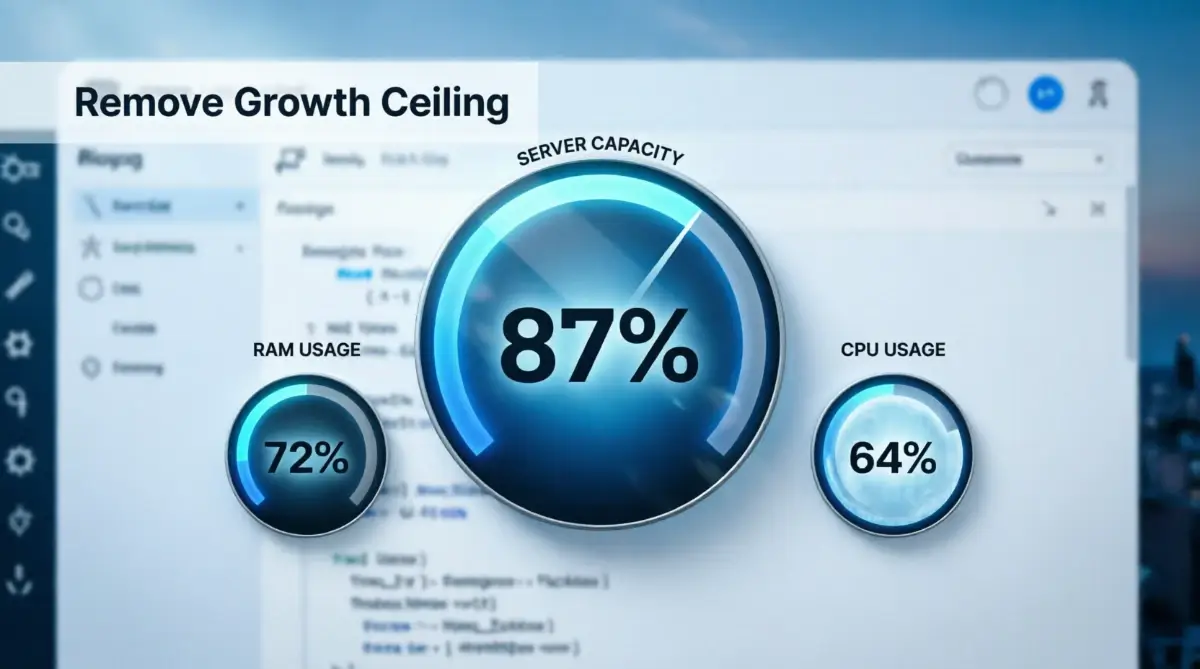
The free platform I started on had served its purpose it allowed me to publish without upfront cost, to learn, to experiment, and to build a body of work. But as the library grew past eighty articles, the limitations became harder to ignore. The page speed scores were acceptable but not strong mobile performance hovered in the yellow, under 80, while desktop was better, ranging from 93 to 98. For a blog with long‑form articles and a growing internal link structure, those speeds were a ceiling on future growth. I needed a hosting plan that would remove that ceiling entirely.
This is the story of how I chose that plan not as a recommendation. Not as professional advice. As a personal account of the criteria I used, the research I conducted, and the results I measured. The hosting plan that fit my budget, my technical needs, and my growth projections may not fit yours. But the process of choosing the questions I asked, the trade‑offs I weighed is something I believe every digital asset builder should go through.
A hosting plan is not an expense. It is the foundation on which every page view, every ranking, and every returning reader will stand.
The Criteria That Guided My Search
First: I looked at a single hosting provider, I wrote down the non‑negotiables. First, page speed. If a hosting plan could not deliver fast load times measured by actual test data, not marketing claims it was not an option. Slow pages drive visitors away before the content has a chance to work. They also send negative signals to search engines, which increasingly use page experience as a ranking factor. The blog was built on long‑form, value‑dense articles. If a reader landed on a page and waited more than a few seconds for it to appear, I had already lost them.
Second: the plan had to support my future traffic, not my current traffic. At the time, the blog was just beginning its journey. The visitor count was small. But I was not building for small. I was building for the day when the library would be large enough to attract thousands of visitors per month, and eventually tens of thousands. I looked for a plan that could comfortably handle up to 100,000 monthly visitors. That number was not a prediction. It was a ceiling I wanted the hosting to accommodate so that I would never have to migrate again the moment growth arrived.
Third: I needed full control over the site’s architecture. The free platform had limitations date‑stamped URLs, restricted customization, limited access to the underlying code. A self‑hosted WordPress setup would give me clean, evergreen URLs, the ability to optimize every aspect of the site, and a professional foundation that could support whatever monetization strategies I chose down the road. This is the lesson I learned when I migrated my blog from Blogger to WordPress and experienced firsthand how a self‑hosted setup transforms the long‑term potential of a digital asset the migration was not just a technical move. It was a declaration that the blog was a permanent asset.
The Budget Constraint That Shaped Every Decision
I was not operating with an unlimited budget. Every dollar spent on hosting was a dollar not spent on something else. So I set a ceiling: the plan had to be affordable enough to sustain even during months when the blog generated zero income. That constraint eliminated most enterprise‑level options and focused my search on shared hosting plans that offered strong performance at a reasonable price. I was not looking for the cheapest option. I was looking for the best value the intersection of speed, capacity, and cost that would not force me to compromise on the first two criteria.
The Scalability Requirement That Looked Beyond Today
A hosting plan that works for a site with 1,000 monthly visitors may collapse under the load of 10,000. I did not want to be forced into another migration in twelve months. So I looked for a plan that offered enough headroom to grow into CPU cores, RAM, PHP workers, and storage that could handle a meaningful increase in traffic without requiring an immediate upgrade. The plan I eventually chose included 3 GB of RAM, 2 CPU cores, 60 PHP workers, and 50 GB of NVMe storage. Those specifications were more than the blog needed at the time. That was the point. I was buying capacity for the future, not just adequacy for the present.
The Limitations of the Free Platform That Forced the Decision
The free platform had served its purpose, but its technical limitations were holding the blog back. The most visible problem was page speed. The platform did not allow me to install caching plugins or optimize server‑side performance. Images were served without modern compression. There was no CDN at the free tier. The result was a mobile experience that lagged, a Largest Contentful Paint that took too long, and a Cumulative Layout Shift that made the page jump as elements loaded. Beyond speed, the platform embedded dates in every URL. Those dates made the content look tied to a specific moment, undermining the evergreen value of articles that I intended to update and keep relevant for years. A self‑hosted WordPress setup would remove all of these limitations. It was not an upgrade for the sake of appearance. It was a practical necessity for a site that aimed to grow.
Why I Did Not Choose Cloud Hosting Initially
Cloud hosting offers flexibility and near‑infinite scalability, but it also comes with greater complexity and a higher starting price. At the time of my migration, I did not need the power of a cloud server. The traffic was small, and my technical skills were focused on content, not server administration. A managed shared hosting plan provided the speed and capacity I needed without the learning curve of configuring a cloud environment. When the blog reaches the point where shared hosting becomes a bottleneck, cloud hosting will be the natural next step. Until then, the Hostinger plan is the right tool for the current job. Choosing the appropriate level of hosting not the most powerful option available is a discipline that keeps costs aligned with actual needs.
The Research Process That Led Me to Hostinger
I did not rely on affiliate reviews or top‑ten lists. I went directly to the technical specifications and compared plans side by side. I looked at the underlying hardware: NVMe storage versus traditional SSD, the number of PHP workers, the RAM allocation, the CPU cores. I looked at the included features: free SSL, daily backups, a CDN, email hosting. I looked at the uptime guarantee and the locations of the data centers. A hosting plan that looked cheap on the surface often lacked one or more of these critical features, and the missing pieces would become expensive to fill later.
The plan I settled on was the Hostinger Business Shared Hosting plan. I mention this name because transparency matters. This is the specific plan that met my criteria at the time of my migration. It included managed WordPress hosting, which meant automatic updates and security patches. It included a free CDN, which meant faster load times for visitors regardless of their geographic location. It included daily backups, which meant I would never lose more than a day’s work if something went wrong. It included unlimited bandwidth, which meant no surprise overage charges if traffic spiked. And it included a free domain and SSL certificate, which removed two additional costs from the equation.
The plan offered 50 GB of NVMe storage, support for up to 50 websites, 60 PHP workers, 150 databases, 3 GB of RAM, 2 CPU cores, and a dedicated IP address. It came with a free automatic website migration a critical feature for someone moving from a free platform with no technical background. The price was within my budget. The specifications exceeded my current needs while leaving room for growth. The plan could handle up to 100,000 monthly visitors, which was the ceiling I had set.
I share these details not to suggest that anyone else should choose the same plan. I share them to illustrate the type of analysis that goes into a hosting decision. The numbers that matter are not the marketing claims on the provider’s homepage. They are the technical specifications that determine how the site will perform under load, how fast pages will load for visitors, and how much room exists for growth. I compared those numbers across multiple providers before making a choice. That process, not the specific plan I chose, is what I would encourage anyone to replicate.
The Features That Matter More Than the Price Tag
It is easy to choose a hosting plan based on the monthly cost. But the monthly cost tells you nothing about the value. A plan that costs five dollars a month and delivers slow speeds, no backups, and no CDN is more expensive in the long run than a plan that costs twice as much and includes everything needed to run a professional site. The hidden costs of a cheap plan lost visitors, lower rankings, the time spent fixing problems add up quickly. I learned to look past the price and evaluate the total package.
The Importance of Managed WordPress Hosting
For someone who is not a developer, managed WordPress hosting is a significant advantage. The provider handles updates, security patches, and server‑level optimizations that I would otherwise have to manage myself. That allows me to focus on what I do best: writing and publishing content. The time saved by not having to deal with server administration is time I can invest directly into the asset. That trade‑off spending a little more on hosting to free up creative energy is one I would make again without hesitation.
The Spreadsheet That Made the Comparison Objective
When I compared hosting plans, I created a simple spreadsheet with columns for storage type, RAM, CPU cores, PHP workers, CDN, backups, SSL, email, domain, and monthly cost. I filled it in for three different providers. The exercise made the differences clear. Some plans offered more storage but fewer PHP workers. Others offered a lower price but no CDN or backups. The Hostinger plan was not the cheapest. It was the one where every row in my spreadsheet was checked off without compromise. That method listing criteria, gathering data, and comparing objectively removed the emotional pull of marketing and let the specifications speak for themselves.
The Page Speed Results That Justified the Decision
After migrating the blog from Blogger to WordPress and setting up the new hosting environment, I ran the site through Google’s official Page Speed Insights tool. The results were immediate and measurable. On mobile, the performance score jumped into the green zone 95 to 99, depending on the page. On desktop, the score ranged from 97 to 100. Those numbers represented a dramatic improvement over the Blogger scores, where mobile had been stuck below 80 and desktop had hovered in the low 90s.
The difference was not just cosmetic. Page speed directly affects user experience. A faster site means visitors stay longer, read more, and are more likely to return. Page speed also affects search rankings. Google has made it clear that page experience including Core Web Vitals is a ranking signal. A site that loads in under two seconds on mobile has an advantage over a site that takes four or five. The Hostinger plan enabled those speeds. The self‑hosted WordPress setup gave me the tools to optimize further: caching plugins, image compression, code modification. The combination of a fast server and a customizable platform created a site that was not just faster than its Blogger predecessor, but fundamentally more capable.
The Core Web Vitals That Confirmed the Improvement
Beyond the overall performance score, I checked the Core Web Vitals the specific metrics Google uses to measure user experience. Largest Contentful Paint, which measures how quickly the main content loads, dropped from over four seconds on the free platform to under two seconds on the new host. First Input Delay became negligible, meaning the page responded instantly to taps and follows. Cumulative Layout Shift fell to near zero, so text and images no longer jumped around as the page loaded. These improvements are not abstract. They translate directly into readers staying on the page longer, scrolling deeper, and trusting the site enough to return. Every millisecond saved is a small competitive advantage in a space where attention is scarce and patience is thin.
The Self‑Hosted Advantage That Extends Beyond Speed
Speed was the primary driver of my hosting decision, but the benefits of a self‑hosted setup extended beyond performance. I gained full control over the site’s structure, allowing me to create clean, keyword‑rich URLs without date stamps an essential step for building evergreen content that remains relevant for years. I gained the ability to install plugins for caching, SEO, and security. I gained a professional domain that signals to readers and search engines alike that the site is a serious, long‑term project. These advantages, while secondary to speed, compound over time. A faster, cleaner, more professional site earns more trust, attracts more backlinks, and ranks higher. The hosting plan is the foundation on which all of that is built and how to structure a productive environment that supports long‑term focus and removes the hidden friction that slows down every project the hosting environment is the digital equivalent of a physical workspace. If it is cluttered, slow, and unreliable, the work suffers. If it is fast, clean, and stable, the work flows.
The Migration That Tested the Plan
Moving 82 articles from Blogger to WordPress was the first real test of the hosting environment. I prepared by exporting my Blogger content, purchasing the Hostinger plan and domain, and then initiating the free automatic website migration offered by the provider. The process transferred all articles, images, and comments without requiring me to touch the command line. Once the content was on the new server, I configured the 301 redirects from the old Blogger URLs to the new WordPress permalinks. This step is critical for preserving any existing search rankings and ensuring that visitors who follow old links are seamlessly redirected to the new URLs.
After the redirects were live I installed essential WordPress plugins: a caching plugin, an SEO plugin, an image optimization plugin, and a security plugin. I configured each one to work with the hosting plan’s built‑in features. The caching plugin leveraged the server’s NVMe storage and PHP workers. The image optimization plugin compressed existing images and set up automatic compression for future uploads. The SEO plugin generated clean sitemaps and meta tags. Within a few hours, the site was fully operational on its new foundation.
The Redirect Setup That Preserved Every Existing Link
The redirect process was the most delicate part of the migration. Every old Blogger URL had a date‑stamped structure. Every new WordPress URL used a clean, keyword‑based permalink. I had to map each old URL to its corresponding new one, ensuring that no link was broken. I tested each redirect manually before finalizing. A single mistake could have meant a lost visitor, a lost ranking signal, a lost opportunity. The attention to detail during this phase paid off: the traffic dip that followed the migration was minimal and temporary, and within weeks the new URLs were indexed and ranking.
The Trust Leap of Moving 82 Articles to a New Host
Handing over a library of 82 articles to a new server felt like a leap of faith. I had backups, but the emotional weight of the migration was real. Every article represented hours of work, a decision made, a question answered. The moment the migration completed and I saw the site live on its new domain, I felt a wave of relief. The redirects were working. The pages were loading. The library had a new, permanent home. That relief was not just about technical success. It was the confirmation that I had made a sound investment in the future of the asset the kind of long‑term thinking that defining a clear mission for a blog provides when the early numbers are small.
The Day After Migration: Living With the New Setup
The morning after the migration, I logged into the Hostinger dashboard and explored the interface. Everything was organized, intuitive, and fast. I could see the site’s resource usage, manage the domain, access email settings, and check backups all from a single screen. The WordPress installation was smooth, and the managed updates began running automatically. I did not have to configure cron jobs or worry about server‑level caching. The platform handled it. That simplicity was exactly what I had hoped for. I wanted the hosting to fade into the background so I could focus on writing. It did.
The Ongoing Optimization That Keeps the Site Fast
A fast hosting plan is the foundation, but ongoing optimization is what maintains the speed over time. I run Page Speed Insights tests after every major update when I add a new plugin, change the theme, or publish a batch of articles. I check the Core Web Vitals in Google Search Console monthly to catch any regressions. I optimize images before uploading them, using compression to reduce file size without visible quality loss. I minify CSS and JavaScript. I leverage browser caching. Each of these actions contributes a small speed improvement, and collectively they keep the site in the green zone.
This maintenance routine is not time‑consuming. It takes perhaps thirty minutes per month. But it is the difference between a site that gradually slows down under the weight of accumulated content and a site that remains fast as it grows. The discipline of regular maintenance is the kind of ongoing editing and improvement routine that keeps every article in the library relevant and valuable applies as much to the technical foundation as it does to the content itself.
The Long‑Term Perspective That Shaped the Choice
I did not choose a hosting plan for the blog I had at 82 articles. I chose it for the blog I intend to have at 500 articles, at 1,000 articles. I had already passed the 50‑article milestone which confirmed that the blog was no longer an experiment but a real asset worth investing in a digital asset is a long‑term project. The hosting decision must be made with that timeline in mind. A plan that saves ten dollars a month but limits growth or slows down the site is not a bargain. It is a tax on the future.
I think about the blog in five‑year increments. In five years, if I continue publishing consistently, the library will be large. The traffic will be meaningful. The income will be a byproduct of the value provided. The Hostinger plan I chose is the platform on which that entire trajectory will be built. If the platform is weak, the trajectory is capped. If the platform is strong, the only limit is the quality and consistency of the content. That perspective the practice of setting goals that span a decade rather than a quarter, making decisions based on long‑term value rather than short‑term cost is what guided every part of this decision.
The Cost of a Slow Website Over Time
A slow website does not just lose a few visitors today it loses rankings, trust, and momentum over months and years. The cost is invisible, spread across thousands of small interactions that never happen because the page took too long to load. The visitor who would have stayed, read, and returned is gone before the first paragraph appears. The search engine that would have ranked the article higher demotes it based on a poor page experience signal. The compounding effect of a slow site is negative. The compounding effect of a fast site is positive. The hosting decision determines which direction that compounding goes.
The Hidden Cost of Cheap Hosting
A hosting plan that saves a few dollars per month but delivers slow speeds can cost hundreds of dollars in lost opportunities. A visitor who bounces because a page took too long to load is not coming back. A search engine that demotes a site due to poor Core Web Vitals is not easily convinced to re‑rank it higher. The savings on the hosting bill are invisible compared to the losses that accumulate over time. I chose to invest in speed not because I had money to waste, but because I could not afford to lose the trust of a single visitor who might have become a loyal reader.
The Financial Analysis of Hosting Cost
The Hostinger Business Shared Hosting plan costs a predictable monthly amount. I calculated the break‑even point: how many additional visitors, at a conservative conversion rate, would I need to cover the hosting cost through ad revenue or affiliate income? The number was small. A handful of extra visitors per month, staying longer and trusting the site more because it loads fast, would easily offset the hosting fee. And the hosting fee is fixed. The upside better rankings, more trust, more returning visitors is uncapped. That financial asymmetry made the decision straightforward. It was not a cost. It was an investment with a measurable return, even if the return took months to materialize.
The Recurring Investment That Compounds
I treat the hosting fee as a recurring investment in the asset’s health. Every month, the payment renews the foundation on which every article rests. It pays for the speed that keeps visitors engaged. It pays for the security that protects the library. It pays for the backups that guard against catastrophe. When I view the hosting cost through that lens, it stops feeling like an expense and starts feeling like the most affordable insurance policy I own. A single lost article, a single hour of downtime, a single visitor who bounces due to slow load times any of those costs more than a month of hosting.
The Upgrade Path That Keeps the Future Open
The plan I chose is not the final destination. It is a waypoint. When the traffic approaches the ceiling of what this plan can handle, I will evaluate the next step whether an upgraded plan within Hostinger or a migration to a cloud hosting solution that offers greater flexibility and scalability. The important thing is that the decision to upgrade will be driven by actual growth, not by a crisis. Too many site owners wait until their site crashes or slows to a crawl before they upgrade. By planning ahead and choosing a plan with headroom, I have given myself the luxury of upgrading on my own terms, when the data supports it.
The Strategic Foundation That Supports Every Article
The hosting plan is one component of a larger strategic system. It works alongside the content strategy, the keyword research, the internal linking, and the publishing cadence the rhythm of showing up every evening that I have built into my life to create an asset that grows over time. If any one of those components is weak, the others must compensate. If the hosting is slow, the best content in the world will not save the user experience. If the content is thin, the fastest server on the planet will not keep readers on the page. The components are interdependent.
I chose the Hostinger plan with that interdependence in mind. I knew that every article I published would depend on the server’s ability to deliver it quickly. I knew that every internal link would depend on the page loading fast enough for the reader to follow it. I knew that every search ranking would depend, in part, on the site’s technical performance. The hosting plan was not a separate decision from the content. It was an integral part of the content’s ability to succeed. This is the integrated thinking I apply when building a strategic system for self‑discipline that turns scattered efforts into a repeatable, scalable process.
The Decisions That Compound Over the Life of the Asset
Every decision I make about the blog the hosting, the URLs, the design, the content compounds over the life of the asset. A good decision made today pays dividends for years. A bad decision made today exacts a tax for years. The hosting decision is one of the highest‑leverage decisions a digital asset builder can make because it affects every other component. A fast site makes good content better. A slow site makes good content worse. The asymmetry is stark.
I made the hosting decision carefully, with research and patience, because I knew that the cost of a mistake would not be a one‑time fee. It would be the accumulated loss of visitors who never stayed, rankings that never materialized, and trust that never formed. The cost of a good hosting plan is visible. The cost of a bad one is hidden in the negative space of what could have been.
The Relationship Between Hosting Speed and SEO
Search engines use page speed as a ranking signal. But the relationship goes deeper than a single metric. A fast site encourages visitors to stay longer, view more pages, and return more often. Those engagement signals session duration, pages per visit, bounce rate are also ranking factors. A slow site produces poor engagement signals. A fast site produces strong ones. The hosting plan, by enabling speed, indirectly improves every engagement metric that search engines measure and how to structure long‑form guides that hold attention and keep readers engaged the underlying assumption is that the page loads fast enough for the reader to even begin. If the page takes five seconds to load, the best structure in the world cannot save the experience. Hosting speed is the prerequisite for content engagement. It is the first domino.
Managed WordPress hosting handles security updates, firewall rules, and malware scanning automatically. I do not spend time configuring these things. I do not lie awake worrying that a vulnerability in an outdated plugin will compromise the site. That mental capacity freed from technical anxiety is redirected into writing, researching, and improving the library. The value of that freed attention is difficult to quantify, but it is real. Every minute I am not troubleshooting a security issue is a minute I am creating something that will serve readers for years.
The Compound Effect of Technical Quality on Reader Loyalty
A fast, secure, professional site earns loyalty in small increments. A reader who visits once and has a smooth experience is more likely to return. A reader who returns twice is more likely to bookmark the site. A reader who bookmarks the site is more likely to share an article. That chain of loyalty begins with the technical foundation. If the site is slow or unreliable, the chain breaks at the first link. The hosting plan keeps the chain intact, allowing every other investment in content, in design, in marketing to pay off fully.
The Additional Features That Rounded Out the Decision
Beyond the core requirements of speed and scalability, the Hostinger plan included several features that, while not deal‑breakers, added significant value. The free email hosting for the first year allowed me to set up a professional address tied to my domain. The domain WHOIS privacy protection kept my personal information out of the public database. The free automatic website migration removed the technical barrier that might have otherwise delayed my move from Blogger. The 99.9% uptime guarantee provided assurance that the site would be available when visitors arrived.
These features are not unique to Hostinger. Many providers offer similar packages. But the combination speed, scalability, control, email, privacy, migration, uptime all included in a single plan at a price within my budget made the decision straightforward. I did not have to piece together services from multiple providers. Everything was consolidated under one account, one dashboard, one bill.
The Daily Backups That Saved Me Once Already
During the early weeks after migration, I made a configuration change that briefly broke the site’s layout. Because daily backups were included with the plan, I restored the previous version in minutes. That experience taught me the value of backups not as a marketing bullet point, but as a practical safety net. Without backups, that mistake would have cost hours of troubleshooting. With backups, it cost a few minutes. That peace of mind allows me to experiment, to try new plugins and optimizations, knowing that I can always revert if something goes wrong.
The CDN That Serves Visitors From Everywhere
The free CDN included with the plan distributes the site’s static files across a network of global servers. When a visitor from the UK or the USA requests a page, they receive the files from a server near them, not from the origin server. That geographic distribution reduces load times significantly for visitors far from the primary data center. For a blog that aims to serve a global audience, a CDN is not a luxury. It is a necessity. The analytics after the migration showed a small but measurable improvement in session duration from international visitors, which I attribute partly to faster load times via the CDN.
Unlimited Bandwidth and the Freedom From Overage Worries
The plan includes unlimited bandwidth. I will never receive a surprise bill because a particular article performed well and attracted more visitors than expected. That freedom removes a subtle but real anxiety that can affect how I promote my content. If I write something that resonates and traffic spikes, the server will handle it without penalty. That knowledge allows me to focus on creating value, not on managing traffic limits.
The plan includes a dedicated IP address for a small blog, a dedicated IP is not essential, but it provides subtle advantages. It can improve email deliverability because the domain’s reputation is not shared with other sites. It can also simplify SSL certificate management. These benefits are not flashy, but they contribute to the overall professionalism and reliability of the site. I did not seek out a dedicated IP specifically, but having it included in the plan was a welcome addition.
The Free Domain and SSL That Lowered the Entry Barrier
The plan included a free domain for the first year and a free SSL certificate. Those two items, if purchased separately, would have added meaningful cost. Having them bundled removed a barrier to entry that might have otherwise delayed my decision. The SSL certificate ensures that the site is served over HTTPS, which is essential for reader trust and search rankings. The domain gives the site a professional identity. Both were included without additional negotiation or setup.
The Brand Perception That a Fast Site Creates
Visitors judge a website in milliseconds before they read a headline, before they process a sentence, they have already formed an impression based on how quickly the page appeared. A fast site signals competence, professionalism, and respect for the visitor’s time. A slow site signals the opposite. That impression, formed in an instant, colors everything that follows. The hosting plan I chose ensures that the first impression is a good one. That matters for every visitor who lands on the site, from the first to the thousandth.
I remember the evening after the migration was complete. The site was live on its new server. I opened Page Speed Insights and typed in the URL. The test ran. The score appeared. Mobile: 97. Desktop: 99. I ran it again on a different article. Similar results. The numbers were not just an improvement they were a transformation. The yellow zone that had haunted the mobile experience was gone. The green zone was solid, consistent, reliable.
I sat there for a moment, not celebrating, but recognizing. The hosting plan was working. The foundation was solid. The library had a permanent, fast, professional home. The work of the next several years would be built on that foundation. And the foundation would hold. That recognition was a private satisfaction the kind that comes not from external validation but from knowing you made a decision that will compound in your favor for as long as the asset exists.
The green scores on Page Speed Insights became a private source of confidence. Every time I ran the test and saw 97, 98, 99, I knew that the technical foundation was solid. That knowledge freed me to focus on the writing. I did not have to worry that a slow server was undermining my efforts. The hosting plan had removed that variable from the equation. What remained was purely about the quality of the content. And that is exactly where the focus should be.
The difference between the old platform and the new one was not just in the numbers. It was in the feeling of opening the site and seeing it load instantly, of navigating between pages without waiting, of knowing that every visitor whether from a nearby city or across the ocean was experiencing the same speed. That feeling, repeated every day, reinforced my confidence in the decision.
The Transparency and Disclaimer Every Reader Deserves
This article is not a recommendation. The Hostinger Business Shared Hosting plan was the right choice for my specific situation my budget, my technical requirements, my growth projections, my tolerance for risk. I named the plan because transparency matters, not because I believe it is the right choice for anyone else. Your situation is different. Your budget may be different. Your technical needs may be different. The plan that worked for me may be completely wrong for you.
Before making any hosting decision, do your own research. Compare plans based on the technical specifications that matter for your specific use case. Read the terms of service. Understand the upgrade paths. Test the customer support if possible. Make the decision based on your own responsibility, not on the experience of a stranger on the internet. I share my story not as a template to copy, but as an example of a process to adapt.
The internet is filled with hosting reviews that are little more than affiliate marketing. I do not participate in that. I do not earn a commission if you choose any particular provider. I have no incentive to steer you toward or away from any specific plan. The only thing I care about is that you make an informed decision that supports the long‑term growth of your digital asset. Because that asset not the hosting plan that powers it is the thing that will eventually change your life.
The best hosting plan is the one that fits your budget, your needs, and your future. Not the one someone else told you to buy.
The Long‑Term Cost Projection and Final Thoughts
I projected the hosting cost over five years and compared it to the expected growth of the blog. The projection was simple: if the blog generates even a modest income after year two, the hosting cost is a fraction of the revenue. If the blog generates no income, the hosting cost is still manageable within my budget. There was no scenario where the hosting cost would break me, and many scenarios where it would pay for itself many times over. That projection gave me confidence. I was not gambling. I was making a calculated investment in the infrastructure of an asset that would compound.
The hosting decision I made was personal, specific, and deliberate. I chose a plan that fit my budget, exceeded my current needs, and gave me room to grow. I chose a plan that prioritized speed because speed is the first experience every visitor has with my content. I chose a plan that gave me full control over the site’s architecture because control is the foundation of a long‑term asset. And I chose a plan with a clear upgrade path because growth should never be punished by a platform that cannot keep up.
Your decision will be different your budget, your traffic, your technical skills, your goals all of those variables will shape the plan that is right for you. The process I followed is more important than the plan I chose. Define your non‑negotiables. Research the specifications. Compare based on value, not price. Buy for the future, not just the present. And never let a slow server be the reason your content fails to reach the people it was written to serve.
The hosting plan is not the star of the show. The content is. But the hosting plan is the stage. And a shaky stage makes even the best performance look amateur. A solid stage lets the performance shine. The Hostinger plan gave me that solid stage. Your research will give you yours.
Every time I log into the site and see it running fast, I am reminded that the hosting decision was one of the best investments I have made in this asset. The peace of mind it provides is worth the monthly fee many times over. That is the feeling I hope every digital asset builder experiences the private confidence that the foundation is solid and the only limit is the work itself. I made mine with research and patience. The results speak for themselves in every green Page Speed score and every visitor who stays to read. The library deserves a fast home. I gave it one. The foundation I chose holds steady every time a page loads, every time a reader stays, every time the library grows by one more shelf. The next article I publish will load in under two seconds. That is the standard I set, and the hosting plan makes it possible.