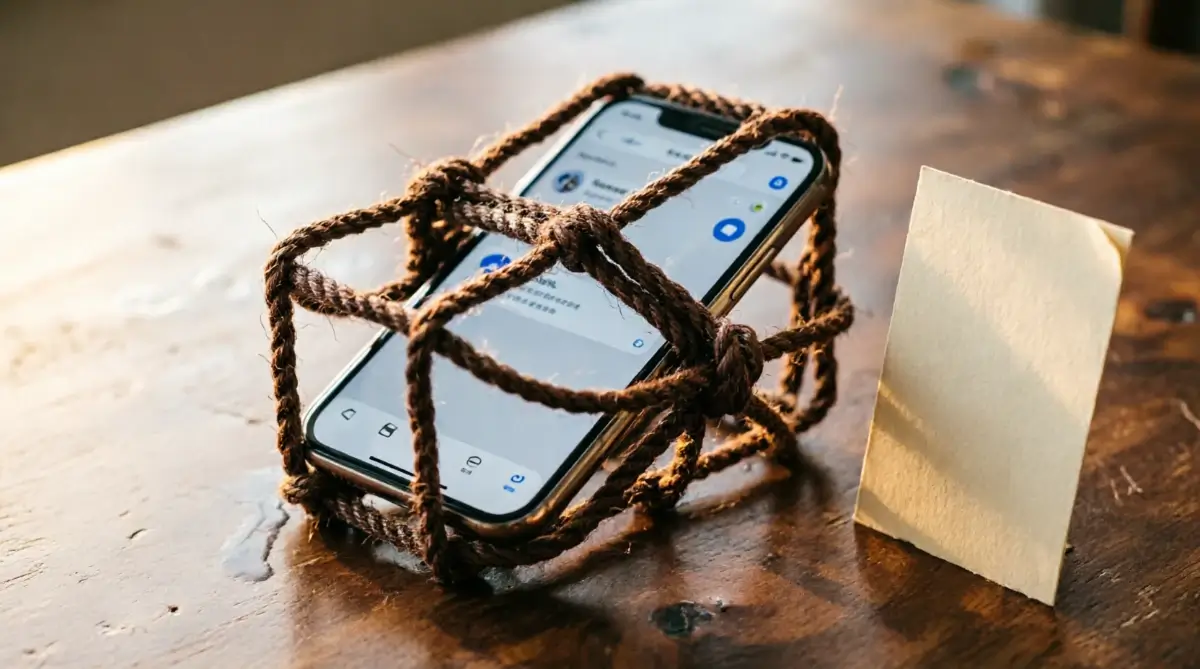
The pause was the first thing I noticed. Not when I was reading. Not when I was listening. But when I opened my mouth to speak. A small gap would open between the thought and the sound. In that gap, a process was running a translation process. I would hear the sentence I wanted to say in my own language, and then I would try to rebuild it, piece by piece, in the language I was learning. Word order. Verb endings. The right preposition. By the time I had the sentence ready, the conversation had moved on.
That pause was not a lack of vocabulary. I knew the words. I had studied them I could recognize them on a page or in a recording. But when I needed to produce them when I needed them to come out of my mouth in real time they were stuck behind a gate. And the gate was translation. I was translating everything before I spoke, and that translation was slowing me down in ways I did not yet understand. I was beginning to see why translation apps can slow language development not because they translate, but because they train you to depend on the translation before you act.
The moment I saw that translation was not the same as understanding
I remember watching a short clip in the language I was learning. There was a phrase I did not know. I paused the video, opened a translation app, and typed the words. The app gave me the meaning in my own language. I read it, understood it, and then replayed the scene. But something was missing. I had understood the translation, but I had not understood the phrase itself. The words in the new language were still foreign. The translation had given me the meaning without giving me the sound, the shape, the feel of the original.
That was when I began to see the difference translation gave me access to meaning. But it did not give me access to the language. The language lived in the original sounds, in the way the words were arranged, in the rhythm of the sentence. The translation was a photograph of the language, not the language itself. And I had been collecting photographs, thinking I was collecting the real thing.
The pause stayed with me for years it became a scar a small, invisible mark on every conversation I tried to have. And I did not know how to heal it until I stopped trying to translate everything and started letting the new language stand on its own.
The assumption that almost made me quit
When I first started learning, I believed that every sentence in the new language had a matching sentence in my own. I thought the words just needed to be swapped. The subject goes here. The verb goes there. The adjective before the noun. This was the structure I knew, and I assumed it was universal. It was not.
The new language had its own order, its own rules, its own way of arranging ideas. But I was not seeing it. I was seeing only my own language, reflected back at me through the translation app. Every time I looked up a sentence, I compared it to how I would say it in my native tongue. And every time I did that, I was reinforcing the idea that the new language was just a coded version of my own. It was not. It was its own world, with its own logic. And I was refusing to enter it.
The mental pause that became a wall
The comparison created a pause a tiny, almost invisible pause between hearing and understanding, between thinking and speaking. That pause was the scar. It was the moment when my brain checked the translation, compared the structures, and tried to fit the new language into the old mold. And the more I relied on translation apps, the deeper that scar became.
I later came to understand what was happening inside my mind. When we rely on instant translation, we bypass the productive struggle that builds real memory. The brain does not need to work, so it does not learn. The translation becomes a crutch, and the leg that should be walking grows weak to stop the mental translation and let my mouth speak without an internal translation I had to stop comparing every new sentence to my native language. I had to let the new language be itself.
A little comparison can be helpful at the very start it gives you a frame. But if you keep comparing every sentence, you train your brain to always look for your own language inside the new one. The new language never gets to stand on its own. The goal is to reach a point where you understand without comparing. Use comparison as a temporary step, not a permanent habit.
The comparison was not helping me learn it was keeping me safe in my own language while the new one waited outside, unheard. When I finally stopped comparing, the door began to open.
The documentary scene that finally changed how I used translation tools
I was watching a documentary about a subject I loved. The narrator spoke quickly, and a phrase appeared that I did not recognize. My old habit would have been to pause, open the translation app, and type the whole sentence. I would have read the translation, compared the structure to my own language, and tried to memorize the pattern.
But this time, I did something different. I paused the video. I opened the translation app. But instead of translating the whole sentence, I translated only the one word I did not know. Just the word. I read the meaning, closed the app, and replayed the scene. The phrase was still there, but now the unknown word had a face. The rest of the sentence stood on its own. I did not compare it to my language. I just understood it.
Letting the phrase stand on its own without comparison
That small change translating only the word, not the sentence shifted something inside me. I began to see the phrases in the new language as complete things. They did not need to match my language. They did not need to be compared. They just needed to be understood.
The more I did this, the less I needed the translation app the words I looked up once stayed with me longer, because I was not burying them under a layer of comparison. I was learning them as they were, in their own shape, in their own order the simplest way to keep vocabulary from fading was to stop comparing it to my own language and start meeting it in its natural home.
I made a rule for myself. If the sentence made sense except for one or two words, I only looked up those words. If the whole sentence was a mystery, I allowed myself to read the full translation but only after I had tried to guess the meaning first. The key was always to try without the app before reaching for it.
The documentary scene taught me something the translation app never could. The words were not pieces to be rearranged into my language they were complete, standing on their own, waiting for me to meet them where they were.
I still remember the first phrase I understood without translating. It was a simple greeting, but it arrived whole. I did not break it apart. I did not compare it. I just knew what it meant. That was the moment the scar began to heal. Translation apps become a problem not because they translate, but because they train you to compare every new structure to your native language. I used to translate every word, thinking the new language should work like mine. That habit left a scar a pause before every sentence while my brain checked the translation. When I changed how I used the app translating only unfamiliar words, not whole sentences, and never comparing structures the pause shrank. The words I earned through context stayed. The ones I borrowed through comparison faded. The tool itself is not the enemy. The habit of comparison is.
The words that stayed and the words that faded
There is a difference between a word you look up and a word you figure out. I did not understand this until I looked back at months of learning and noticed a pattern. The words I had translated instantly the ones I had looked up before I even tried to guess their meaning were mostly gone. They had slipped away within days, leaving no trace. But the words I had struggled with, the ones I had read three times, guessed from the surrounding sentences, and only then checked those were still with me.
The struggle was the difference. When my brain had to work for the meaning, it held onto the result. When the translation app handed me the answer without effort, my brain treated it as disposable. It was like the difference between being given a fish and learning to catch one. The fish you catch yourself feeds you longer.
The vocabulary I earned through context never left
I used to think translation was saving me time a quick tap, and I knew the meaning. But that time was borrowed, not saved. The words came fast and left faster. They were borrowed from the app, not earned by my own effort. And borrowed words, like borrowed money, never really feel like they belong to you.
When I stopped borrowing and started earning, the vocabulary became mine. It stayed because I had built a connection to it a memory of the sentence where I first saw it, the guess I made, the moment of discovery when I finally understood. That connection was the glue. The translation app had been washing the glue away before it could set.
I gave myself three attempts before looking up a word. I would read the sentence, then the paragraph. If I still could not guess, I would walk away for a few minutes and come back. Only after the third attempt would I reach for the translation. Most of the time, the meaning surfaced on its own before I ever tapped the button.
The words that stayed were not the ones I had looked up fastest. They were the ones I had worked for. And that work, which once felt like a waste of time, turned out to be the only thing that made them mine.
The slow migration from mental translation to automatic speech
The scar began to heal when I made one deliberate change. I stopped checking how the new language fit into my own. I stopped asking, “How would I say this in my native tongue?” I stopped comparing word order, verb endings, and sentence flow. I just let the new language be itself.
This was uncomfortable at first. My brain kept reaching for the comparison, the way a hand reaches for a crutch even after the leg has healed. But I kept pulling it back. When I heard a phrase, I repeated it as it was. When I read a sentence, I understood it in its own shape. I did not translate it in my head. I just accepted it.
The first conversation without a pause
The first time I spoke without pausing, I almost did not notice. I was talking with a neighbour about something ordinary the weather, the bus schedule and the words came out before I had time to translate them. I did not prepare the sentence in my own language first. I just spoke. And when I finished, I realized what had happened.
That moment was not the result of a single breakthrough. It was the result of weeks of small choices. Choosing not to compare. Choosing to listen without translating. Choosing to speak without rehearsing. Each choice had been a small act of healing, and together they had closed the wound. I was learning any foreign language by myself, and the system I was building was finally strong enough to carry me. The confidence I built before my first real conversation had been essential without that preparation, I would have frozen, but with it, I could step into the unknown and trust that the words would come.
To stop translating in my head, I started with single words. When I saw a common object a door, a cup, a window I thought the word in the new language without passing through my native language. Then I moved to short phrases. Then to full sentences. The habit broke slowly, but it did break. The key was to catch myself translating and gently redirect, never punishing myself.
The pause did not disappear in a single moment. It faded over weeks and months, one uncompared sentence at a time. And when it finally vanished, what replaced it was not just fluency. It was freedom.
The real damage is not the tool but the comparison
I still have a translation app on my phone. I use it when I need it. The tool itself is not the problem. The problem is the habit of comparison that the tool can create if you are not careful. When every new word is filtered through your own language, you never let the new language develop its own voice in your mind. You are always listening to an echo, never the original sound.
The translation app is like a mirror. If you use it to glance quickly and then look away, it helps. If you stare into it and try to find yourself in every reflection, you lose yourself. The same is true for language. Use the app to understand, then let the new language stand alone.
Using translation only for understanding
The rule I gave myself was simple. Translate only to understand. Never to compare. When I looked up a word, I read the meaning and moved on. I did not study how the grammar differed from my own language. I did not check if the word order was the same. I just understood, and then I let the phrase be.
This shift changed the way I absorbed the language. The phrases began to feel natural because I was not constantly measuring them against a different standard. They were their own standard. And once I accepted that, the language stopped feeling foreign. It started feeling like just another way of saying what I wanted to say.
If I noticed myself thinking, “In my language we would say it like this,” I knew I was comparing. I would gently stop myself. I reminded myself that the new language is not a version of my own. It is its own thing. Let it be.
The tool was never the scar the scar was the constant measuring, the endless checking, the refusal to let the new language be itself. When I stopped comparing, the scar began to fade. And the language, finally free, began to grow. Every time I compared, I built a wall between myself and the new language. Every time I let it stand alone, I tore that wall down. The choice was made in a hundred small moments every time I reached for the translation, every time I paused to check the structure, every time I trusted the new language to be enough on its own.
There was a week when I forced myself not to compare a single sentence. I looked up words when I needed them, but I did not analyse the grammar. I did not check the word order. I just read, listened, and spoke. At the end of that week, I had a conversation with a stranger, and I did not pause once. The scar had been healing all along, and I had not even noticed.
The scar fades when you stop picking at it
The habit of comparison was not something I broke in a single day. It was more like a wound that healed only when I stopped touching it. Every time I caught myself wondering how the new language would sound in my native tongue, I pulled my attention back. I told myself, “This is enough. This sentence, in this shape, is enough.”
At first, it felt like I was missing something. The comparison had given me a false sense of security. Without it, I felt exposed. But as the weeks passed, that exposure became freedom. I was no longer carrying my native language on my back while I tried to learn a new one. I was walking alone, and I was walking faster.
The day I forgot to translate and just understood
I do not remember the exact sentence. It was something ordinary a line from a video, a comment from a friend. But I remember the feeling. The words arrived, and I understood them. There was no pause. No mental search. No translation running in the background. The meaning was just there, as if it had always been.
That moment was quiet. It did not announce itself with a trumpet. But it was a turning point. It was the day the scar stopped hurting. The pause that had lived between my ears for years had shrunk to nothing, and in its place was a simple, clean understanding.
The listening practice I had been doing all along had helped this healing more than I realized. By spending hours with podcasts and videos and conversations, I had trained my ear to accept the new language on its own terms. I had learned to listen without needing every word to match my own tongue the ear had led the way, and the voice had followed.
It took me months of deliberate effort for the mental pause to disappear. The pause did not vanish overnight. It faded gradually, and I only noticed it was gone when I looked back. The key is not to wait for a single breakthrough. The key is to keep catching yourself in the act of comparing, and gently choosing not to. Every time you stop the comparison, the scar heals a little more.
The scar did not heal because I found a better translation app. It healed because I stopped picking at it. I let the new language be itself, and in that letting go, I found the fluency that translation had always promised but never delivered. The pause you feel before speaking is not a part of you. It is a habit, and habits can be changed. Every time you stop yourself from comparing, you shorten the pause. One day, you will open your mouth and the words will be there before you even remember that you used to wait.
The slow healing that happened without my noticing
Healing is never a straight line. There were weeks when I felt like nothing was changing. The pause was still there. The comparison still tugged at the edge of every sentence. I wondered if I had stopped improving. I wondered if the scar would always be there.
But I kept going. Not because I felt progress. Because I had promised myself I would not go back to the old way. The translation app was still on my phone, but I was using it differently now only for understanding, never for comparison. And even on the days when I felt stuck, that small, consistent choice was doing its work beneath the surface.
Looking back and seeing the scar had faded
One afternoon, I was talking with someone and I realized something strange. I had been speaking for several minutes, and I had not thought about my native language once. The words had come in the new language, stayed in the new language, and left in the new language. There was no echo. No shadow. No translation running behind the scenes.
That was when I knew the scar had faded not because I had found a magic fix, but because I had kept showing up, day after day, and making the same small choice. The choice to let the language be itself. The choice to stop comparing. The choice to trust that my brain could handle the new language without constantly checking it against the old one.
Staying consistent with that choice, even when there was no one to check on me, had been the hardest and most important part of the whole journey I had learned to stay disciplined without anyone watching the discipline was not in the drills. It was in the quiet, repeated decision to let go.
When I slipped back into old habits, I did not scold myself. I just corrected the course and kept going. The habit of comparison is strong, but it is not stronger than your attention. Every time you notice it and let it go, you weaken it. Slips are part of the process. They are not failures. They are reminders.
The healing was not a single event. It was a thousand small choices, made over months, that finally added up to a voice that spoke without hesitation. The scar did not disappear. It was replaced. Replaced by trust.
I kept a small note on my phone that said, “Let it be.” When I caught myself comparing, I would open the note and read it. Those three words became my anchor. They reminded me that the new language did not need to be fixed or checked or fitted into my own. It just needed to be let in.
The phone still has a translation app but I use it differently now
The translation app is still there, sitting in the same folder on my phone. I open it now and then, when I need to understand a word that refuses to give up its meaning. But I no longer type whole sentences into it. I no longer check how the grammar lines up with my own language. I look up a word, read the meaning, and close the app. That is all.
The tool has returned to its proper place. It is a dictionary, not a crutch. It is a bridge I cross quickly, not a room I live in. And because I use it lightly, it no longer leaves a mark. The scar has healed. The pause is gone. The words come on their own.
What I tell anyone who is still caught in the comparison trap
If I could sit down with the person I was at the start of this journey, I would tell them something simple. The translation app is not your enemy. The comparison is. When you stop comparing every new sentence to your own language, you give the new language room to breathe. You give your brain permission to learn without the constant filter of the familiar. And when that filter finally lifts, the world on the other side is clearer than you ever imagined.
Purpose is what kept me going through all of this. The reason I wanted to learn the people I wanted to speak with, the life I wanted to build was stronger than the scar. When I tied the language to something that mattered, the effort of healing felt worth it. I had found a purpose in my language journey and that purpose was the light that showed me the way forward, even on the darkest days.
You can still use a translation app and become fluent. The app is not the problem. How you use it is the problem. Use it to understand words, not to compare sentences. Use it as a quick check, not as a permanent filter. If you keep the comparison out, the app can be a helpful tool. The key is to let the new language stand on its own as much as possible.
And if you want to build a weekly routine that protects your focus and keeps the language growing start with one small consistent review session that anchor will hold everything else in place.
The translation app did not change. I changed. I stopped using it as a mirror and started using it as a window. And through that window, the new language finally came into full view.
A pause a small, invisible gap between every thought and every word. That pause was the scar left by years of comparing every new sentence to my own language. The translation app, which I had thought was helping me, had been deepening the wound.
The healing began when I changed how I used the tool. I stopped translating whole sentences and started looking up only the words I did not know. I stopped comparing structures and let the new language stand on its own. The more I let go of comparison, the more the pause shrank. The words I earned through context stayed. The fluency I had been chasing finally arrived not because I studied harder, but because I trusted more.
The scar is gone now. The translation app is still on my phone, but it has returned to its proper place a small helper, not a heavy crutch. The language flows on its own, and the voice that speaks it is fully mine.
If the scar of comparison could speak, what would it say to you now and what would you say back?