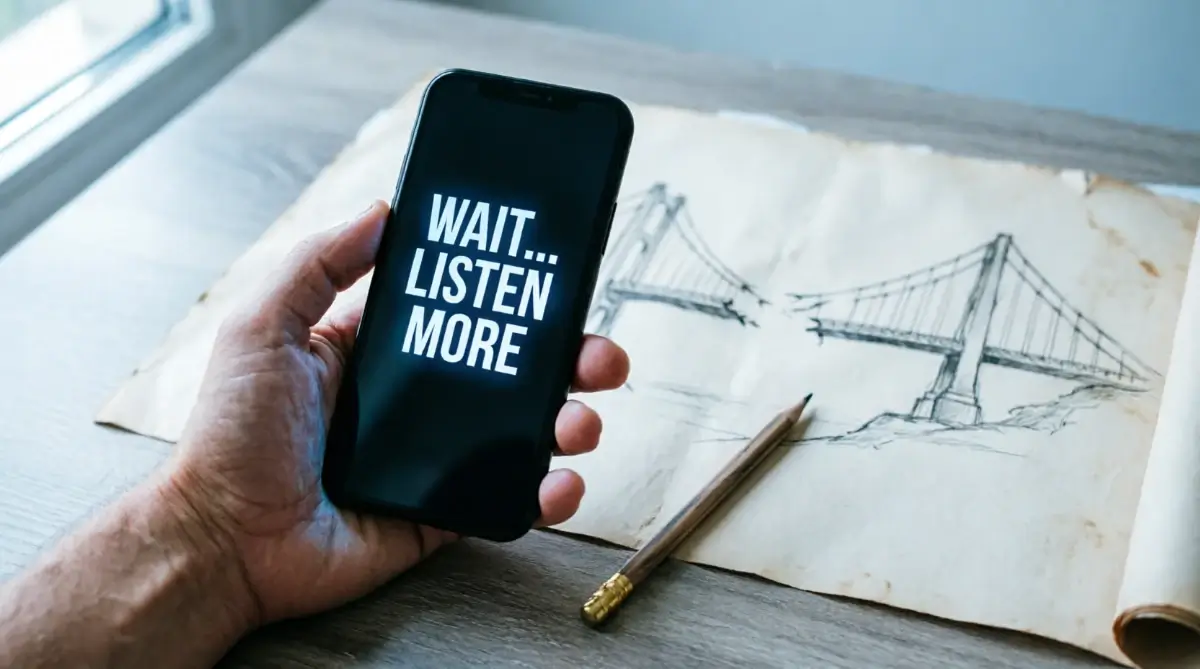
The Moment I Realized I Had Been Keeping My Language Like an Antique I was sitting in my living room after a long ordinary stretch of work. The earbud rested in my right ear, playing a short dialogue I had heard twice before. Not to study. Just to fill the quiet a woman was asking about train times, and a man answered with a sigh that carried the weight of someone who had answered the same question many times. I understood the words. I had studied them I had listened to them in different orders, on different days, for weeks.
But something was wrong I could follow the recording perfectly, yet if someone had walked into the room and asked me the same question in that language, my voice would have locked. I had been collecting words, storing them carefully like objects behind glass, polishing them with comprehension but never once using them to speak. I had turned the language into an antique something beautiful to observe, not something alive to use.
I had been searching for the right order to learn language skills the sequence that would finally unlock my voice. But the sequence I had inherited told me to wait. Listen until perfect. Read until effortless. Write until flawless then, maybe, speak. That order was a museum catalogue, designed to preserve the language in pristine condition rather than put it into the hands of someone who actually needed to communicate.
That moment, I broke it. I tapped the voice mode on my phone and repeated the woman’s question aloud. The digital assistant flagged one vowel I had missed. I tried again. Then, still holding the phrase in my mouth, I typed it into a note. I read it back. I spoke it once more. Within minutes, I had woven listening, speaking, reading, and writing into a single moment not because I had read about a better order, but because I had finally stopped treating communication as the last step. The language had never asked to be kept behind glass. It wanted to be used.
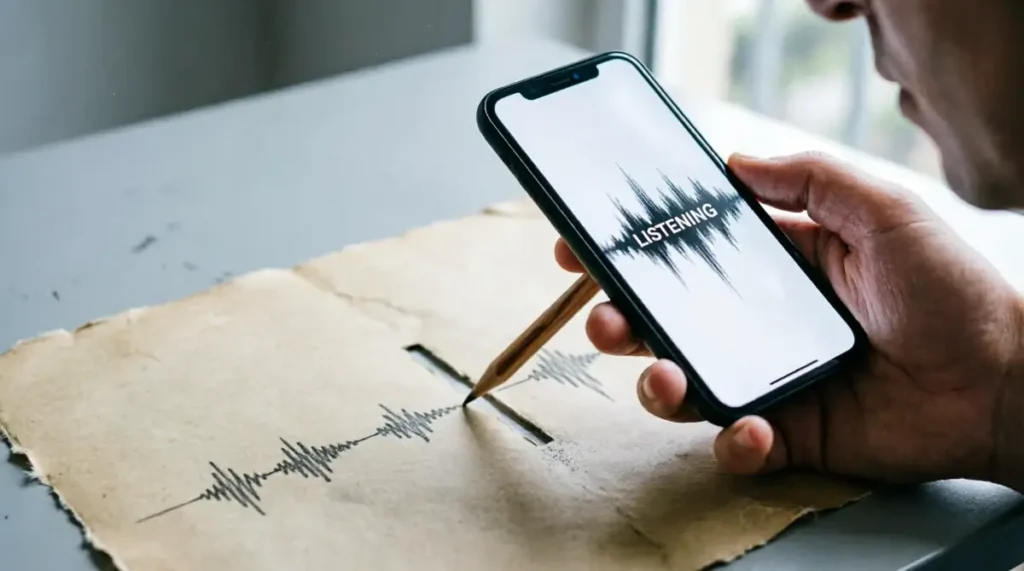
Illustration:AI-generated visual representing”accuracy over growth keeps us silent”
That moment did not feel like a breakthrough at first it felt messy. But the mess was the point. The old sequence had been spotless and silent. This new tangle of skills was alive, and for the first time in months, I felt like I was learning a language I might actually speak someday.
How to Blend Speaking, Listening, Reading, and Writing From Day One
The order that finally worked for me abandoned the idea of mastering one skill before starting the next. Listening gave my ear the rhythm and the sounds, but speaking began immediately repeating aloud, even poorly, before I fully understood. Reading and writing followed as natural supports, not as prerequisites. With a single integrated platform that combined audio, voice feedback, and interactive text, I could practice all four skills in a single session, each one strengthening the others. The best order is not a line. It is a cycle, and speaking leads the way.
The Old Belief That Made Me Treat Speaking Like a Final Reward
For a long time I carried a quiet, unexamined rule. It said: first you understand everything you hear, then you read without a dictionary, then you write without mistakes, and only then when the other three skills stand solid do you open your mouth. I had absorbed this rule from classrooms, from well‑meaning advice, from the very structure of most language courses. It felt logical. But logic, I discovered, can be a cage.
The chain I built was invisible but strong. Every time I thought about trying to speak, the rule stopped me. You are not ready yet. I had to understand more. I had to read more. I had to write another ten sentences without error. And so I listened, month after month, building a large, silent vocabulary that lived only in my head. My ear became sharp. I could follow a podcast, catch the gist of a documentary, nod along with a news report. But my voice stayed locked in the glass case, waiting for a permission that never came.
How that chain kept my voice locked in a glass case while my ears grew sharp
The cost of that belief was not just silence it was the slow accumulation of a language shaped entirely for reception, not for connection. I had trained myself to be an excellent audience and a nonexistent participant. The gap between what I understood and what I could say became so wide that speaking felt like stepping off a ledge. The more I listened without speaking, the heavier the expectation of perfection became, until the idea of uttering a single flawed sentence seemed almost unthinkable.
I remember thinking about the purpose of language people do not learn their first tongue by waiting until they can understand every word before babbling. They speak first, brokenly, joyfully, and the listening catches up. Somewhere in my formal education, that natural order had been reversed, and no one had told me I could reverse it back to learn any foreign language by yourself with a self built system means acknowledging that the sequence you inherited may not be the sequence that serves you.
Why did I believe speaking had to come last, even when it felt wrong?
The belief came from an old classroom model that treats production as a final test, not as a learning tool. Many of us were taught that you must first absorb the language perfectly before you are allowed to produce it. But the brain does not work in that linear way. Speaking itself is a form of learning every time you speak, even with errors, you are building and strengthening neural pathways. The old model prioritizes accuracy over growth, and that is why it keeps us silent far longer than necessary
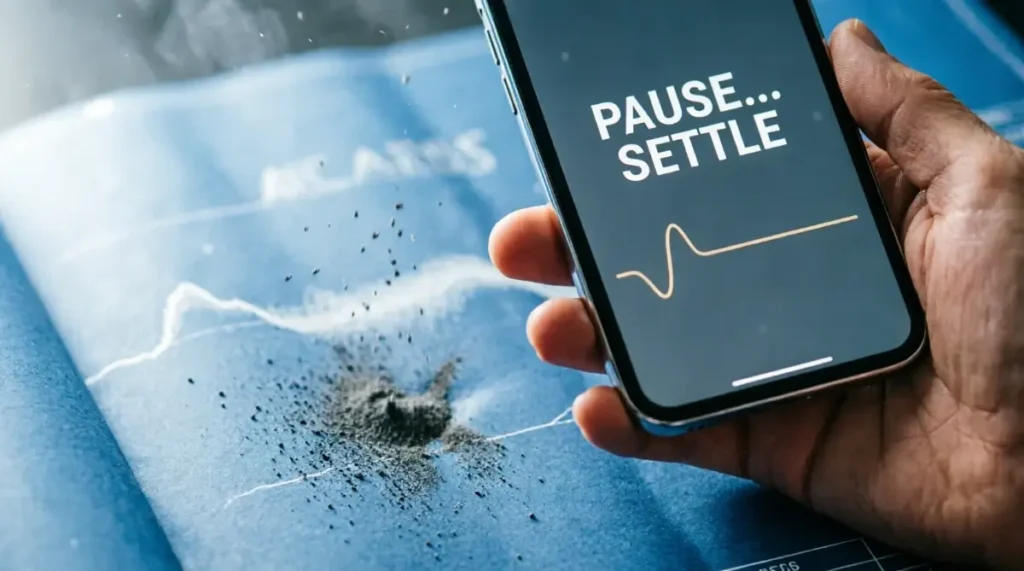
Illustration:AI-generated visual representing”pause allows consolidation, not abandonment”
Write down one sentence you want to be able to say in the language you are learning. Right now, before you finish this section, say it aloud three times even if it is wrong, even if it is clumsy. That act is your permission slip no one else can issue it.
The chain I had built did not break because I found a better method. It broke because I finally asked myself what language was actually for. It was not for collecting. It was not for performing. It was for reaching another person, and reaching cannot happen with hands that never leave the glass case.
I once kept a language journal for six months without speaking a single sentence aloud. When I finally tried, my voice cracked on the third word. The journal hadn’t failed me. My silence had. From that day forward, every written entry was followed by two spoken sentences. The balance wasn’t perfect, but it was real.
What Changed When I Let Speaking Become the Engine, Not the Destination
I still remember the first phrase I deliberately spoke without understanding every word that surrounded it. I was listening to a short exchange between two people in the language I was learning. I had replayed it several times. The broader meaning was clear, but a few words still hovered in fog normally I would have waited. I would have paused, looked up the unfamiliar vocabulary, studied the grammar, and maybe, days later, attempted a careful reproduction.
But that day, something was different. I had already begun to loosen the chain. I paused the recording right after the first speaker’s line and spoke it back not from memory, but from mouth. My voice formed the sounds roughly, missing one vowel entirely, stumbling on a consonant cluster. I did not care. I was speaking. The digital assistant highlighted the mistake, I tried again, and the correction held. Then I moved to the next line. I did not understand every word, but my mouth was learning the rhythm regardless.
How AI Tools turned speaking from a distant goal into a daily warm up
That single session rewired something I began to treat speaking as the warm‑up for listening, not the other way around. Every practice session now opens with my voice repeating a phrase, shadowing a dialogue, responding to a recorded question. The AI conversation assistant never tires, never judges, and gives feedback that is immediate and specific this is not a replacement for human conversation; it is the rehearsal hall where the voice learns to walk before it steps onto the stage.
One of the most practical shifts I made was to learn language through audio before reading slows you down instead of starting with written texts, I spent weeks with only sound and my own voice. The written form arrived later, and when it did, it felt like a transcription of something already familiar, not a new code to crack. Listening became the rich soil, but speaking was the sprout that grew from it, pushing upward every day.
How can I use AI assistants to start speaking when I still feel completely unprepared?
Start with the smallest possible unit: a single word. Play a recording, pause it immediately, and repeat the word. Do not worry about meaning do not translate. Just match the sound. After a day or two of single‑word repetition, move to a short phrase. The AI assistant will catch deviations and show you where your voice strayed. There is no penalty for mistakes only feedback. The emotional barrier of speaking crumbles when the act is reduced to something as simple as imitating a sound, and the AI assistant provides the safety of total privacy.
Before any other language practice, open a voice capable AI assistant play a short phrase no longer than five seconds and repeat it immediately. Do this for only two minutes. Make it the first thing your mouth does. After a week, notice whether speaking feels less like a performance and more like a habit.
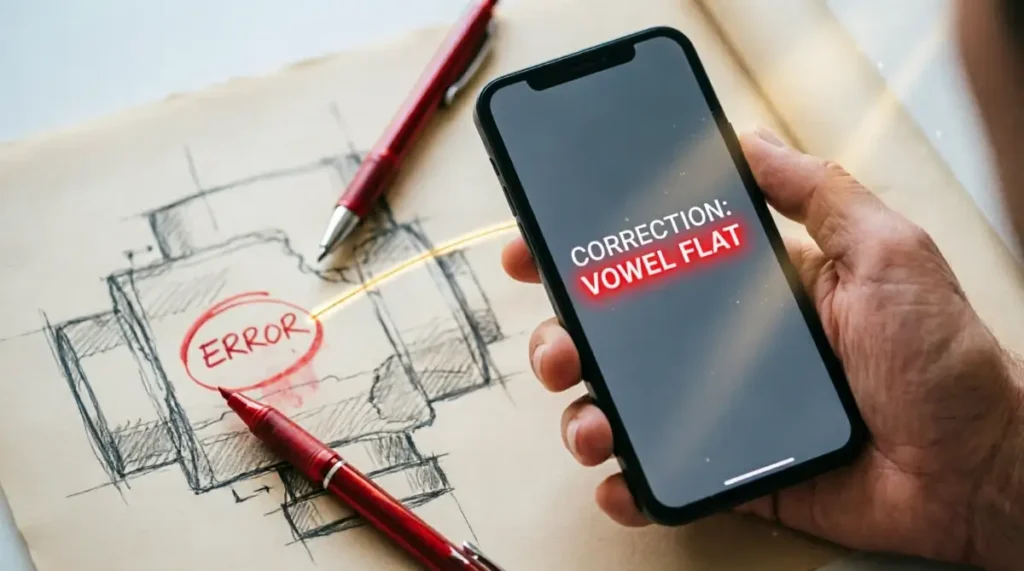
Illustration:AI-generated visual representing”speaking is the engine, not the destination”
That broken sentence I spoke without full understanding showed me something the old sequence never could: the mouth does not need the brain to be entirely ready. It needs permission to move, and once it moves, the listening sharpens, the reading deepens, and the writing becomes a record of something already spoken, not something wrestled onto the page from silence.
The moment I finally stopped treating listening like the main event
There is a stillness that arrives when you stop treating language as a checklist and start treating it as something that breathes. I found it by accident, on a day when I had done nothing but listen for an hour and felt, at the end, completely empty. Not empty of words I had understood most of the recording but empty of connection. The voices had passed through me without leaving a mark. I had treated listening as the main event, the anchor, the skill that mattered most, and I had done it so diligently that I had forgotten to let any of it touch me.
I sat with the silence after the recording ended. The hum of the room was the only sound. My hands rested still on the desk. I did not reach for a notebook. I did not open a review tool. I simply let the phrases I had heard drift back through my mind without chasing them. Some surfaced. Some did not. I did not judge. The pause was not a gap in practice; it was the practice unfolding in a different key.
How silence between spoken sentences became part of the practice itself
That pause changed something I began to notice that the spaces between my attempts at speaking were not empty. They were where the mind sorted and filed what the mouth had just tried to do. After a spoken sentence, even a halting one, a few seconds of silence allowed the sound to settle, the correction to land, the next attempt to emerge with slightly more ease. I had been racing from one repetition to the next, filling every moment with noise, and in doing so I had been suffocating the very consolidation I was trying to force.
Now, after each spoken phrase whether into the voice assistant or simply to the empty room I let the quiet sit. A few breaths. Sometimes a slow exhale. The digital tool waited patiently; it had no need to rush. When I spoke again, my voice was steadier. The silence had done something the repetition alone never could to stop mental translation and let your mouth speak without an internal translation requires more than technique. It requires a willingness to let the space between words be as important as the words themselves.
Illustration:AI-generated visual representing”voice leads, written form confirms”
How long should the pauses between speaking attempts last?
There is no fixed number. I let the pause last until the tightness in my throat eases usually three to five slow breaths. The body signals readiness far better than a timer. If the next attempt still feels forced, I wait longer. The goal is not to fill the silence but to let it work. Over time, the pauses shorten naturally as the voice grows more confident.
In your next speaking practice, after every sentence you speak aloud, close your lips and take three slow breaths before speaking again. Do this for only five minutes. Notice whether your voice feels less rushed by the end.
In that stillness I found something the old sequence had never offered: a way to let the language rest without abandoning it. Listening was no longer the main event. It was the companion that walked beside speaking, and the silence between them became the quiet ground where both could stand.
The Time My Mouth Moved Before My Mind Could figure out
The cup sat on the counter, steam curling upward I opened the voice‑capable tool without ceremony. There was no warm‑up, no preparatory listening, no careful review of vocabulary. I simply pressed the button and spoke. The prompt was ordinary something about what I had done that day and my answer came out rough, unpolished, with a verb that landed in the wrong place and a noun I had to repeat twice the coffee finished brewing while I was still talking.
That session was the first time I spoke without the safety net of a script or a pre‑listened recording. My voice led. The assistant responded. I understood most of what came back, but not all. It did not matter. I was in the middle of a real exchange, however small, and my brain was learning to produce under pressure the same pressure that real conversation would one day demand. The words were flawed, but they were mine, spoken into the air before my inner editor could veto them.
That first unscripted reply and the vowel the assistant caught for me
After I finished, the tool displayed my sentence alongside the corrected version. One vowel had been consistently flat a sound I thought I had mastered weeks ago. I had been listening to it correctly, but my mouth had never quite shaped it right, and without speaking, I would never have known. I practiced the vowel several times, feeling the slight shift in my tongue. On the final attempt, the feedback turned green.
That small correction stayed with me. It proved something I had long suspected but never trusted: listening alone cannot reveal every gap. The ear can hear a sound correctly while the mouth produces it wrong, and only production exposes the mismatch tis is why I eventually understood the value of raw, unscripted output the kind that comes from learning a language with no teacher and no textbook where mistakes are not failures but signals pointing directly at what needs attention.
How do I know if my pronunciation is improving if I cannot hear my own mistakes?
The ear often cannot hear its own errors because the brain predicts what it expects to hear rather than what is actually spoken. This is why external feedback is essential a voice‑capable AI assistant acts as a neutral mirror it shows the waveform or highlights the specific sound that deviated, without judgment. Over time, as the mouth learns the correct shapes, the ear retrains itself to hear the difference. The two grow together.
Illustration:AI-generated visual representing”speaking pulls skills into orbit”
Set a timer for sixty seconds open a voice assistant, select a casual topic describe your room, your lunch, your mood and speak without stopping or correcting yourself. When the minute ends, read the feedback pick one sound to practice for a couple of minutes that is your entire speaking session for the day.
There was a week when the AI voice assistant flagged the same vowel error every session. I felt like I was running into a wall. On the sixth day, the correction turned green on the first attempt. The wall hadn’t moved; my mouth had finally learned to step around it.
What shifted was not just the speed of my progress but the weight of my own expectation. When speaking became the warm‑up rather than the reward, the fear of error shrank. The mouth moved first, and the mind surprised but willing learned to follow.
Where Reading and Writing Found Their Real Job: Supporting My Voice
For weeks I had been speaking phrases I could not write I knew their sound, their rhythm, the way they felt in my mouth. But I had never seen them on a page. When I finally opened an interactive reading tool and typed one of those phrases, the screen reflected it back in clean, correct script I recognized it instantly. The written form was not a foreign code; it was a photograph of something I already knew.
That moment reversed the old classroom sequence entirely. Instead of reading a word, memorizing its spelling, and then learning to pronounce it, I had spoken it first many times and the written version arrived as a confirmation, not a challenge. The screen held the phrase I had spoken moments before, and for the first time, written language felt like an echo rather than a source.
How interactive text closed the circle that speaking had opened
After that first transcription, I began to write regularly not essays, not grammar exercises, but short, personal sentences that captured what I had said aloud earlier in the day. The interactive tool corrected my spelling in real time, quietly, without interrupting the flow. I would type a line, see the correction, and retype it correctly. The physical act of producing the letters reinforced the sound patterns my mouth had already practiced.
This closed a circle I had not known was open. Speaking set the rhythm. Listening provided the raw material. Writing gave the sounds a permanent shape, and reading that shape back to myself deepened the whole cycle designing a self directed education framework without a degree taught me that when you build your own curriculum, the skills do not need to march in a line; they can circle, each one feeding the next, with no single skill waiting for permission to begin.
Should I learn to read and write in the language from the very start, or wait until I can speak a little?
I delayed formal reading and writing until I could hold a basic spoken exchange not because they are harmful early on, but because I wanted my voice to lead. Once speaking felt comfortable, reading and writing arrived as natural extensions, not as burdens. If you choose to begin all four from day one, let speaking guide the other skills. Read aloud what you read. Write down what you have said. Keep the voice at the center.
After your speaking practice, open a blank note write down two sentences you spoke aloud without looking up spellings. Then check the corrected version. Notice how much easier the written form feels when the sounds are already familiar.
The written word never taught me to speak it was always the other way around. My voice carved the path, and the letters simply followed behind, tracing the shape of a sound that had already found its home.
The Daily session That Emerged When Speaking Became the Sun
I stopped planning my practice around chapters and started planning it around my voice. The shift was subtle at first a decision to open every session by speaking aloud, before touching a written word or pressing play on a recording. I would greet the empty room in the language I was learning, describe the weather outside my window, or recount something small that had happened earlier in the day. The sentences were basic. The grammar was often wrong. But the act of producing them set the tone for everything that followed.
Within a week, a natural rhythm emerged. Speaking came first, always. After a few minutes of oral warm‑up, I moved to listening a short audio clip, sometimes the same one for several days, until I could shadow it without stumbling. Then I read a related text, often the transcript of what I had just heard. Finally, I wrote a brief summary of what I had understood, using my own words. The four skills were no longer separate islands; they had become satellites orbiting the same bright center: the need to communicate.

Illustration:AI-generated visual representing”speaking starts the self feeding cycle”
The gentle repetition that turned separate acts into a single, speaking driven flow
The repetition was not grinding. It was gentle, almost musical. I would speak a phrase, hear it echoed by the voice assistant, read the corrected version on the screen, and then write it down by hand. The same phrase, experienced four different ways, each pass deepening the groove. By the end of the week, I could produce that phrase effortlessly in a live conversation with the assistant, without needing to translate or rehearse.
That session did not require a rigid schedule. Some days I spent more time speaking; other days, listening took the lead. But the speaking never stopped being the sun. Everything else orbited it, and that was the key. I came to realize that the daily rhythm I had built was not something separate from discipline it was the discipline itself when I understood that the most consistent learners stop relying on motivation and build a discipline system instead I recognized my own reflection the process had become the system, and the system ran on the inner fire and energy of my own.
How do I design a daily practice that balances all four skills without feeling scattered?
Anchor every session to a single speaking act. Start with your voice a greeting, a description, a response to an AI assistant’s prompt. Let that speaking set the direction. Then bring in listening, reading, and writing around the same topic or phrase. This creates a natural coherence that a textbook table of contents cannot replicate. The session does not need equal minutes for each skill; it needs a common thread, and speaking provides it.
Begin your practice with two minutes of unscripted speaking. Choose a simple topic your surroundings, your last meal, your plans. Do not prepare. Speak. Then, for the rest of the session, let every other activity connect back to what you said. Listen to a related audio. Read a relevant text. Write down your original sentence again, corrected if needed.
Out of that rhythm, I came to understand that balance is not about equal minutes. It is about gravity. When speaking pulls everything else into its orbit, the four skills stop competing for attention and start moving as one.
The most productive sessions I have ever had were not the longest or the most intense. They were the ones where my voice led the way and the other skills followed like loyal companions, each one picking up what the voice had left behind.

Illustration:AI-generated visual representing”language released from museum”
How each skill began to feed the others without forcing once speaking led
I did not set out to build a wheel. The wheel built itself. Speaking sharpened my ear because I was now listening for sounds I had tried and failed to produce. Listening fed my reading because the written words now mapped onto familiar rhythms. Reading enriched my writing because I was absorbing sentence structures that I could borrow and reshape. And writing, when I read it back aloud, circled right back into speaking.
This was the reinforcing circle I had heard described in abstract terms but never felt in my own body until now. It was not a theoretical model drawn on a whiteboard. It was a living, breathing process that happened every time I opened my mouth first and let the other skills respond. The wheel turned because speaking pushed it, and once it started spinning, it did not need constant effort to keep going.
The reinforcing circle I never had to build it built itself around real conversations
The most surprising part was how naturally the circle sustained itself. I did not need elaborate tracking systems or colour‑coded schedules. I simply continued to speak every day, and the other skills followed in their own time. When I had a particularly good conversation with the assistant, I felt motivated to read more. When I read a passage that moved me, I wanted to write about it. When I wrote, I wanted to speak my own words aloud. The cycle was self‑feeding, and the fuel was genuine communication.
That cycle felt, in many ways, like a quiet form of resilience the same resilience I later understood when I learned how to hold onto hope when life keeps knocking you down language learning, like any long journey, has moments where the wheel feels stuck. But if speaking remains at the center, the wheel always starts turning again. The voice does not need perfect conditions. It just needs to be used.
What if one of the four skills starts to fall behind should I pause the others to catch it up?
There is no need to halt the whole machine skills develop unevenly, and that is normal if reading feels weak, add a few minutes of reading to the end of your session. If writing lags, write an extra sentence after the speaking warm‑up. The key is not to stop speaking while you fix the rest. Speaking is the engine; if you shut it off, the whole circle slows. Keep the voice moving, and the other skills will catch up in their own time.
At the end of your next session, ask yourself: which skill felt the most neglected today? On the following day, give that skill an extra few minutes but only after you have already spoken. The voice always leads; the other skills follow, never the other way around.
I once went three weeks without opening a single written resource only speaking and listening through a voice‑capable assistant. When I returned to reading, the sentences felt familiar, like rooms I had already walked through. My voice had used to pattern before my eyes ever saw the page.
The wheel never asked to be drawn or diagrammed. It simply spun into existence the moment I stopped treating speaking as the finish line and started treating it as the starting gun.
Fluency is not a destination where all four skills arrive at once, perfectly balanced, like a photograph. It is more like a moving wheel, always turning, sometimes wobbling, but travelling forward as long as the voice keeps pushing against the ground.
Illustration:AI-generated visual representing”production exposes gaps listening cannot”
The Long Road That Was Never a Straight Line, and Never a Museum
I think back now to that first moment in the living room the earbud, the dialogue about train times the realization that I had been treating my language like something to admire rather than something to use. At the time, I could not have imagined the person I would become: someone who speaks first and listens deeply, who reads and writes as companions to the voice, not as its jailers.
The road was never straight. There were plateaus where my speaking seemed to stall, stretches where my listening felt blunt, times when I opened the writing tool and stared at the blank screen with nothing to say. But the wheel kept turning, because I kept speaking. The voice was always there, waiting to be used. And the more I used it, the more the other skills rallied around it, until the language was no longer a collection of separate abilities but a single, living thing.
What I now tell anyone who asks about the right order: speak first, and let everything else follow
I no longer believe in a correct order of skills I believe in a center. And the center is speaking not because the other skills are less important, but because they find their proper place more naturally once the voice has claimed its own. Listen to feed your speaking. Read to see how others have said what you want to say. Write to give your spoken words a lasting form. But speak. Always speak the language is not a museum piece. It is a tool, a bridge, a voice waiting to be heard.
If you are beginning, let your first act be to produce sound any sound in the language you want to learn. Let the voice assistant catch your errors. Let the written word confirm what your mouth already knows set language goals that actually work instead of chasing streaks and make those goals about real communication, not abstract milestones. The path will unfold from there.
Can I really start speaking from day one, even if I know almost nothing?
Yes. Day one speaking is not about forming perfect sentences. It is about training your mouth to make unfamiliar sounds. Repeat single words. Greet the empty room. Imitate the intonation of a recorded voice. These small acts of production build the motor pathways that will one day carry fluent speech. Speaking on day one is not premature; it is the most natural starting point there is.
If you have been waiting to speak until you feel ready, stop waiting. Right now, open a voice assistant or simply speak to the air. Say one word in the language you are learning. Say it again, slower. Feel it in your mouth. That word is your beginning. Everything else can follow.
The voice came first. It always did. And once I gave it permission to lead, the other skills fell into place not as burdens but as companions, walking alongside a path that was never a straight line, but was always moving forward.
The Wheel That Speaking Set in Motion
I began with a language locked behind glass listened to, read, written, but never once spoken freely I end with a voice that leads every session, a listening ear sharpened by the sounds my own mouth has tried to make, a reading eye that recognizes phrases I have already spoken, and a writing hand that records what my voice has already claimed the old sequence listen, read, write, speak treated communication as the final reward, handed out only after years of silent preparation. But language does not live in silence. It lives in the air between two people, and speaking is the breath that carries it.
Illustration:AI-generated visual representing”eventually the bridge is built by one plank at a time”
The four skills are not a ladder to climb they are a wheel that turns. And the wheel turns best when speaking takes the first push, every day, without apology, without waiting for permission. We do not need to wait to be ready. We only need to open our mouths and begin, trusting that the other skills will follow, and that the language finally released from the museum case will become what it was always meant to be: alive, imperfect, and deeply, humanly ours
The first word you speak tomorrow will be the foundation of every skill that follows do not wait for perfect comprehension. Do not wait for the right chapter or the right moment. Open your mouth, let the sound come out, and let the other skills gather around it. The wheel is waiting, and it turns as soon as you push it build your strategic system and l et language goals befome the process instead of chasing streaks.
If your language had a voice that spoke before you felt ready, what would it say to you today and would you recognize the sound as your own?