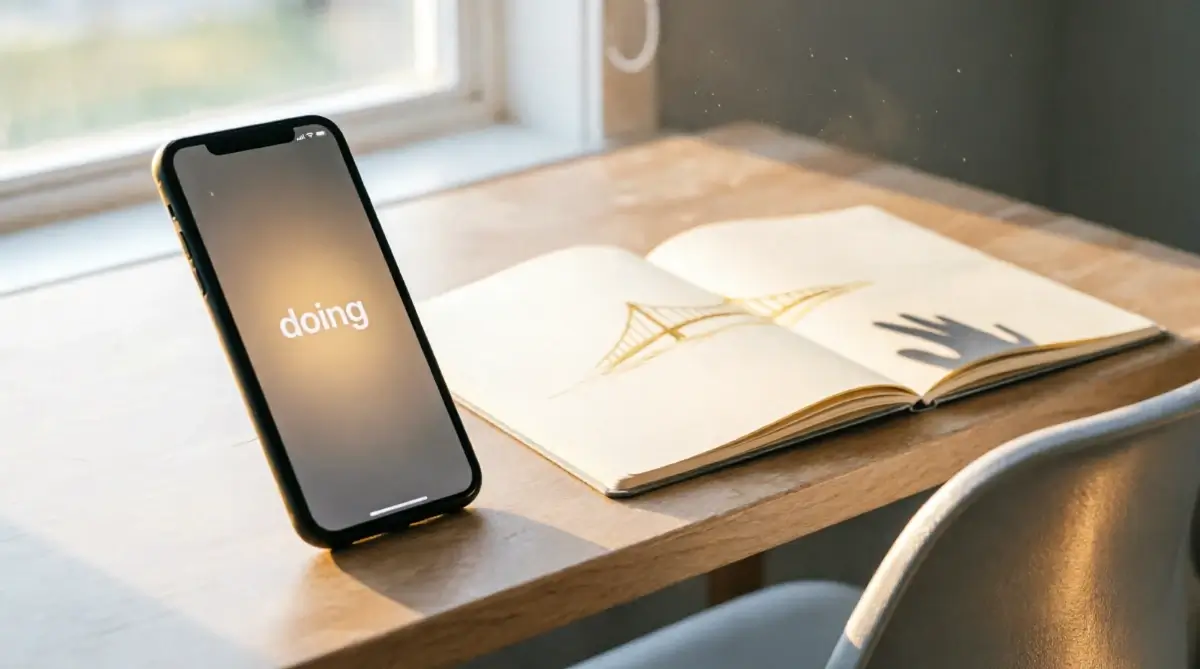
The room where my Voice finally stopped freezing I was alone in a waiting room, the kind with plastic chairs and a low an old ceiling light. I had been searching for a way to practice speaking alone without freezing, and this small, unremarkable room had become my laboratory. The earbud sat in my right ear, and I had already opened the voice assistant a two‑minute conversation scenario was loaded something simple, a greeting at a shop.
My finger hovered over the start button my throat had that familiar tightness, the same one that always arrived whenever I tried to speak in the language I was learning. The silence stretched. The light buzzed. I pressed start.
The first sentence came out cracked and uneven the assistant’s feedback was instant not harsh, not judgmental, just factual. One vowel had flattened, one consonant had dropped. I tried again. On the third attempt, the words came out whole. The freeze that had locked my voice for months had not vanished, but it had shrunk to a size I could finally step past.
Why I had been silent for so long and the first word that cracked the ice first I believed the freeze was proof that I was not meant to speak this language. Every time I opened my mouth, the pause between the desire to speak and the actual sound stretched so long that I gave up before I began. I thought it was fear of being judged. And it was, partly. But the deeper truth was simpler: my mouth had never practiced the movements. The muscles did not know where to go. The freeze was not a psychological failure. It was a physical one.
That first word in the waiting room a simple greeting, mispronounced, then corrected, then spoken clearly showed me something important. The freeze was not a wall. It was a door that had always been unlocked, and the key was not courage. It was repetition. Not mindless repetition, but the kind where every attempt is heard, corrected, and tried again. The assistant never tired. It never rolled its eyes. It just listened and responded. And in that moment, private space, my voice began to move.
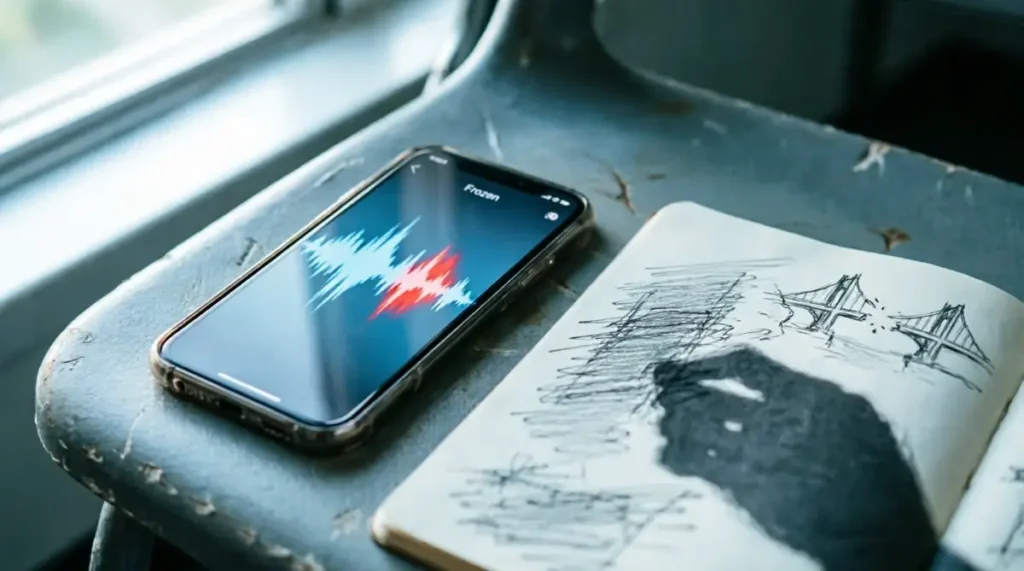
Illustration:AI-generated visual representing”freeze is physical response, breath resets the body”
I still think about that waiting room and the light. The empty chairs. The screen glowing with my own words, highlighted where they went wrong and green where they went right. That was the moment I stopped believing the freeze was permanent. It was just a habit my body had learned, and habits even the stubborn ones can be unlearned.
How to Practice Speaking Alone Without Freezing
The method I built for myself had three parts. First, I chose an online course that offered over two hundred real‑life conversation scenarios. I drilled them until my responses came without thinking, until the mouth moved on its own without waiting for permission from the brain. Second, I surrounded myself with the culture. I watched documentaries made for native speakers, pausing every time I did not understand a word, translating it, and saving it to my review stack third and this was the most powerful I learned to say a simple, honest phrase to native speakers: “I love your culture, and I’m learning your language. If I make a mistake, I welcome your guidance.” That phrase turned strangers into willing teachers, and it turned my fear of mistakes into something manageable. The freeze never disappeared entirely but I learned to move through it, and that made all the difference.
The Chain Reaction of Learning Alone: From Panic to Practice
For a long time, I thought the freeze meant something was wrong with me. I had studied the vocabulary. I had listened to the audio. I understood the grammar on paper. But when the moment came to speak even alone, even with no one watching my throat closed and my mind went blank. I took that as evidence that I lacked some essential gift, some language learning gene that other people seemed to have.
The shift came when I stopped asking “What is wrong with me?” and started asking “What is actually happening in my body?” The freeze is a stress response. It is the same mechanism that makes a person lock up before stepping onto a stage or freeze in the headlights of an oncoming car. The brain perceives a threat in this case, the threat of sounding foolish and the body responds by tensing muscles, swallowing breath, and narrowing attention. It is not a character flaw. It is biology.
Once I understood that, the freeze lost some of its power. I could feel it coming the tightness, the shallow breath and instead of thinking I am failing, I thought My body is trying to protect me, but I am safe here. That small mental shift did not eliminate the freeze, but it made it manageable. I could speak through it. And every time I spoke through it, the freeze grew a little weaker.
The self built system I was constructing began with this understanding the tools and methods would only work if I first accepted that freezing was normal, and that the only cure was repeated, low‑pressure practice. No amount of vocabulary memorization could replace the act of opening my mouth and producing sound.
The Reasons behind the freezing moment and why understanding it changed everything
The freeze is not just a feeling. It is a cascade of physical reactions. The amygdala fires. Cortisol rises. The muscles of the throat and jaw tighten. Breathing becomes rapid and shallow. These are ancient survival mechanisms, evolved for moments when the body needs to either fight or flee. But speaking a foreign language is not a predator. It is a skill. And the same biology that protects us in danger can become a cage when we treat a conversation like a threat.

Illustration:AI-generated visual representing”humble phrase turns strangers into willing teachers”
I learned to interrupt that cascade. Before speaking, I would take three slow breaths, deep enough that my stomach moved. I would consciously relax my jaw and drop my shoulders. I would remind myself, out loud if necessary, that the assistant in my earbud had no face, no opinions, and no memory of my mistakes. And then I would speak just one word, then another, then a short phrase. The first attempt still wobbled. The second attempt wobbled less. The third attempt sometimes came out almost smooth. Over weeks, the ritual of breathing and relaxing became automatic, and the freeze became less of a barrier and more of a familiar visitor that I knew how to manage.
Is it normal to freeze even when I’m alone and no one can hear me?
Yes, completely. The freeze is not about who is listening; it is about the brain’s prediction of failure. Even alone, your mind anticipates the mistake, and that anticipation triggers the stress response. The good news is that this is exactly the condition that best rewires the brain practicing in a safe, private space where mistakes have no consequences gradually teaches the brain that speaking is not a threat. Over time, the freeze response weakens.
The next time you feel the freeze coming whether you are about to speak into an assistant or simply practicing aloud stop. Place one hand on your stomach. Take three slow breaths, counting to four on the inhale and six on the exhale. Feel your shoulders drop. Then speak your first word. Do this every time. In a week, the reset will start to feel like a habit.
The freeze taught me something I never expected: it was not my enemy. It was a signal a signal that my body was trying to protect me from a danger that no longer existed. And once I learned to read the signal instead of obeying it, the path from panic to practice opened wide.
I once froze so completely during a solo practice session that I sat in silence for ten minutes, unable to produce a single sound. I was not afraid of anyone’s judgment; I was afraid of my own failure. That was the day I started the three‑breath ritual. The first time I spoke after those breaths, the word came out cracked but clear. The silence had not won. It had just been waiting for me to find the right way through.
The First Strand: Drilling Real Conversations Until the Mouth Moves on Its Own
I had tried language apps that taught me isolated words. I had tried tools that made me translate sentences out of context. None of them prepared me for the moment when a real person actually said something and expected me to reply. The gap between knowing a word and using it in a live exchange was vast, and I kept falling into it.
Then I found an online course that was built around conversation. Not grammar lessons. Not vocabulary lists. Just scenario after scenario over two hundred of them each one a real‑life exchange: ordering food, asking for directions, making small talk, resolving a misunderstanding. The structure was simple: listen, repeat, respond. And then do it again. And again. The course did not promise fluency in five minutes a day. It promised that if I repeated these scenarios enough times, the responses would become automatic. I would not have to think about which word came next my mouth would already know.
I committed to it every session, I worked through two or three scenarios, repeating each one until I could respond without hesitating, until the phrases rolled out as naturally as if I were speaking my mother tongue. It was not glamorous. It was not fast but it worked.
How repeating the same dialogue a hundred times rewired my responses
There is a kind of repetition that feels mindless and useless. And then there is the kind that feels like carving a path through thick undergrowth. The first time I spoke a new scenario, I stumbled on every other word. The second time, I remembered the shape of a few phrases. The tenth time, I could anticipate the other speaker’s lines because my ear had learned the rhythm of the exchange. By the fiftieth repetition, the words came without my conscious effort my mouth moved on its own.

Illustration:AI-generated visual representing” daily discipline and from native speakers builds natural grammar”
This is how the brain builds automaticity every repetition strengthens the neural pathway that connects the situation to the words. Eventually, the pathway becomes so strong that the response fires without the slow, effortful intervention of the thinking mind. That is what fluency feels like not a vast store of vocabulary, but a mouth that knows what to say before the conscious brain has time to deliberate.
Building that automaticity required a practice that was consistent and reliable. I found that when I focused on matching pitch and rhythm repeating a phrase immediately after hearing it, without pausing to think my voice began to mirror the native speaker’s intonation without force. I was learning not through translation but through direct imitation, the way a child learns to speak to build fluency vocal matching through steady breath windows meant letting the sound lead, not the textbook the body learned faster than the mind, and that was exactly the point.
How do I stay motivated when repeating the same scenarios feels boring?
I changed the focus instead of treating repetition as a chore, I treated it as a physical skill like learning a new chord on an instrument. I paid attention to the subtle improvements: the vowel that finally sounded right, the sentence that came a beat faster than yesterday. I also rotated scenarios so I had variety across a week, but I always returned to the same ones until they felt effortless. The boredom faded when I started noticing the small, real progress that each repetition brought.
Choose one short conversation scenario no more than six lines. Set a timer for ten minutes. Repeat the scenario out loud, from start to finish, without stopping to analyze grammar. Focus only on matching the rhythm and the sound. After the timer ends, notice which lines came easily and which still need work. Tomorrow, do it again.
Out of that repetition a change took place. The mouth began to move ahead of the mind. The responses that once required careful construction began to surface on their own, not because I had memorized them, but because they had become part of the body’s natural movement through the language.
The moment when I stopped forcing and let the silence do its work
The scenario drill had become intense. I was pushing through line after line, trying to match the native speaker’s rhythm, and my throat was beginning to ache. The assistant had flagged the same consonant cluster three times in a row. I felt the old frustration rising the urge to slam through the barrier by sheer repetition. But my voice was wearing thin. I set the phone down on the small table beside me and did nothing. Just sat. The room was quiet except for the faint distant sound of a door closing somewhere in the building.
That silence, which I had always treated as wasted time, began to feel different. It was not empty. It was settling. The phrase I had been struggling with floated back into my mind without my summoning it. I let it sit there, not speaking it aloud, just hearing it internally. My jaw relaxed. My shoulders dropped. The assistant’s screen had dimmed, waiting patiently. I realized then that the pause was not a break from the work. The pause was where the work was quietly finishing itself.
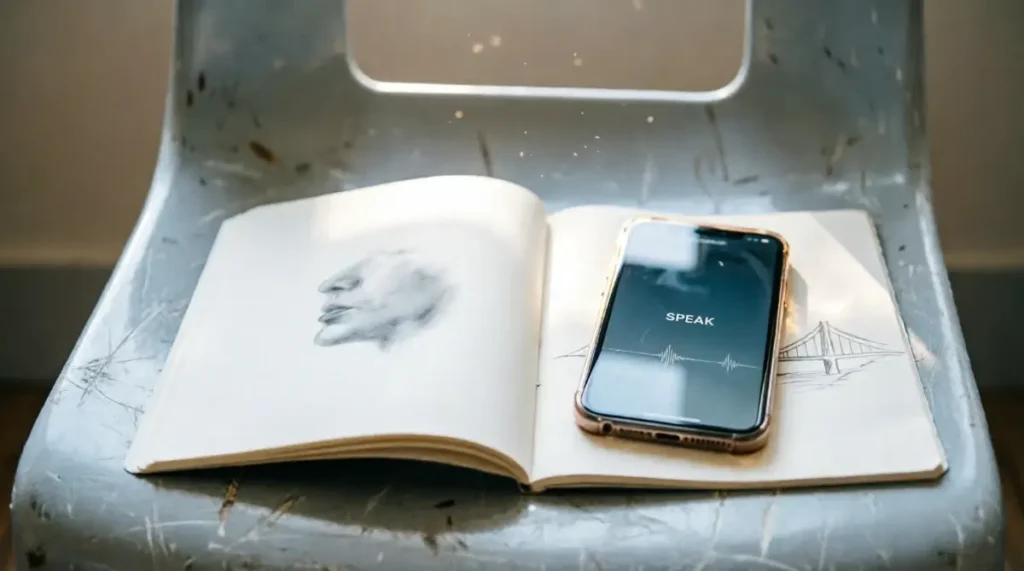
Illustration:AI-generated visual representing”documentary immersion builds vocabulary with human texture”
How the AI assistant’s patience taught me to wait
Before that moment, I had treated the voice assistant like a stopwatch. Speak, get feedback, speak again, faster, better. But the tool had no urgency. It never rushed me. It never sighed or checked its watch. It simply waited, and in its waiting I found permission to slow down. I began building deliberate pauses into every practice session. After each spoken attempt whether I nailed it or mangled it I would close my lips and take three slow breaths before trying again. The silence between attempts became as important as the sounds themselves.
Over a week, two things happened. First, my accuracy improved not dramatically, but steadily. Second, the anxiety that had always accompanied speaking began to soften. The pause gave my mind a chance to absorb the correction, to let the new shape settle into my mouth before I overwrote it with another attempt. It was like letting paint dry before adding another layer. Without the pauses, every attempt smeared into the next, and nothing ever set.
That kind of steadiness the ability to stay calm when everything inside me wanted to rush was something I had only ever felt in other parts of my life when I learned to stay mentally steady when everything around me felt unsteady the principle applied here the pause was not a luxury. It was the foundation that allowed the other strands the drills, the documentaries, the conversations with native speakers to actually hold.
How long should the pauses be? Is there a risk of losing momentum?
I kept the pauses to three slow breaths about fifteen to twenty seconds. Long enough for my throat to relax, short enough that I did not lose the thread of the practice. I never experienced a loss of momentum. In fact, the opposite happened: the pauses created a rhythm that made the practice feel more sustainable, more like a conversation with myself and less like a drill. The silence became the beat that held everything together.
The next time silence stretches between attempts, sit with it. Let the pause be the practice. Notice whether your voice returns steadier on its own, without forcing.
That quiet waiting taught me something the drills alone never could: the voice does not grow stronger through constant strain. It grows stronger through the rhythm of effort and rest, and the rest is not a concession. It is where the growth actually happens.
The most effective practice I have ever done was not the session where I pushed through exhaustion. It was the session where I stopped before exhaustion arrived, let the silence hold the sounds I had made, and returned to them with a throat that had learned to trust the process.
The Second Strand: Immersing Myself in Culture Through a Screen
The conversation drills were building my automatic responses, but I could feel a ceiling. The scenarios were scripted, predictable. Real life was not. I needed to hear how people actually spoke when they were not performing for a learner how they mumbled, interrupted themselves, used slang, trailed off mid‑sentence. So I turned to documentaries. Not language‑learning documentaries, but films made for native speakers about ordinary topics: cooking, travel, history, the repair of old machines.
I chose one about a fisherman in a coastal village. The narrator spoke quickly, with a regional accent, and the first time I watched five minutes of it I understood almost nothing. But I did not panic. I paused. I replayed. Every time a word stopped me, I paused the frame, wrote the word down in a small notebook, looked it up, and then replayed the sentence three times first reading the translation, then without. Then I continued. The five‑minute segment took nearly an hour to work through, but by the end, I had a list of twelve new words and phrases that I had earned from real, living speech. Those words stayed because they had come with a voice, a face, and a story attached.
Saving every unfamiliar phrase and returning to them until they were mine
I built a small review stack from those documentary sessions. Not a digital list of isolated vocabulary, but a collection of phrases as they had been spoken the fisherman saying “the nets came up empty,” the historian describing “a wall that had outlived three empires.” I reviewed them the same way I drilled the conversation scenarios: aloud, with the assistant listening, until I could produce them with the same rhythm and intonation as the original speaker.
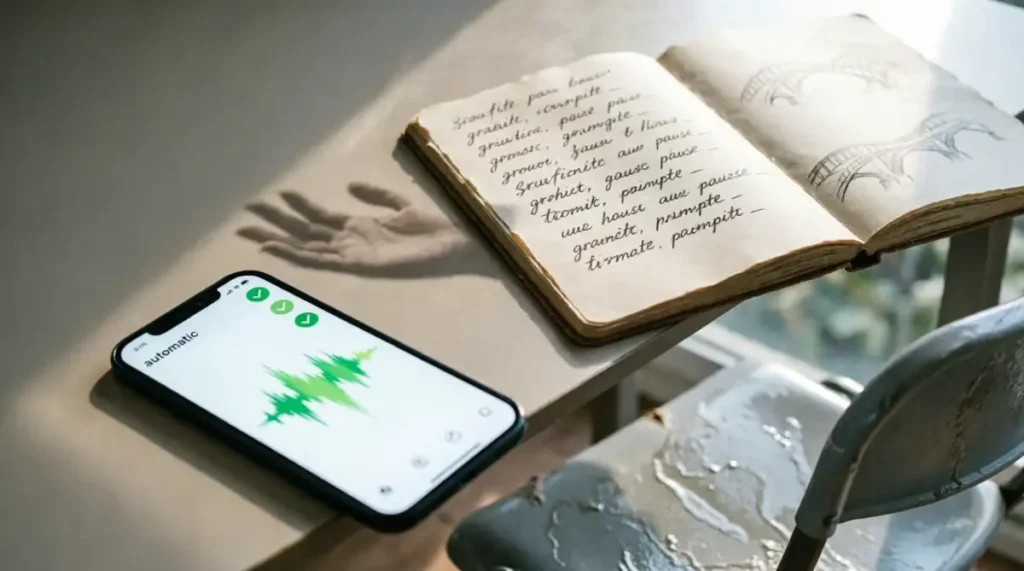
Illustration:AI-generated visual representing”drilling builds automatic responses without thinking”
This was a different kind of repetition. It was not rote. It was re creation I was not just memorizing words; I was absorbing the musicality of the language, the way certain syllables stretched and others disappeared. The documentary taught me that vocabulary is not a list to be checked off. It is a living thing that changes shape depending on who is speaking, and the only way to learn it deeply is to hear it in its natural habitat I started to learn a foreign language without endless word lists and the shift was immediate. The words I gathered from the fisherman’s voice were more durable than any I had ever pulled from a flashcard.
How do I choose the right documentary or video for this kind of practice?
Pick something that genuinely interests you, regardless of the language. The subject matter must carry you through the frustration of not understanding. I chose topics I already knew about fishing, history, cooking so that even when the words failed, the context held. Start with five‑minute segments. Pause often. Do not try to understand every word the first time through. The goal is to gather a few phrases that stick because they were spoken by a real person in a real moment.
Choose a five‑minute clip from a documentary in the language you are learning. Watch it once without stopping, just to absorb the rhythm. Watch it again, pausing at every unfamiliar word. Write down the phrase, not just the word. Look it up. Replay the sentence three times at the end, read your list aloud first reading, then from memory.
What the documentary gave me was not a bigger vocabulary. It was a vocabulary with weight. Words that had been spoken by a real voice, in a real place, about something that mattered to the speaker. Those words did not fade like the ones I had memorized from lists. They stayed, because they had arrived carrying the texture of a human life.
The Third Strand: The Honest Phrase That Turned Strangers Into Teachers
After months of solo drills and documentary study, I could feel my comprehension growing. But I had still not spoken to a real person. The thought of it made my stomach tighten. What if they spoke too fast? What if I froze completely? What if they laughed? The fears were familiar, and they had kept me silent far longer than any technical limitation.
Then I met someone a neighbour who spoke the language I was learning. We had exchanged greetings before, always in my own tongue. One day, standing in the hallway, I took a breath and said the phrase I had practiced alone many times: “I love your culture, and I’m learning your language. If I make a mistake, I welcome your guidance.” The words came out haltingly. My accent was thick. The neighbour paused, then smiled a wide, genuine smile and answered slowly, clearly, in their language. They did not criticize me. They did not switch back to my tongue. They simply spoke to me, and I understood most of it.
How one gentle correction from a stranger gave me three new sentences
That hallway conversation lasted only a few minutes, but it changed everything. At one point, I used a verb form that was grammatically wrong. The neighbour did not say “That’s incorrect.” They simply repeated my sentence back to me, correctly, as part of their reply. I heard the difference immediately. I made a mental note of the structure they used. The next day, I took that same structure and built three new sentences from it sentences I had never spoken before, but which followed the pattern I had heard.
This became my primary grammar teacher. Not a textbook. Not a rule list. The voices of native speakers, correcting me gently as they responded, giving me new structures without ever calling them “lessons.” My job was to listen, to absorb, and to practice what I had learned until it became mine I learned to build a voice that does not leave by using every conversation no matter how brief as raw material for the next.
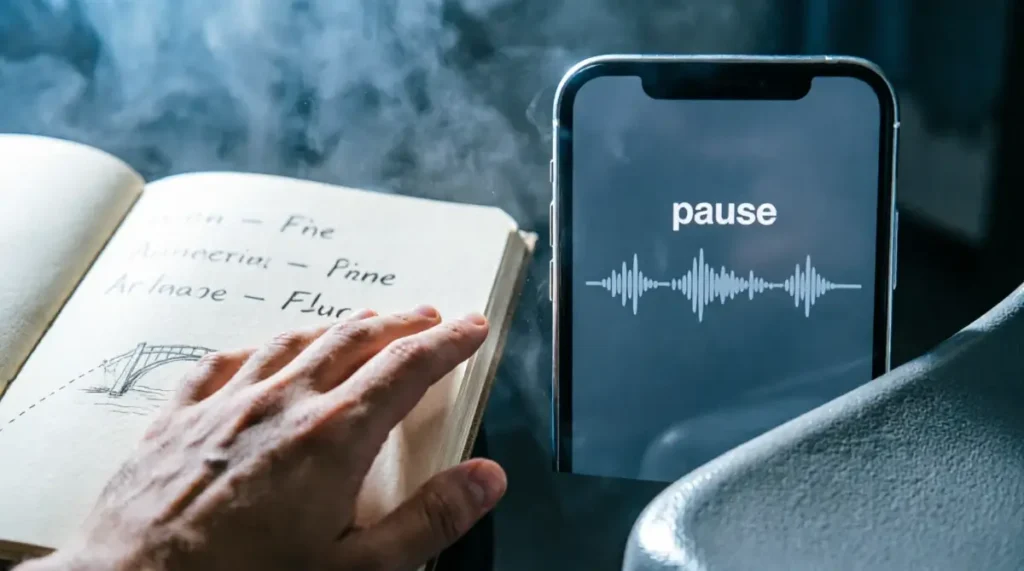
Illustration:AI-generated visual representing”pause between attempts allows corrections to settle”
What if the native speaker I approach is not patient or willing to help?
I encountered that too some people were busy, or shy, or simply not interested. I never pushed. I thanked them and moved on. For every person who did not have time, there was another who did often someone who was genuinely moved that I cared about their language and culture. The phrase itself honest, respectful, appreciative tended to attract the right kind of attention. It signalled that I was not just practicing a skill; I was honouring something they loved.
Write down the phrase “I love your culture, and I’m learning your language. If I make a mistake, I welcome your guidance.” Translate it into the language you are learning practice saying it aloud until it feels natural. The next time you meet a native speaker, say it. Notice what happens the response may surprise you.
That hallway taught me something the solo drills never could: the final barrier to speaking is not linguistic. It is relational. And the shortest path through it is not perfection. It is humility wrapped in appreciation. The phrase that welcomes guidance does not weaken you it opens doors that flawless grammar never could.
The most important sentence I ever learned was not a grammatical structure. It was an invitation, spoken with respect. Every time I offered it, I was not confessing weakness. I was building a bridge. And the people who crossed it to meet me became the best teachers I ever had.
And I approached a stranger at a market and shared my honest phrase with a heavy accent. The stranger listened, nodded slowly, and then corrected one word gently, almost as an afterthought. That single correction unlocked a grammatical pattern I had been struggling with for weeks. I walked away with a new structure, a small moment of connection, and the purpose of knowledge that the risk of speaking to a real person was always worth taking.
How Native Speakers Built My Grammar Without a Textbook
I was sitting across from a friend who spoke the language natively. We were not in a classroom. We were just talking about food, about the weather, about nothing important. At one point I tried to say something in the past tense and got the ending wrong. I knew it was wrong the moment it left my mouth. My friend did not correct me directly. They just replied, using the same idea but with the proper structure, as if my mistake had never happened. Their sentence landed like a soft echo of what I had meant to say.
I did not interrupt the conversation to ask for an explanation. I just listened. I heard the shape of their verb, the way the ending curved differently from mine, the word that came before it, the pause that followed. I stored it. Later, alone, I replayed the exchange in my head. I took their structure and I built. I made a sentence about something that happened last week. Then another about a memory from years ago. Then a question, using the same pattern, turned around. The rule had never touched a page, but it had found a home in my voice.
Building new sentences by mirroring the structures I heard in real conversation
This became a deliberate practice after every conversation with a native speaker whether it lasted two minutes or twenty I would sit down and write out one sentence they had said that used a structure I did not yet own. Then I would construct three new sentences with that same skeleton, changing the subject, the object, the time frame, until the pattern felt like mine. The next time I spoke, I would try to use one of those new sentences naturally in conversation.

Illustration:AI-generated visual representing”three breath reset unlocks speaking practice”
The grammar was not separate from the speaking it was embedded in it. I was not learning rules and then applying them; I was applying living structures from people who used them effortlessly and then making them my own through variation and repetition that is how I came to understand that you can learn a foreign language without rigid grammar study not by avoiding grammar, but by absorbing it the way a child does: through example, imitation, and creative play.
How do I remember the structures I hear during a conversation when everything is moving so fast?
I stopped trying to capture everything. Instead, I listened for one structure that stood out something I had never used before, or something I had used incorrectly. I focused on that single snippet. After the conversation ended, I wrote it down immediately, while the sound was still fresh. If I could not remember the exact words, I wrote the rhythm of it, the shape. The next day, I reconstructed it and built from there. One structure per conversation was enough. Over weeks, the collection grew.
The next time you speak with a native speaker or even watch a dialogue in a documentary listen for one sentence that uses a pattern you do not yet own. Write it down. Then, in the same session, write three new sentences using that same pattern but with different content. Speak them aloud. The following day, try to use one of them in a real or simulated conversation.
What I discovered through real life practice was that grammar had never been a separate subject. It was the echo of how people actually spoke. When I stopped studying rules and started mirroring voices, the rules came quietly, without fanfare, and settled into my speech as naturally as breathing.
The Daily Discipline That Fused All Three Strands Into One Practice
I decided to test whether the three strands drilling conversation scenarios, immersing in documentary speech, and learning from live conversations could coexist in a single, coherent daily practice. I did not want them to compete for time. I wanted them to feed each other. So I designed a week where every day contained all three, compressed into a rhythm that felt organic rather than scheduled.
Each day began the same way a ten‑minute scenario drill to wake up my voice. I would take a conversation from the course, repeat it until it felt automatic, and then move on. Next came a documentary segment ten minutes of a film, pausing to capture a handful of unfamiliar phrases. I would listen, pause, write, replay. Then, in the final part of each session, I would either speak to a native speaker if one was available or I would simulate a conversation using the assistant, trying to use one phrase I had gathered from the documentary and one structure I had learned from a previous conversation.
How the strands began to reinforce each other without my planning
The first thing I noticed was that the scenario drills became easier. The documentary had filled my ears with more varied speech, and the live conversations had sharpened my recall. The phrases I had extracted from the film began to appear, unprompted, in the drills. The structures I had learned from native speakers started surfacing when I responded to the assistant. The strands were not separate tracks running in parallel. They had intertwined.
By the end of the week, I could feel a new fluency emerging not perfect, but fluid. My mouth was anticipating responses. My ear was catching sounds that had been invisible a month earlier. The practice had stopped feeling like three separate tasks and had become one integrated act: listening, speaking, mimicking , repeating. A rhythm I had not designed but had allowed to form.
That rhythm reminded me of something I had learned earlier in my journey: the best way to sustain practice is to design a daily routine that actually sticks not by forcing rigid blocks but by letting the activities complement each other so naturally that missing a day feels like leaving a conversation unfinished.
How do I fit all three strands into a busy schedule without feeling overwhelmed?
I kept each strand short. Ten minutes for scenario drilling. Ten minutes for documentary immersion. Ten minutes for a real or simulated conversation. That is thirty minutes total. The key is not the length but the consistency and the deliberate integration making sure each strand feeds the next. On the busiest days, I combined the strands: I would listen to a documentary segment and then use the assistant to describe what I had just watched. That single act touched all three strands at once.
Tomorrow, try a single practice session that contains all three strands. Spend ten minutes on a conversation scenario. Spend ten minutes with a documentary, pausing to capture two phrases. Spend ten minutes with the assistant, trying to use one of those phrases in a new sentence notice how the strands begin to connect.
What emerged from that week was not a plan but a discovery. The three strands drilling, immersing, mimicking had never been separate. They had always been threads of the same fabric. The daily practice was simply the act of weaving them together, and the fluency that came from it was not a skill I had acquired but a living, breathing result of the weave itself.
The framework I built did not come from a schedule. It came from letting the drills feed the listening, the listening feed the speaking, and the speaking feed the next conversation. When the three strands became one, the effort of practice disappeared. What remained was simply the daily act of engaging with the language the way a musician engages with music: not as a task, but as a practice that had become inseparable from living.
Then I had a conversation with a native speaker where, for the first time, I did not freeze. Not once. I stumbled, yes. I made mistakes. But the pause that used to stretch into silence had shrunk to a blink. Later, I traced the change back to the three strands. The drills had built my reflexes. The documentaries had tuned my ear. And the honest phrase had given me the courage to start the conversation in the first place. The freeze had not vanished. It had been outgrown.
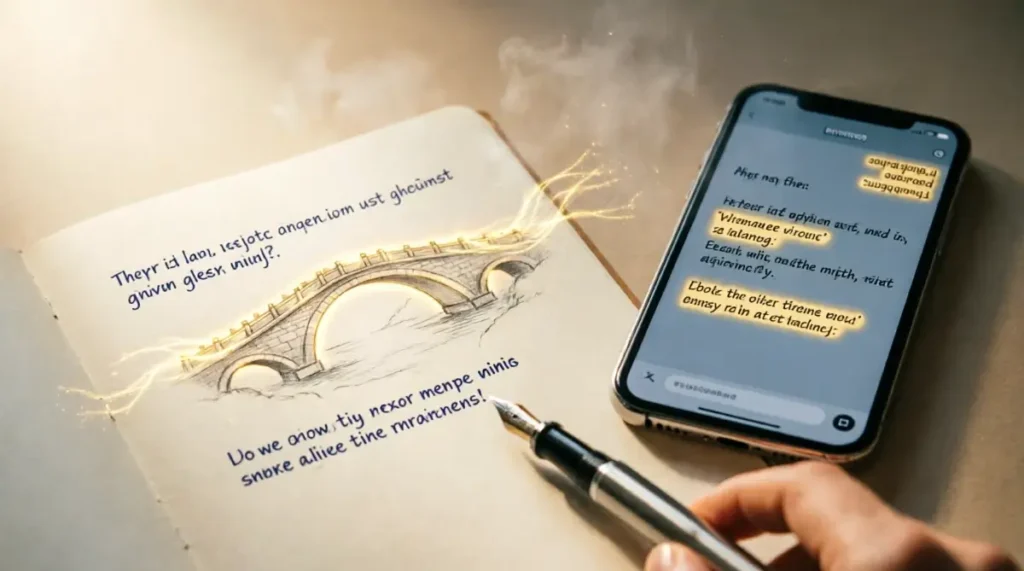
Illustration:AI-generated visual representing”drilling, immersing, repetition fuse into effortless practice”
The Voice That Speaks Now, and the Phrase That Still Opens Doors
I think back now to the waiting room the plastic chairs, the humming light, the earbud in my right ear. I can still feel the tightness in my throat from that first attempt, the cracked first word, the assistant’s calm feedback. At the time, I could not imagine the speaker I would become. Someone who drills conversation scenarios and trusts that the mouth will find its way. Someone who pauses a documentary to capture a phrase and then builds three new sentences from it. Someone who walks up to a stranger and says, with genuine warmth, “I love your culture, and I’m learning your language. If I make a mistake, I welcome your guidance.”
The road was never straight. There were conversations where I froze and walked away embarrassed. There were documentaries I abandoned because the accent was too thick. There were native speakers who did not have time, who nodded politely and moved on. But the strands held. The drills kept building automaticity. The films kept feeding my ear. And the honest phrase kept opening doors, one after another, until the fear of speaking was no longer a wall but a memory of a wall that had long since crumbled.
What I now tell anyone who is afraid to speak alone start here
I no longer believe that freezing is a sign of weakness. I believe it is a sign that the body cares deeply about connection, and that it needs a safe place to practice before the stakes feel high. Start in a waiting room with an assistant that never judges. Drill the scenarios until your mouth moves on its own. Watch the documentaries, pause them endlessly, capture every unfamiliar phrase. And then when you are ready, and even when you are not say the honest phrase to a real person the words may wobble.
The accent may be thick but the response, more often than not, will be a smile and a gentle correction, and you will walk away with a new structure, a new word, and the knowledge that your voice is no longer frozen.
My own journey from silence to speech was built on nothing more than the tools I have described and the simple belief that language is a bridge, not a test. And the first plank of that bridge, for me, was the realization that I could learn a language from zero with no money no special talent, and no teacher just an empty room, a voice assistant, a documentary, and a phrase that welcomed guidance with respect.
Can I really reach speaking fluency using only solo practice and occasional native conversations?
I did. Solo practice built my automaticity and removed the performance anxiety. The native conversations provided the real‑world feedback and the cultural grounding that no tool could replicate. Together, they formed a complete system. You do not need daily immersion among native speakers. You need a deliberate mix of private rehearsal and real human connection. The balance shifts over time more solo work at first, more conversation later but both remain essential.
Right now, choose one of the three strands to begin today. If you have no course, find one with real‑life scenarios. If you have no documentary, pick a five‑minute clip on a topic you love. If you know a native speaker, write down the honest phrase and practice it until it feels natural start with one strand. The others will follow.
The voice I speak with now was built in silence, alone, with an assistant that never tired and a phrase that always opened doors. It was not born confident. It was trained, slowly, through drills and documentaries and the gentle corrections of strangers who became teachers. And if it could grow from a cracked first word in a quiet room to full sentences spoken without fear, then anyone’s voice can.
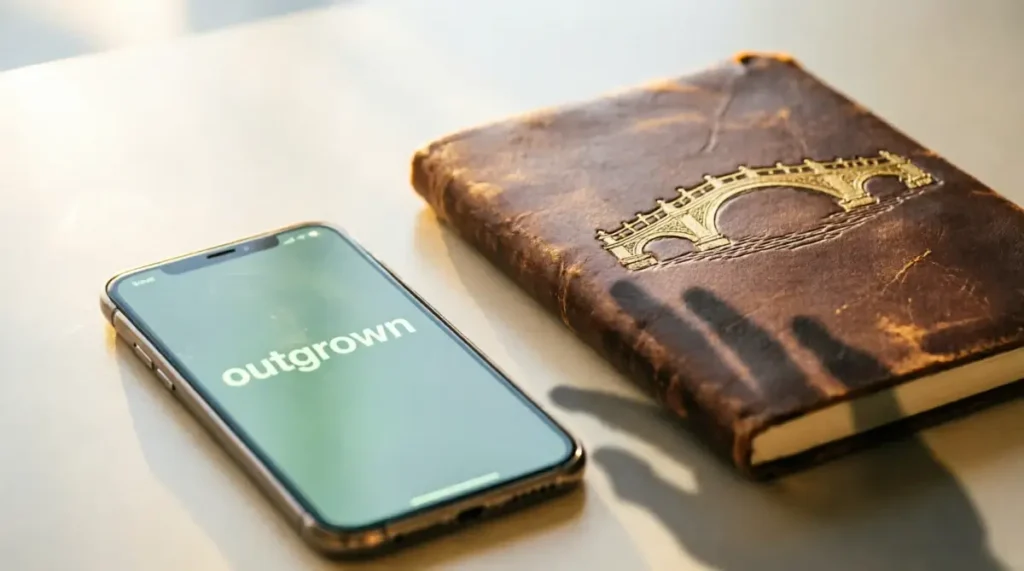
Illustration:AI-generated visual representing”voice trained through safe practice and real connection”
I began with a voice locked behind a wall of freeze, unable to speak even to an empty room. I end with a practice built on three simple strands: drilling real conversation scenarios until the words belong to the mouth, not just the memory; immersing in the culture through documentaries and films that bring the living language into the ear; and walking toward native speakers with an honest, appreciative phrase that turns strangers into teachers.
The freeze was never the enemy it was a signal that the body wanted to do well, and that it needed a safer space to learn. The assistant provided that space. The documentaries provided the raw, beautiful material of real speech. The native speakers, met with respect, provided the gentle corrections and the living structures that no textbook could ever offer. Together, these three strands became a rope that pulled me from silence into conversation.
The language is not a museum piece. It is not a test. It is a bridge between people, and speaking is the act of crossing it. We cross it imperfectly, with mistakes and the structures and accents that will never be perfect. But we cross it. And every time we do, the freeze becomes a little smaller, the voice a little stronger, and the world a little wider.
If the freeze you feel before speaking had a voice of its own, what would it say to you and what would you say back, now, after everything you have learned?
The first strand is waiting pick a scenario, a documentary, or an honest phrase, and begin today. The assistant is ready. The words are already out there, spoken by real voices, waiting to be claimed, practiced, and made your own. You do not need to wait until you feel ready the readiness comes from the doing, and the doing starts with a single, imperfect sentence spoken aloud.